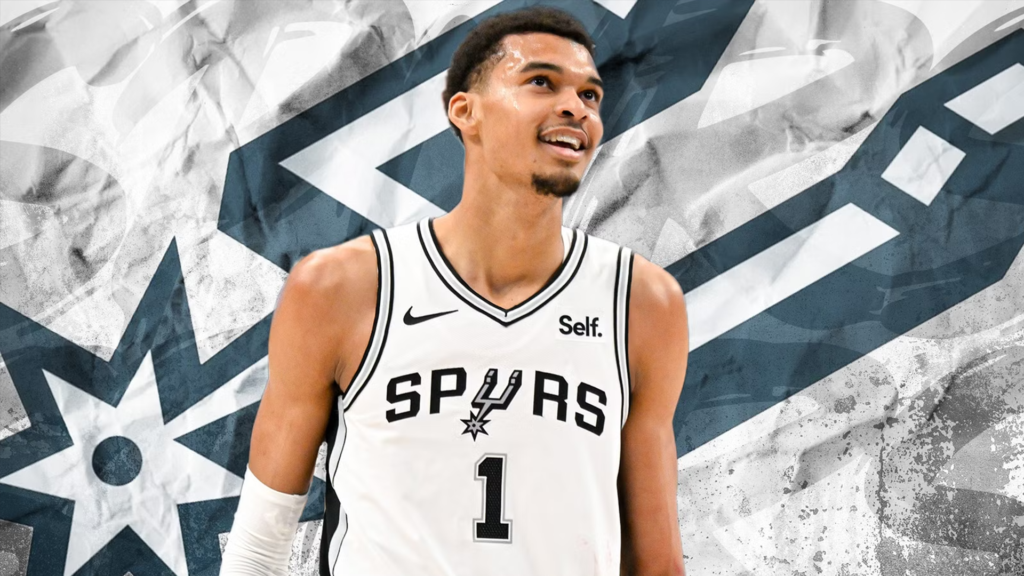
When Cooper Flagg was selected first overall by the Dallas Mavericks in the 2025 NBA Draft, the basketball card market exploded with more hype than I’ve seen since Victor Wembanyama the previous year. Within hours, his 2025-26 Topps 1/1 card sold for $7,055, whilst base Cooper Flagg rookie cards that cost $0.50 in packs were trading on eBay for $15-20. The frenzy reminded me of every rookie hype cycle I’ve witnessed – equal parts genuine excitement and dangerous speculation.
I’ll admit, I got caught up in the Flagg fever during his Duke season. Watching him dominate college basketball as an 18-year-old, leading the Blue Devils to the Final Four, I found myself thinking “this kid might be special.” When Topps‘ first licensed NBA product in 16 years happened to coincide with Flagg’s rookie year, it created perfect storm conditions for collectors. But here’s the question keeping me awake: is Cooper Flagg the generational talent worth investing in, or are we witnessing another overhyped rookie whose cards will crater once reality sets in?
Throughout this comprehensive guide, I’ll break down everything collectors need to know about Cooper Flagg, from his background, his historic college career, his rookie cards, and most importantly, whether his cards represent smart investments or dangerous speculation. Let’s separate the hype from reality and figure out if Flagg deserves a spot in your collection!
Who Is Cooper Flagg and Why Should Collectors Care?
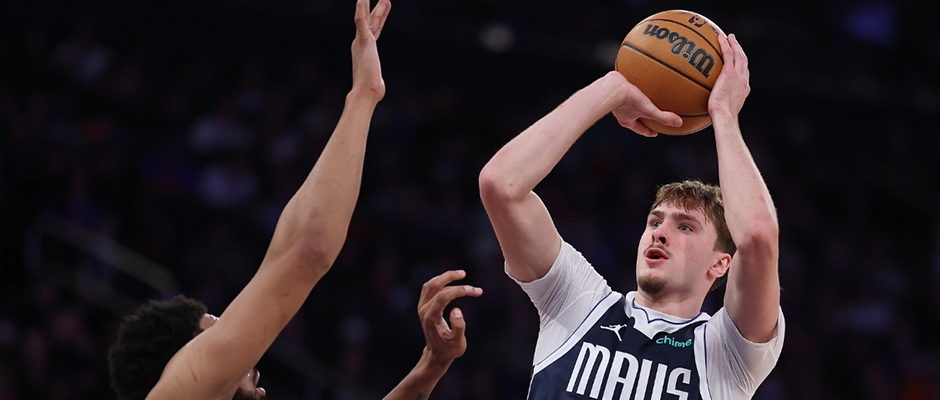
Cooper Flagg was born in Newport, Maine, on December 21, 2006, making him one of the youngest players ever selected first overall in the NBA Draft. His small-town origins create an underdog narrative that resonates with collectors and this isn’t some kid from basketball powerhouse cities like Los Angeles or New York, but rather from a town most Americans couldn’t locate on a map.
The historic high school career started at Nokomis Regional High School where Flagg became the first freshman to be named the Maine Gatorade Player of the Year after averaging 20.5 points, 10 rebounds, 6.2 assists, 3.7 steals, and 3.7 blocks per game. Those numbers from a freshman are absolutely ridiculous.
Flagg transferred to Montverde Academy in Florida, immediately elevating an already elite program. His Montverde team went 33-0 whilst winning a national championship, with four of his teammates eventually becoming first-round NBA draft picks alongside him. That level of talent concentration and success created the perfect development environment for a player with Flagg’s ambitions.
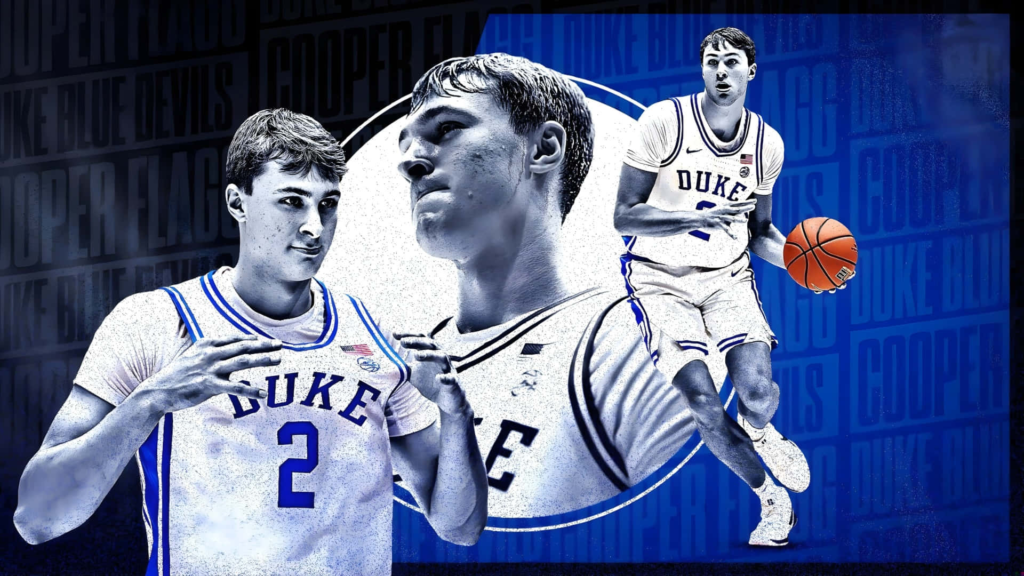
Duke’s freshman sensation exceeded even massive expectations. Flagg won the Wooden Award, becoming just the fourth freshman ever to earn the honour alongside Kevin Durant, Anthony Davis, and Zion Williamson. That’s genuinely elite company and all three previous freshmen Wooden winners became NBA superstars and championship contributors. The comparison alone justifies collector attention.
The Dallas Mavericks selected Flagg first overall after winning the lottery with just 1.8% odds, creating one of the most dramatic draft scenarios in recent memory. Landing in Dallas provides interesting context where he’ll play alongside veteran stars rather than being thrown into a complete rebuild. This could accelerate his development or limit his statistical opportunities depending on how the Mavericks use him.
Comparison to recent first overall picks reveals Flagg’s unique characteristics. Wembanyama brought unprecedented size-skill combination. Zion offered explosive athleticism. Paolo Banchero showcased polished offensive game. Flagg combines elements of all three – he’s 6’9″ with versatile skills, explosive athleticism, and remarkable basketball IQ for his age. The two-way impact sets him apart from more offensively-focused recent rookies.
Cultural impact and marketability extend beyond basketball performance. Flagg signed a shoe deal with New Balance prior to starting at Duke and became the first men’s college basketball player to be sponsored by Gatorade. These endorsements demonstrate mainstream appeal and marketing savvy that translates into card demand from non-collectors who recognise his name and brand.
The Maine connection creates unique storyline that collectors appreciate. He’s only the third person born in Maine to play in the NBA, making him a literal hometown hero for an entire state. That underdog narrative, small-town kid makes it to the absolute pinnacle of basketball, resonates powerfully in ways that big-city stars’ stories sometimes don’t.
What Made Cooper Flagg’s Duke Season Historic?
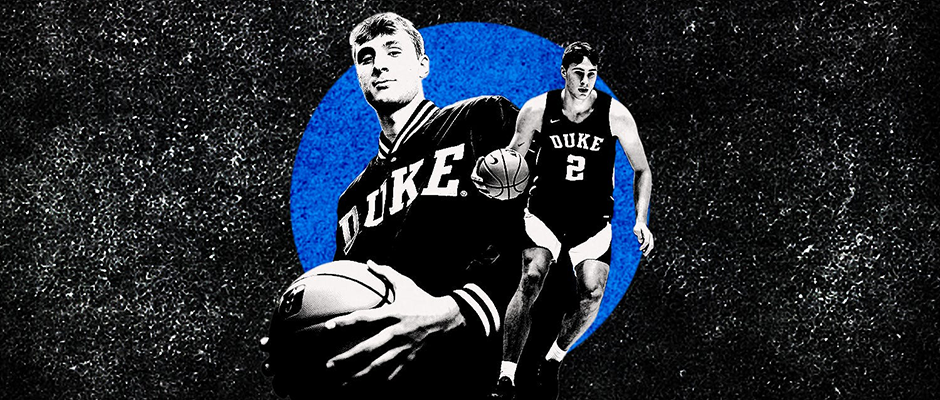
Cooper Flagg’s lone season at Duke produced achievements that placed him among the greatest freshman campaigns in college basketball history. Understanding his college dominance helps assess whether Cooper Flagg rookie cards deserve the premium prices they’re commanding.
The consensus National Player of the Year honours represent incredibly rare achievement for freshmen. Flagg became just the fourth freshman to win the Naismith Award, joining Kevin Durant, Anthony Davis, and Zion Williamson. Every single previous freshman winner became legitimate NBA star. This track record suggests Flagg’s success at Duke predicts NBA stardom rather than being flash-in-the-pan college performance.
Statistical dominance across all categories demonstrated true two-way excellence. Flagg averaged 19.2 points, 7.5 rebounds, 4.2 assists, 1.4 steals and 1.4 blocks in his freshman season, leading Duke in every major statistical category. That comprehensive impact from scoring, rebounding, playmaking, and defence – separated him from specialists who excel in one or two areas.
The 42-point explosion against Notre Dame on January 11, 2025, showcased his offensive ceiling. Flagg scored 42 points, grabbed six rebounds, and dished out seven assists, shooting 11-of-14 from the field, 4-of-6 from three-point range, and 16-of-17 from the free-throw line. Efficiency like that from a freshman is genuinely special as it wasn’t just volume scoring but elite shooting percentages suggesting refined offensive skills.
I watched that Notre Dame game live, and by halftime I was texting my mates saying “this kid is different.” The effortless scoring, the court vision, the defensive intensity, it all clicked simultaneously in ways that suggested genuine superstar potential. That single game probably drove more card purchases than any other performance in his college career.
The Final Four run validated Duke’s championship credentials whilst ending frustratingly short. Flagg scored 27 points, seven rebounds and three blocks in a 70-67 loss against Houston in the Final Four. Despite the defeat, his performance under pressure demonstrated maturity and competitiveness that NBA scouts covet. Many top picks wilt under tournament pressure; Flagg elevated his game.
Legacy among Duke greats positions Flagg alongside the program’s most celebrated one-and-done players. He became the fifth Duke player in the Lottery era to go first overall, joining Elton Brand (1999), Kyrie Irving (2011), Zion Williamson (2019) and Paolo Banchero (2022). That’s genuinely elite company in one of college basketball’s most prestigious programs.
The awards haul from his freshman season reads like a career’s worth of accomplishments compressed into eight months: ACC Rookie of the Year, ACC All-Defensive Team, consensus first-team All-American, and multiple National Player of the Year honours including the Wooden Award. These aren’t just participation trophies, they’re the highest individual honours college basketball offers.
What impressed me most wasn’t the scoring or even the defensive prowess, but rather the complete game. Flagg could dominate possessions scoring, then lock down opponents defensively, then facilitate for teammates, then grab crucial rebounds. That versatility suggested an NBA-ready skill set rather than just college dominance that wouldn’t translate professionally.
How Did Cooper Flagg Become the #1 Pick?
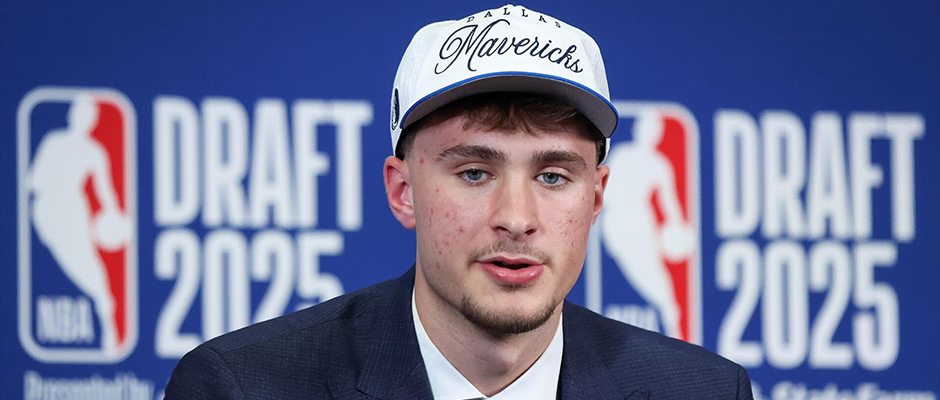
Cooper Flagg’s path to becoming the first overall selection started years before draft night, with decisions and performances that positioned him perfectly for basketball’s ultimate prize.
The reclassification to the 2024 recruiting class represented a calculated gamble that paid off brilliantly. Flagg originally belonged to the 2025 high school class but decided to graduate early and enter college as a 17-year-old. This move accelerated his development timeline whilst demonstrating confidence in his abilities against older competition. Not many players can reclassify and still dominate, but Flagg made it look easy.
Pre-draft hype and projections locked Flagg into the first overall spot remarkably early. From the moment he announced his Duke commitment and reclassification in August 2023, mock drafts pencilled him in at #1. Maintaining that projection throughout an entire college season whilst meeting sky-high expectations proved his mental toughness and consistent excellence.
The Dallas Mavericks lottery miracle created one of draft history’s most dramatic scenarios. Dallas entered the lottery with just 1.8% odds of securing the first pick, having finished as a playoff team. When the ping pong balls somehow landed on Dallas anyway, they jumped ten spots, thus tying for the biggest lottery leap in NBA history. That stroke of luck paired Flagg with a veteran roster rather than a rebuilding situation.
I watched the lottery live, and when Dallas’s logo appeared at #1, my immediate thought was “wow, Flagg just landed in one of the best possible situations.” Instead of joining a tanking team where he’d carry massive offensive burden immediately, he’d develop alongside established stars and playoff-tested veterans. That context matters enormously for both his career development and card values.
Draft night experience at Barclays Center in Brooklyn showcased Flagg’s composure and family support. Flanked by his parents (both former college basketball players) and his twin brother Ace (who’ll play at Maine), Flagg handled the moment with maturity beyond his 18 years. The genuine emotion and family connection created compelling narrative that collectors appreciate.
Early NBA performance has exceeded reasonable expectations for an 18-year-old rookie. Through his first months with the Mavericks, Flagg is averaging 18.4 points, 6.3 rebounds, and 3.5 assists per game whilst demonstrating the two-way impact that made him the top pick. He’s running point at times, defending multiple positions, and contributing to a playoff-contending team immediately.
Fit with the Mavericks roster provides developmental advantages whilst potentially limiting statistical ceiling. Playing alongside veteran stars means Flagg doesn’t face the pressure of carrying offence nightly. However, it also means his counting stats might not reach the levels that #1 picks on bad teams typically achieve. This dynamic affects card values where collectors love big stats that win Rookie of the Year honours.
The path from small-town Maine kid to NBA #1 pick creates narrative power that enhances collecting appeal. Flagg’s story isn’t just about basketball talent as it’s about someone from nowhere becoming the best prospect in the country through work ethic and determination. Those stories resonate with collectors in ways that entitled, blue-chip prospect narratives sometimes don’t.
What Are Cooper Flagg’s Rookie Cards Worth?
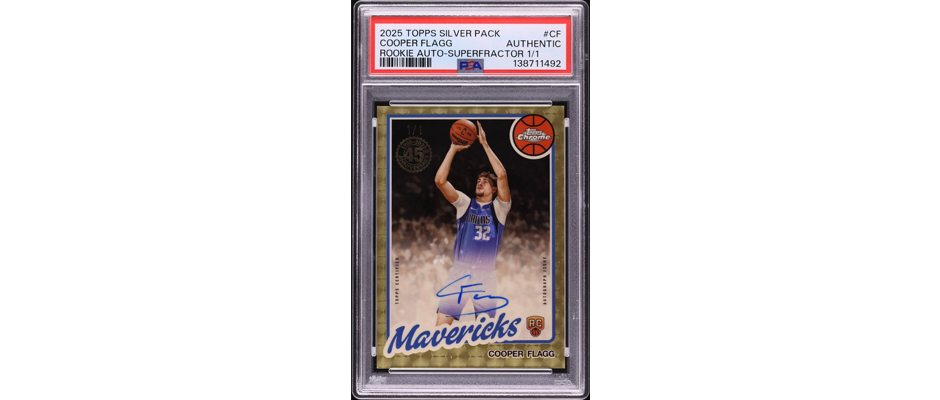
Cooper Flagg’s rookie card market demonstrates the volatility and excitement that accompanies highly anticipated prospects meeting the NBA’s licensed card market for the first time. Current values reflect both genuine talent assessment and speculative fever that accompanies #1 picks.
The 2025-26 Topps flagship cards represent Flagg’s official NBA rookie cards, with his base card (#201) serving as the most accessible option for budget-conscious collectors. Raw base cards trade in the $5-20 range depending on market conditions and seller, whilst gem mint examples command premiums once graded.
Base card pricing has fluctuated significantly since Topps’ release. Initial frenzy drove base cards to $25-30, but as supply increased and collectors realised millions of base cards exist, prices settled into more reasonable $8-15 range for raw copies. I watched this correction happen in real-time, glad I’d waited rather than buying during peak hype.
Parallel values vary dramatically based on colour and serial numbering. The 2025-26 Topps Cooper Flagg RC Black Parallel numbered to just 68 copies sold for $1,200, demonstrating premiums for scarce variations. Meanwhile, unnumbered colour parallels trade in the $30-100 range depending on specific variation and demand.
Autograph card prices represent where serious money enters Flagg’s market. His New Applicants Autographs card has moved up significantly, with raw versions recently selling around $700. The Chrome Rookie Autographs cards trade even higher, with recent sales around $1,400 despite experiencing some volatility. These autographs command premiums because Flagg’s signature carries #1 pick cachet combined with Topps’ return to NBA cards.
Record sales showcase the ceiling for Flagg’s absolute rarest cards. A 2025-26 Topps New School Foilfractor 1/1 sold for $7,055, whilst SSP autographs fetched $2,700-3,000. These extreme prices reflect both Flagg’s status and the one-of-one scarcity that creates auction bidding wars among premium collectors.
Chrome versus flagship comparison will become crucial as Topps Chrome Basketball releases. Historically, Chrome rookies command premiums over flagship base cards due to the chromium finish and traditional collector preference for Chrome as the “premier” rookie card. I expect Flagg’s Chrome base to trade at 2-3x his flagship base once Chrome hits the market.
Market trends show typical rookie card volatility. Prices spiked immediately after Topps release as collectors rushed to acquire Flagg’s first cards. Then corrections followed as reality tempered speculation. Early NBA performance influences daily prices such as strong games drive short-term surges, whilst disappointing performances create dips. This volatility creates both opportunity and risk depending on entry timing.
I bought several Flagg base cards at $8-10 each, viewing them as reasonably priced lottery tickets on a talented prospect. If he becomes a superstar, those $10 cards could become $100+ cards over the next decade. If he busts, I’ve lost maybe $50 total. That risk/reward ratio makes sense for modest speculation, though I wouldn’t dump thousands into Flagg cards at current prices.
Which Cooper Flagg Cards Should Collectors Target?
Navigating Cooper Flagg’s extensive card checklist requires strategic thinking about budget, collecting goals, and risk tolerance. The sheer variety of Flagg cards across products creates both opportunity and confusion for collectors trying to identify the best options.
Budget options start with the 2025-26 Topps base rookie card #201, available raw for $8-15 or graded PSA 10 for $40-80 depending on market conditions. This represents the most accessible true Flagg rookie, suitable for collectors wanting exposure without major investment. The base Chrome rookie (once released) will offer similar accessibility at slightly higher price points given Chrome’s traditional premium.
For slightly higher budgets around $30-100, unnumbered parallel variations provide the next tier. Colour parallels like Blue, Red, Green, or special finishes like Foilboard offer visual appeal and modest scarcity without the extreme prices of serial numbered versions. These make excellent collection pieces that are distinctive whilst remaining affordable.
Mid-range investments in the $100-500 range target serial numbered parallels and premium inserts. Cards numbered /99, /68, or /50 provide genuine scarcity with documented population limits. Insert sets like All Kings SP or special variations command premiums based on both design appeal and limited availability. I’d allocate this budget tier to collectors confident in Flagg’s potential who want meaningful scarcity.
Premium chase cards above $500 include autographs, memorabilia, and extremely low-numbered parallels. The New Applicants Autographs at $700, Chrome Rookie Autographs at $1,400, and various serial numbered autos in the $2,000-3,000 range represent serious investment commitments. These cards bet heavily on Flagg becoming a superstar whose autographs appreciate dramatically over his career.
Topps NOW cards offer unique collecting angles as Flagg’s career unfolds. These print-on-demand cards commemorate specific performances or milestones, with print runs revealed after sales windows close. Early Topps NOW Flagg cards had print runs exceeding 40,000 copies, making them interesting snapshots of moments but not particularly scarce. However, special performances might generate lower print run NOW cards worth targeting.
Product recommendations by budget help prioritise purchases:
- Under $50: Focus on base Topps rookies and common parallels
- $50-200: Target better parallels or PSA 10 base cards
- $200-500: Consider lower-tier autographs or serial numbered parallels /25 or higher
- $500-1,500: Premium autographs or extremely low-numbered parallels
- $1,500+: Only if you’re absolutely convinced Flagg becomes superstar
Comparison to Dylan Harper and Ace Bailey, the #2 and #5 picks respectively, provides interesting market dynamics. Harper’s cards trade at roughly 30-40% of Flagg’s prices despite solid early NBA performance. Bailey sits even lower around 20-25% of Flagg prices. This gap reflects draft position psychology more than actual performance differential, potentially creating value opportunities in Harper or Bailey if they outperform expectations.
My personal Flagg allocation remains modest, so maybe $150 total across several base cards and one parallel. I’m treating these as educated speculation rather than core portfolio holdings. If Flagg delivers on his potential, great. If not, the loss won’t materially impact my overall collection value. That’s appropriate risk management for unproven talent regardless of #1 pick status.
Should You Invest in Cooper Flagg Basketball Cards?
The investment question for Cooper Flagg requires separating legitimate talent assessment from dangerous hype-driven speculation. Let’s examine both sides honestly before reaching conclusions about whether Flagg cards deserve your investment dollars.
Generational talent assessment starts with acknowledging Flagg’s legitimate credentials. His college performance, physical tools, basketball IQ, and two-way impact suggest genuine superstar potential. The comparison to previous freshman Wooden winners (Durant, Davis, Williamson) who all became NBA stars provides encouraging precedent. Scouts and analysts widely project All-Star potential at minimum, with possible MVP trajectory if everything breaks right.
However, risk factors demand equal consideration. Injuries represent the primary threat as Flagg suffered a sprained ankle during the ACC Tournament that forced him to miss games. At 6’9″ and still developing physically, injury risk exists throughout his career. Development trajectory remains uncertain too as college dominance doesn’t automatically translate to NBA success, as countless examples prove.
The market hype concerns me most about Flagg investments. Current prices already assume significant future success, leaving limited upside if he merely becomes a solid All-Star rather than transcendent superstar. Compare this to buying LeBron rookies in 2003-2004 when prices were modest despite his #1 pick status. Early adopters captured massive appreciation. Today’s Flagg buyers are paying premium prices upfront, requiring extraordinary performance to generate meaningful returns.
I made this mistake with previous hyped rookies. Bought Zion base cards at $40-50 during his rookie season, convinced they’d climb to $200+. Years later, those same cards trade around $30-40 because injuries limited his career development. The lesson: rookie hype creates inflated entry prices that require everything going perfectly to justify.
Comparison to recent rookie investments reveals concerning patterns. Wembanyama cards exploded during his rookie year before correcting as supply overwhelmed demand. Ja Morant cards surged early then declined despite his All-Star performance. Trae Young, Luka Dončić, even Zion – all experienced boom-bust cycles during rookie years before stabilising at prices reflecting actual career trajectory rather than speculative fever.
Time horizon considerations suggest patience beats FOMO for Flagg investments. Rookie year represents peak hype typically. By years 2-3, prices often decline as hype fades and collectors move to newer rookies. Then around years 5-7, proven stars’ cards begin climbing again based on actual accomplishment rather than potential. Buying Flagg cards in 2027-2028 after the hype dies might generate better returns than buying today at peak speculation.
Portfolio allocation strategy for Flagg should remain modest for conservative investors. Allocating more than 5-10% of basketball card portfolio to any unproven rookie represents excessive risk concentration. Flagg might justify slightly higher allocation than typical rookies given his credentials, but treating him as portfolio anchor before he proves anything in the NBA courts disaster if injury or development issues emerge.
Personal collecting versus investing creates important distinction. If you love Flagg’s game, appreciate his story, and want cards for personal enjoyment regardless of investment returns, buy what makes you happy. If you’re purely investing, the current risk/reward profile doesn’t favour aggressive Flagg positions. The prices already assume success, leaving limited upside and substantial downside.
My recommendation? Buy a few base cards and maybe one mid-tier parallel if you want exposure to Flagg’s potential. Avoid dumping thousands into his cards at current prices. Let him prove himself over 2-3 seasons, then reassess whether his performance justifies higher allocation. Missing some upside beats losing capital on overhyped bust.
How Do Flagg’s Cards Compare to Victor Wembanyama?
The comparison between Cooper Flagg and Victor Wembanyama provides useful framework for assessing Flagg’s market dynamics, given Wembanyama represented the previous year’s generational rookie prospect whose cards dominated collector attention.
Hype level comparison reveals surprisingly similar market enthusiasm despite different physical profiles. Wembanyama’s unprecedented 7’4″ frame with guard skills created “unicorn” status driving extreme collector interest. Flagg’s versatility and two-way dominance as youngest #1 pick since LeBron generates comparable excitement. Both players entered the league as consensus generational talents expected to transform franchises.
Price point differences at equivalent career stages show Flagg’s cards trading at premiums to where Wembanyama’s were during rookie year. Wembanyama’s base Topps unlicensed rookie cards from his pre-NBA licensed products traded around $5-10. Flagg’s licensed Topps base rookies immediately commanded $15-20. This gap partly reflects Topps’ return to NBA licensing creating additional demand, but also suggests potentially inflated Flagg pricing.
I tracked Wembanyama cards throughout his rookie season, watching prices surge then correct as supply overwhelmed demand. Cards that sold for $50-100 early dropped to $20-30 within months. That pattern concerns me for Flagg – are current prices sustainable, or will similar corrections follow once initial frenzy subsides?
Career trajectory projections differ based on playing style and team situation. Wembanyama’s unique physical profile creates ceiling that Flagg likely can’t match and there’s literally never been anyone like Wemby. However, Flagg’s more traditional skillset might prove more reliable and less injury-prone. Versatile two-way forwards with high basketball IQ have excellent NBA track records compared to physically extreme outliers.
Market sustainability discussion centres on whether rookie card prices reflect reasonable future expectations or speculative excess. Wembanyama’s cards corrected significantly after rookie year hype. If Flagg follows similar pattern, current buyers might face losses before eventual recovery based on career performance. Alternatively, Flagg’s licensed Topps status might provide floor that unlicensed Wemby cards lacked.
Fanatics exclusive considerations create interesting wrinkle. Flagg signed as a Fanatics exclusive athlete, meaning his autographs appear only in Topps/Fanatics products. This exclusive relationship mirrors Wembanyama’s similar deal, creating monopolistic pricing power that could support higher autograph values long-term. No competition from other manufacturers means Topps controls Flagg autograph supply completely.
Lessons from Wembanyama’s rookie year suggest caution about buying into peak hype. Wait for corrections, buy dips rather than peaks, prioritise base cards and accessible parallels over premium autos early, and maintain patient timeline expecting volatility before stabilisation. These lessons cost me money learning with Wemby, but hopefully they save you from similar mistakes with Flagg.
The ultimate question: will Flagg’s career and card trajectory match or exceed Wembanyama’s? Too early to know, but both represent generational talents whose cards deserve attention whilst requiring careful risk management given current premium pricing and unproven NBA careers.
What Makes Flagg Different From Other Recent #1 Picks?
Cooper Flagg’s unique characteristics distinguish him from recent first overall selections in ways that affect both his NBA potential and collecting appeal. Understanding these differences helps assess whether Flagg’s cards represent better or worse investments than comparable recent rookies.
Playing style and versatility set Flagg apart from more specialised recent #1 picks. Zion Williamson was primarily an explosive athletic finisher. Anthony Edwards an elite scoring guard. Paolo Banchero a skilled offensive creator. Flagg combines elements of all these profiles – he scores, facilitates, defends at elite levels, and impacts games comprehensively rather than through singular dominant skill.
Two-way impact separates Flagg from offensively-focused recent rookies. He made the ACC All-Defensive Team as a freshman, demonstrating genuine defensive prowess that #1 picks don’t always possess immediately. In an NBA increasingly valuing two-way wings who can switch defensively whilst contributing offensively, Flagg’s profile aligns perfectly with modern basketball’s evolution.
Basketball IQ and maturity for an 18-year-old impressed scouts and analysts across the board. Jon Scheyer praised Flagg’s understanding of what’s required to win and his ability to elevate teammates. That intangible quality separates stars who make teams better from talented individuals who accumulate stats without winning. For collectors, high basketball IQ suggests sustained excellence rather than athletic peak followed by decline.
Maine roots and relatability create storyline that other #1 picks lacked. Most top picks come from basketball hotbeds or attended powerhouse high schools. Flagg’s small-town background creates “every kid from nowhere can make it” narrative that resonates emotionally. This relatability could translate into broader collector appeal beyond just basketball card enthusiasts.
The New Balance sponsorship represents unique marketing angle. Most NBA stars sign with Nike, Adidas, or Under Armour. Flagg chose New Balance specifically because of their connection to his home state of Maine, demonstrating values and loyalty that marketing teams dream about. That authentic connection could drive long-term endorsement value that supports card demand from sneakerheads and casual fans.
Team situation advantages provide better developmental environment than most #1 picks receive. Recent first overall selections typically joined lottery teams where they carried massive offensive responsibility immediately. Flagg landed in Dallas alongside established stars, allowing gradual development without overwhelming pressure. This could accelerate his growth whilst limiting immediate statistics that drive rookie card values.
The comparison I keep making internally: Flagg reminds me more of Kawhi Leonard’s developmental path than LeBron’s immediate dominance. Kawhi developed gradually into superstar alongside veteran Spurs before becoming the player he is. Flagg might follow similar trajectory where steady improvement rather than explosive Year 1 stardom. That pattern might disappoint collectors expecting immediate statistical dominance.
The differences from other #1 picks suggest Flagg’s cards carry different risk/reward profile than typical prospects. His versatility and two-way impact provide higher floor (he should be good regardless) but possibly lower ceiling (might not be transformational scorer). For conservative investors, high floors matter. For aggressive speculators, ceilings drive decisions. Know which type you are before buying.
Where Can You Buy Cooper Flagg Rookie Cards?
Finding Cooper Flagg rookie cards requires knowing which sources provide legitimate products at fair prices versus which exploit rookie hype through inflated pricing or questionable inventory.
Topps direct releases through Topps.com offer official products at retail prices, though availability depends on releases and sellout speed. The Topps NOW program featuring Flagg’s performances provides print-on-demand cards available exclusively through Topps’ website. These represent authentic product directly from the manufacturer, eliminating counterfeit concerns.
eBay and online marketplaces provide the largest selection of Flagg cards across all price points. Search “Cooper Flagg rookie” on eBay and you’ll find thousands of listings from base cards to 1/1s. The challenge involves identifying fair prices versus inflated asking prices from sellers exploiting hype. Always check “sold listings” to see actual market values rather than wishful thinking asking prices.
I buy maybe 60% of my cards through eBay, but only after extensive sold listing research. Someone listing a Flagg base card for $30 when sold listings show $10-12 recent sales is trying to exploit uninformed buyers. Patience and research prevent overpaying during rookie hype cycles.
Local card shops stock Topps products containing Flagg rookies, providing immediate physical access without shipping delays. However, LCS prices typically run 10-30% higher than online due to overhead costs and limited competition. The premium might be worth it for examining cards before purchase or supporting local businesses you value. My LCS gets my business when prices are reasonable and when I want cards immediately rather than waiting for shipping.
Group breaks offer affordable participation in premium products. Instead of buying complete $300 hobby boxes, you can buy the Dallas Mavericks team slot for maybe $40-60, receiving only Mavs cards including Flagg if he appears. This provides exposure to hobby-exclusive content without full box investment. Platforms like Whatnot and various YouTube channels host Flagg-focused breaks constantly.
Retail versus hobby products contain different Flagg content with price implications. Retail blasters at Target or Walmart cost $25-35 and might contain Flagg base cards or parallels. Hobby boxes cost $200-300+ but guarantee autographs and serial numbered content. For Flagg specifically, hobby’s guaranteed premium content probably justifies the price gap better than for typical rookies given his #1 pick status.
Australian collector considerations include higher prices due to import costs and shipping. Cards that cost $10 in the US often run $15-20 AUD through Australian sellers once you factor in exchange rates and shipping. I’ve found Cherry Collectables stocks Topps products, though availability and pricing vary. Sometimes importing directly from US sellers despite shipping costs actually saves money compared to Australian retail.
Avoiding overpaying in hype requires discipline and research. Set maximum prices you’re willing to pay before shopping, then stick to those limits regardless of FOMO. Monitor sold listings to understand true market values. Avoid buying during initial product release when prices peak. Wait 2-4 weeks for markets to settle before making major purchases. These simple habits prevent the worst overpaying mistakes.
The buying strategy I recommend: acquire a few base cards and accessible parallels now to participate in the Flagg phenomenon. Wait on premium autographs and low-numbered cards until his career develops further and prices potentially correct from hype peaks. This balanced approach provides exposure without excessive risk concentration in unproven talent.
What’s the Long-Term Outlook for Flagg’s Cards?
Projecting Cooper Flagg’s card values over 5-10+ years requires honest assessment of career ceiling, market cycles, and the gap between hype and likely reality. Let me share my actual analysis rather than cheerleading you’ve probably read elsewhere.
Career ceiling projections range from perennial All-Star to potential MVP depending on whose analysis you trust. The optimistic case sees Flagg developing into a Kawhi Leonard or Paul George type for elite two-way wing leading championship teams. The realistic case projects quality starter or secondary All-Star on playoff teams. The pessimistic case involves injuries or development plateau preventing full potential realisation.
I lean toward the realistic case personally. Flagg will very likely become a quality NBA player worthy of his draft position. Whether he becomes a genuine superstar commanding $100+ base rookie cards in five years? That’s less certain and requires everything breaking right such as his health, development, team success, and market conditions all aligning favourably.
Hall of Fame trajectory discussion feels premature for an 18-year-old with zero NBA seasons completed. Yes, his college accolades and draft position suggest potential. But the NBA graveyard is littered with “can’t miss” prospects who missed. Reserve Hall of Fame speculation for years 5+ when you’ve got actual NBA track record to evaluate. Basing investment decisions on projected Hall of Fame career requires massive assumptions about unknowable future.
Market cycle predictions suggest volatility before stabilisation. Rookie year typically features inflated prices driven by hype and limited supply. Year 2-3 often brings corrections as supply increases and hype fades. Years 4-6 see stabilisation around actual career performance. Years 7-10 begin long-term appreciation if the player proves worthy. Flagg’s cards will likely follow this pattern rather than exhibiting linear appreciation from debut.
Comparison to established stars highlights valuation concerns. Flagg’s premium cards already trade at prices comparable to proven All-Stars’ rookie cards. His $700-1,400 autographs approach prices that quality veterans command despite Flagg having played zero meaningful NBA games. This suggests market has already priced in significant success, limiting upside unless he exceeds even lofty expectations.
Blue chip potential timeline extends 8-12 years minimum before Flagg cards could reasonably qualify as “safe” investments rather than speculation. LeBron’s cards arguably achieved blue chip status around 2010-2012 after proving sustained excellence. That’s 7-9 years post-rookie. Expecting Flagg to reach similar status before 2033 at earliest ignores the career validation required for genuine blue chip designation.
Conservative versus aggressive approaches suggest different strategies. Conservative investors avoid rookies entirely, waiting years for career validation before buying at higher but safer prices. Aggressive investors buy during rookie years accepting high risk for high reward potential. I split the difference – small speculative positions in promising rookies whilst maintaining core portfolio in proven excellence.
My long-term outlook: Flagg’s cards represent interesting speculation for collectors comfortable with risk and equipped with 5-10 year patience. However, they’re wildly inappropriate as core portfolio holdings or as investments for money you can’t afford to lose. Treat them as educated lottery tickets rather than blue chip foundations.
The honest assessment? Current prices already assume Flagg becomes very good. For his cards to generate meaningful returns from today’s levels, he needs to become transcendent – multiple championships, MVP awards, cultural icon status. That’s possible but far from certain. Invest accordingly with realistic expectations rather than fantasy projections.
Flagg or Fad? Making Your Decision
After exploring Cooper Flagg’s background, college dominance, draft position, rookie cards, and investment potential, we arrive at the crucial question: should his cards occupy space in your collection, and if so, how much?
The balanced perspective acknowledges both Flagg’s legitimate credentials and the speculative nature of rookie card investing. He’s genuinely talented with historic college performance and ideal physical profile for modern NBA. However, he’s also an 18-year-old with zero NBA track record commanding prices that assume superstar trajectory. Both realities matter equally for informed decision-making.
Recommendations for different collector types depend on your approach to the hobby:
- Pure collectors: Buy cards you enjoy owning regardless of investment returns. If Flagg excites you, grab some base cards and parallels you like
- Conservative investors: Avoid or allocate maximum 2-3% of portfolio. Wait for career validation before significant positions
- Aggressive investors: Small speculative positions (5-10% portfolio) acceptable if you can stomach volatility and potential losses
- Speculators: You’re already buying Flagg regardless of my advice, so at least avoid premium autos at peak prices
The decision framework I use for any rookie: Would I regret owning this card in five years if the player busts? If yes, don’t buy it or buy so little that losses won’t matter. If no because you genuinely enjoy the player regardless of investment returns, buy what makes you happy. This emotional accounting prevents expensive regrets.
Now I want to hear from you! Have you bought Cooper Flagg rookie cards, and if so, which ones? Are you treating them as long-term investments or short-term flips? Do you think he’ll become the generational talent everyone projects, or are we witnessing another overhyped rookie? Share your takes in the comments – I love hearing different perspectives on prospects before their careers fully unfold!
Cooper Flagg represents basketball card collecting’s eternal tension between exciting potential and dangerous speculation. He might become the next superstar whose rookie cards appreciate magnificently. He might become a cautionary tale about buying hype over proven performance. Most likely, he’ll land somewhere between extremes as a quality player whose cards provide modest returns to patient investors whilst disappointing those expecting explosive gains.
My final advice? Participate in the Flagg phenomenon if it excites you, but maintain perspective about what you’re actually buying. You’re not buying the next Michael Jordan’s rookie cards at 1986 prices but you’re buying a talented prospect’s cards at prices already reflecting optimistic projections. That’s fine if you understand the risk/reward balance. Just don’t mortgage your house betting on an 18-year-old’s uncertain future!
Welcome to the Cooper Flagg era of basketball cards. May your collecting decisions prove wise, your Flagg cards appreciate handsomely, and your portfolio weather whatever market volatility his career brings. Happy collecting!
Essential Cooper Flagg Rookie Cards Resources
Product Information:
- Beckett Product Pages – Release schedules and reviews
- Cardboard Connection – Comprehensive product guides and checklists
Market Data:
- eBay Sold Listings – Real-time pricing
- 130 Point – Market tracking
- Card Ladder – Price history
- COMC – Singles marketplace