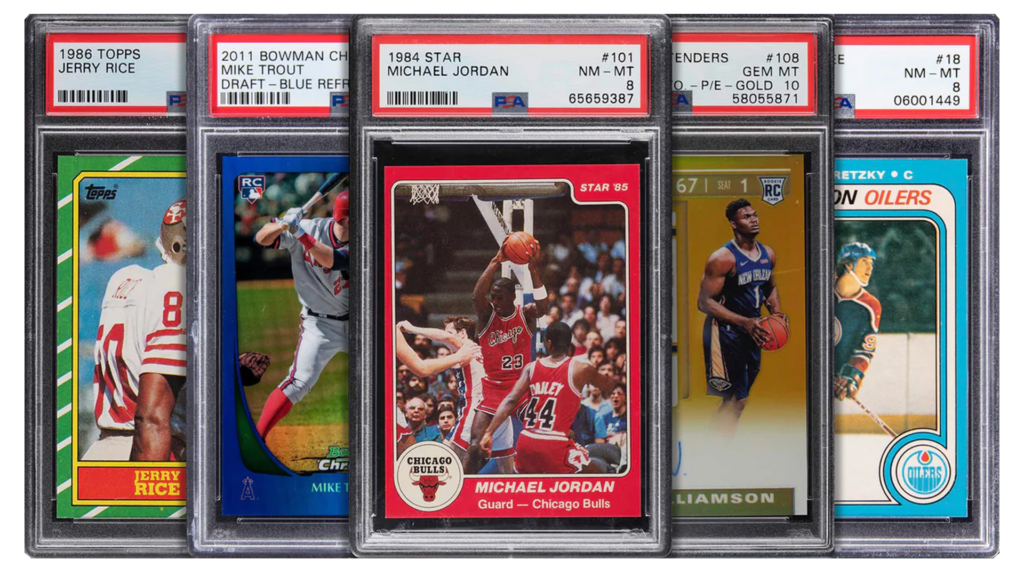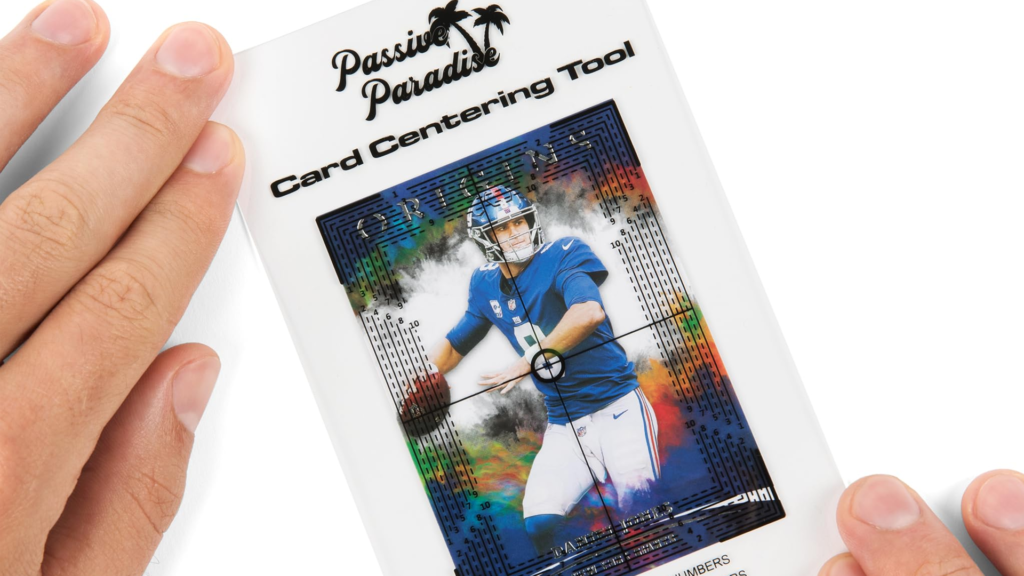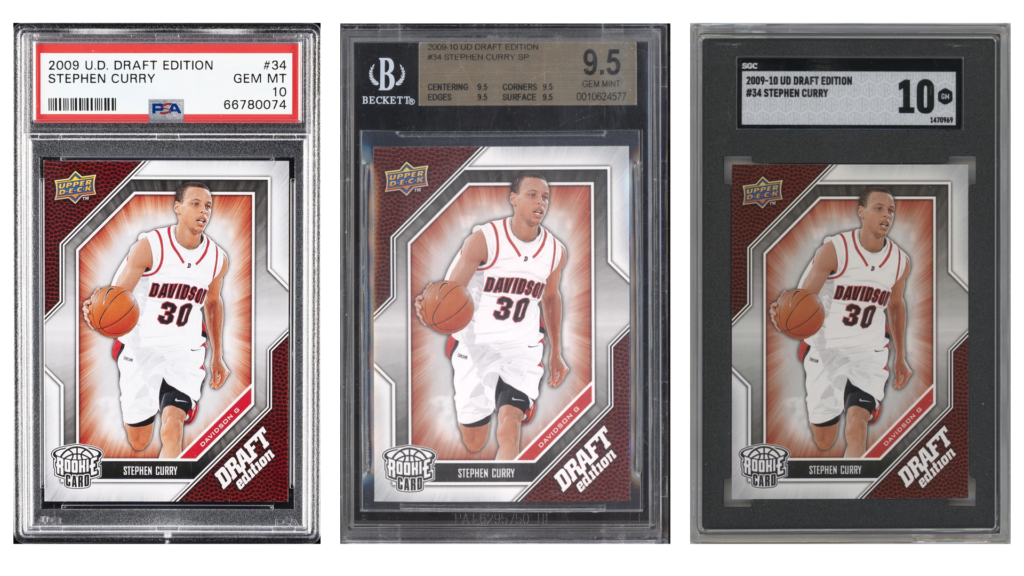
Here’s a number that should make every collector stop and think: as of late 2025, one company controls roughly 80% of all sports card grading volume in the world. One company. That company is Collectors Holdings, and it owns PSA, BGS (Beckett Grading Services), and SGC (Sportscard Guaranty Corporation) – the three names that have dominated the grading industry for decades. The hobby didn’t see it coming quite this fast, and the reaction has been everything from genuine concern to outright legal action.
So when you sit down and ask how do PSA, BGS, and SGC compare in 2026, you’re asking a fundamentally different question than you would have asked even two years ago. The competitive landscape has shifted in ways that affect pricing, turnaround times, resale values, and the long-term future of the hobby’s grading infrastructure. And with a class action lawsuit filed in California in April 2026 and a US congressman demanding an FTC investigation, this is one of the most genuinely interesting moments in the hobby’s history to be paying attention.
I’ve been submitting cards to all three of these companies for years, and in this guide I’m going to walk you through exactly how they compare right now – not just the surface-level stuff like prices and turnaround times, but the stuff that actually matters for your decisions: which grader gets you the best resale value for which type of card, what BGS subgrades actually mean for your collection, what happened to SGC after the acquisition, and whether any of this should change how you’re submitting cards in 2026. Let’s get into it!
The Biggest Story in Grading Right Now – One Company Owns Almost Everything
Before we get into the head-to-head comparison, you need to understand the single biggest development in the grading world right now, because it affects everything that follows. Through acquisitions of PSA in 2021, SGC in February 2024, and Beckett (BGS) announced in December 2025, Collectors Holdings has consolidated over 80% of grading market volume, leaving only one significant independent competitor in CGC.
To put that in concrete terms: in November 2025, PSA graded 1.66 million cards, CGC graded approximately 425,000, and Beckett, TAG, and SGC combined for around 448,000 total grades. Collectors Holdings – through PSA, BGS, and SGC combined – graded 1.769 million of the 2.233 million cards graded that month. That’s the scale of what one company now controls.
The antitrust concerns are being taken seriously at a government level. Congressman Pat Ryan wrote a letter strongly urging the FTC to investigate Collectors Holdings when they announced the Beckett acquisition in late 2025. Then, in April 2026, a class action lawsuit was filed in the US District Court for the Central District of California, alleging that Collectors Holdings’ 2024 purchase of SGC and 2025 acquisition of Beckett Grading Services violated Section 7 of the Clayton Act, which prohibits acquisitions that lessen competition.
The complaint details how both SGC and Beckett experienced price increases and longer service terms after acquisition, and that PSA also ratcheted up prices at the same time, leaving collectors with few alternatives. As of the time of writing, no formal FTC investigation has been publicly announced, and the Beckett acquisition’s full operational integration is still ongoing. But this is not background noise – it’s the defining context for every grading decision you make in 2026.
What does it mean practically? For now, all three graders still operate under their own brands with their own grading standards – BGS claims to be operating independently. But the SGC precedent is worth knowing about, and we’ll get into that shortly.
How Much Does PSA, BGS, and SGC Grading Cost in 2026?
Let’s talk money, because grading has gotten noticeably more expensive across the board over the past two years, and understanding where your dollars go is the first step to a smarter submission strategy.
PSA Pricing in 2026
PSA raised prices again on February 10, 2026, with increases of $3 to $5 per card across multiple service tiers. Cards submitted before that date were grandfathered at original pricing, but anything submitted after falls under the new structure. Here’s how PSA’s current tiers break down:
| Service Level | Cost Per Card | Declared Value Cap | Turnaround |
|---|---|---|---|
| TCG Bulk | $18.99 | $200 | 65 business days |
| Value Bulk | $24.99 | $499 | 95-120 days |
| Value | $32.99 | $499 | 45 business days |
| Regular | $74.99 | $1,499 | 20-30 business days |
| Express | $149.00 | $2,500 | 10 business days |
| Super Express | $299.00 | $5,000 | 5 business days |
On top of grading fees, you need to factor in return shipping ($29.99 for 10–19 items with $2,000 insurance), packaging materials, and if you want the Value Bulk tier, an annual Collectors Club membership running $99. All up, you’re looking at roughly $31 per card at the cheapest realistic tier once shipping and membership are factored in.
BGS Pricing in 2026
BGS has historically been the cheaper alternative to PSA, and that remains true in 2026. BGS Base service sits around $19 per card – significantly below PSA’s cheapest tier – with no membership required and no minimum card count. Subgrades cost an additional $3 per card on top of the base grading fee, which is well worth it if the subgrade data matters to you. Standard tier sits in the mid-$30s, Express in the $70–$80 range, and Priority around $120 for fast turnaround.
SGC Pricing in 2026
SGC is the budget pick of the three. With PSA’s latest price increase pushing Value Bulk to $24.99, SGC’s Standard tier at $18–20 per card is now 25–40% cheaper than PSA’s cheapest options, with significantly faster turnaround times. SGC uses volume-based pricing for Standard tier, so the more cards you submit, the lower the per-card cost. No membership is required for any tier, which removes a barrier for occasional submitters. SGC also provides free autograph grades on all cards that grade a 10 autograph, which is a nice bonus.
| Company | Cheapest Tier | Cost Per Card | Membership Required? |
|---|---|---|---|
| PSA | Value Bulk | $24.99 | ✅ Yes ($99/year) |
| BGS | Base | ~$19.00 | ❌ No |
| SGC | Standard | $15–$18 | ❌ No |
How Long Does PSA, BGS, and SGC Grading Take in 2026?
Turnaround time is often treated as a secondary consideration, but it’s actually one of the most important factors in your grading economics – especially if you’re submitting hot rookie cards during a player’s breakout season. A card that’s worth $300 when you submit it could be worth $180 by the time it comes back if the hype dies down, and that swing is entirely determined by how long the grading company holds your card.
PSA Turnaround in 2026
At the Value Bulk tier with a $25 price tag, collectors are experiencing advertised 95–120 day turnarounds, with cards actually returning in around 50–55 business days in practice. That’s improvement from the 2021-22 nightmare period, but you’re still looking at two to four months at budget tiers. PSA has integrated AI-assisted grading technology to improve consistency and throughput, and turnaround times have genuinely improved since the worst of the backlog era – but it’s still the slowest of the three at equivalent price points.
BGS Turnaround in 2026
BGS turnaround times have historically been more consistent than PSA at comparable service levels, with Standard and Express tiers generally hitting their windows. BGS Express in the $70–$80 range is competitive for collectors who need cards back within a month. Base tier runs longer – 45-plus business days – which is a meaningful wait for time-sensitive cards.
SGC Turnaround in 2026
SGC consistently delivers the fastest turnaround times of the three. SGC provides the fastest turnaround times at competitive pricing, with Standard submissions often completing in the 30–50 business day range depending on the tier. For collectors who need cards back quickly – whether for a card show, a sale at peak hype, or just because patience isn’t a strong suit – SGC is the clear winner on speed.
| Company | Budget Tier Turnaround | Mid Tier | Express |
|---|---|---|---|
| PSA | 50–120 days (actual) | 20–30 days | 5–10 days |
| BGS | 45+ days | 20–30 days | ~5 days |
| SGC | 30–50 days | 20–25 days | Competitive |
Which Grading Company Gets You the Best Resale Value?
This is the question most collectors actually care about the most, and the honest answer is: it depends entirely on what type of card you’re grading.
For most card categories, PSA wins on resale value – and it’s not close. PSA 10s command 10–20% higher resale prices than equivalent BGS 9.5s across most card categories. PSA holds approximately 67% market share of all graded cards, creating a self-reinforcing cycle: collectors prefer PSA because it’s the standard, which increases liquidity, which attracts more submissions.
That liquidity advantage is real and it matters day-to-day. A PSA slab sells faster and at closer to market value because there are simply more buyers who recognise it, trust it, and want it. For vintage cards, flagship rookies, and Pokémon cards, the PSA label is effectively a language that the broadest possible audience of buyers speaks fluently.
BGS has its own resale advantage in a specific category: modern chrome cards and the Black Label chase. A BGS 10 Black Label can significantly exceed a PSA 10 in value for modern chrome/Prizm cards. A BGS Black Label – which requires perfect 10 sub-scores in all four categories (centering, corners, edges, and surface) – is extraordinarily rare and commands a serious premium in the right market. If you’ve got a legitimately flawless modern chrome card and you’re chasing a Black Label, BGS is the move.
SGC’s resale is lower than PSA and BGS on most modern cards, but it maintains genuine credibility in the vintage market, particularly pre-1980 cardboard where the tuxedo slab aesthetic has a loyal following among serious vintage collectors. For cards where the PSA premium doesn’t justify the cost difference, SGC still gets the job done.
Which Grader For Which Card Type
| Card Type | Best Grader | Reason |
|---|---|---|
| Vintage sports (pre-1980) | PSA or SGC | PSA for maximum value; SGC for aesthetic and cost |
| Modern sports rookie | PSA | Highest liquidity and resale premium |
| Modern chrome/Prizm | BGS or PSA | BGS for Black Label chase; PSA for broad market |
| Pokémon / TCG | PSA | Dominates market recognition |
| Japanese Pokémon | CGC or PSA | CGC has specialist recognition |
| Autographs | PSA | Widest buyer pool |
| Budget/personal collection | SGC | Best price and speed combo |
What Are BGS Subgrades and Why Do They Matter?
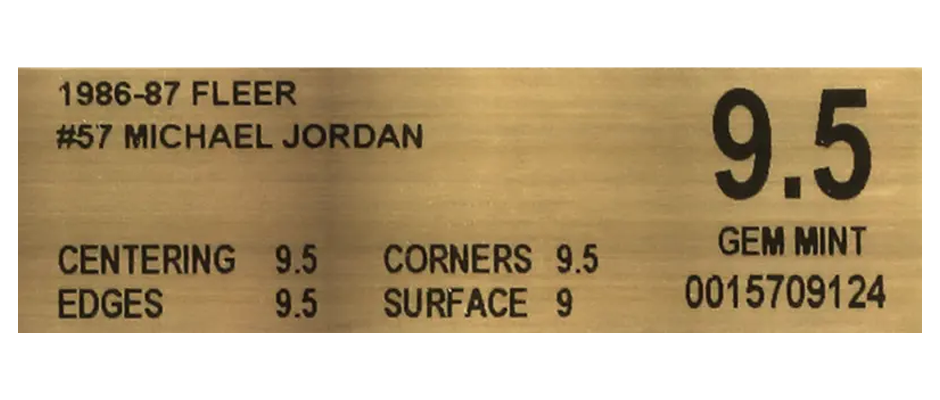
BGS is the only major grader that provides subgrades – individual scores for four specific attributes of the card: centering, corners, edges, and surface. Each is scored on a 10-point scale, and the overall grade is a weighted composite. This level of detail is genuinely useful information that PSA and SGC don’t provide.
Here’s why subgrades matter. When you buy a BGS 9 on eBay, you don’t actually know why it’s a 9. It could be a card with perfect centering and corners but soft edges – or a card with good surface but slightly miscut. The subgrade breakdown tells you exactly which attributes were strong and which dragged the overall score down. For collectors who are building a personal collection and want to understand what they own, that information has real value. For sellers, a BGS 9.5 with a 9.5/10/10/9.5 sub-breakdown is a more convincing card than one with 8.5/10/10/9.5 – buyers can see exactly what they’re getting.
The Black Label Pristine 10 is the pinnacle of BGS grading. To achieve it, a card must score a perfect 10 in all four sub-categories. It’s extraordinarily rare and difficult to obtain, and when it lands on the right card – a key modern chrome rookie or a pristine vintage – it can exceed PSA 10 prices significantly. Chasing a Black Label is a specific and deliberate strategy, not something that happens by accident.
The limitation is that subgrades add cost ($3 extra per card) and BGS’s resale ecosystem is smaller than PSA’s. If you’re grading primarily to sell, the subgrade nuance is often lost on buyers who just look at the overall number. But for collectors who are building long-term and want detailed condition records of their collection, BGS subgrades are legitimately valuable data.
What Happened to SGC After Collectors Holdings Bought It?
SGC was founded in 1998 and spent over two decades building a reputation built on two things: clean, elegant tuxedo-style slabs with a distinctive black border, and turnaround times that consistently beat PSA and BGS at equivalent price points. Vintage card collectors in particular loved SGC – the aesthetic suited older cardboard in a way that other graders’ labels didn’t, and the company had an authentic connection to the part of the hobby that cares most about pre-war and mid-century cardboard.
Collectors Holdings acquired SGC in February 2024. Following the acquisition, SGC’s prices increased by 20%, turnaround times extended by as much as 400% at some tiers, and significant assets were reallocated from SGC to PSA, effectively shrinking SGC and repositioning it as a specialised boutique grading company rather than a genuine PSA competitor. The company’s president also departed following the acquisition.
Hobby insiders have noted that SGC looks like it’s being “dialled back” into a niche company, with one hobby lawyer suggesting that at some point it might not mean anything at all as a mainstream grading option. That’s a harsh assessment, but it reflects real changes in how SGC operates post-acquisition. Volume is down, the price and turnaround advantages that made SGC compelling have been partially eroded, and collector enthusiasm has cooled.
What SGC still does well: the tuxedo slab aesthetic remains genuinely beautiful and widely appreciated by vintage collectors. Half-point grades – which PSA doesn’t offer – provide granularity that some collectors prefer. And the institutional backing of Collectors Holdings does mean SGC slabs won’t become obsolete from a collector’s perspective, even if the company’s competitive positioning has weakened. For vintage cards where you want an attractive presentation at a price below PSA, SGC still makes sense. It’s just not the disruptive alternative it used to be.
Is BGS Still Worth Using Now That PSA Owns It?
This is the question every BGS collector is asking right now, and the honest answer is: probably yes for now, but watch closely.
BGS claims to be operating with independent grading standards following the acquisition, and there’s no evidence yet of the same kind of operational consolidation that hit SGC post-acquisition. BGS still does several things better than PSA – the subgrade system, the Black Label, and the general reputation for modern chrome cards. For collectors who specifically want that level of detail, BGS remains the only game in town.
The SGC precedent is not encouraging. When SGC was acquired, independent operations were promised. The company’s president left, volume fell, and turnaround times extended. Whether BGS experiences similar consolidation pressure after its deal closes is a fair question, not speculation.
The shift in collector sentiment is real and worth noting. Some collectors are moving away from Collectors Holdings brands to support genuine competition, which now means CGC is the only fully independent major grading company. CGC has been gaining ground particularly in the Pokémon and TCG space, and with all three of its top competitors now under the same corporate umbrella, CGC’s CEO has said the consolidation only reinforces their competitive position.
My take: if you’re submitting cards specifically for the BGS subgrade system or chasing a Black Label, keep using BGS – those features are still there and still have real value. If you were using BGS primarily as a cheaper, faster alternative to PSA, that case has weakened somewhat, and SGC or CGC might be worth reconsidering depending on your card type.
Which Grading Company Is Best For My Cards in 2026?
Rather than give you a one-size-fits-all answer, here’s a practical framework for matching your cards to the right grader.
Go PSA if: You’re submitting high-value vintage cards, flagship rookie cards, Pokémon cards, or anything you plan to sell to the broadest possible market. The liquidity advantage and resale premium are real and they justify the higher cost on cards worth $200 or more. PSA also makes sense for autographs where the widest buyer pool matters.
Go BGS if: You’re submitting modern chrome or Prizm cards where the Black Label chase is realistic and would meaningfully increase the card’s value. BGS also makes sense for collectors building personal collections who want detailed subgrade data for their own records, or for cards where a BGS 9.5 is genuinely competitive with a PSA 10 in that specific market segment.
Go SGC if: You’re submitting vintage cards where the tuxedo slab aesthetic suits the card and you want to save on fees. SGC also makes sense for budget submissions where the PSA resale premium doesn’t justify the cost difference – typically cards worth under $200 raw. The speed advantage still holds for most tiers, making SGC the pick when turnaround time matters more than label prestige.
Consider CGC if: You’re a Pokémon TCG or non-English card collector, you specifically want to support an independent grading company, or you’re doing a bulk submission where CGC’s competitive pricing makes sense. CGC Bulk at $15 per card is still the cheapest grading option from a major recognised company.
| Factor | Winner | Runner-Up |
|---|---|---|
| Resale value | PSA | BGS (Black Label) |
| Turnaround speed | SGC | BGS |
| Pricing | SGC | BGS |
| Subgrade detail | BGS | N/A |
| Vintage cards | PSA | SGC |
| Modern chrome | BGS | PSA |
| Liquidity / buyer pool | PSA | BGS |
| Independence | CGC | N/A |
The smart move in 2026 is to use multiple graders strategically rather than committing to one company for everything. High-value vintage cards with strong resale prospects → PSA. Modern chrome where Black Label matters → BGS. Bulk submissions for personal collection → SGC. That hybrid approach optimises for cost, turnaround, and resale value across different card types rather than accepting a compromise on all three.
Is PSA a Monopoly? What the Antitrust Case Means for Collectors
Let’s address this directly, because it’s one of the most significant hobby-related legal stories in recent memory.
Through acquisitions of PSA in 2021, SGC in February 2024, and now Beckett announced in December 2025, Collectors Holdings has consolidated over 80% of grading volume, leaving only one significant independent competitor. The congressman’s concerns are compounded by vertical integration – Collectors also controls grading capacity, pricing analytics through CardLadder, and participates in buying and selling graded cards, creating what critics describe as severe conflicts of interest.
Hobby lawyer Paul Lekso stated that with that market share, Collectors is already a monopoly by definition. The question being actively debated is whether they’ve crossed into illegal monopoly territory where antitrust enforcement should step in – and his view is they’re “really close.”
The class action complaint’s allegations are pointed. Rather than compete with SGC and BGS on the merits by decreasing prices or increasing service quality, the complaint alleges Collectors acquired both companies to cement its monopoly power. The suit seeks damages and forced divestment as remedies.
What does this mean practically for collectors right now? A few things. First, as long as the legal process continues, the status quo is unlikely to change dramatically overnight – these cases take time. Second, CGC’s position as the only independent major grader makes it significantly more strategically important than it was two years ago, and CGC itself has been vocal about this. Third, if forced divestiture does eventually happen – which is one of the remedies being sought – the grading landscape could look very different in a few years.
For Australian collectors, the immediate impact is mostly felt in pricing and turnaround. PSA’s price increases flow through to everything – grading costs, the economics of flipping graded cards, and the relative value proposition of SGC and BGS alternatives. Keep an eye on how this case develops. It’s the most consequential thing happening in the grading world right now, and it has direct implications for every submission decision you make.
For a detailed breakdown of the legal filings and timeline, Sports Collectors Digest and Bloomberg Law’s reporting are both essential reading.
Grade Expectations: Who Wins in 2026?
So, how do PSA, BGS, and SGC compare in 2026? Here’s the honest summary.
PSA is still the standard. It has the highest resale values, the biggest buyer pool, the best liquidity, and the label that the broadest audience of collectors and investors trusts. If you’re grading for resale and you want to maximise what your card is worth on the secondary market, PSA is usually the right call – particularly for vintage, Pokémon, and flagship modern rookies. The price increases sting, but the premium it commands typically justifies the cost on cards worth grading at all.
BGS is still worth using – specifically. The subgrade system is genuinely valuable information, the Black Label chase is unique in the hobby, and BGS’s reputation for modern chrome cards is real. The ownership question is a legitimate concern worth monitoring, but nothing has changed operationally yet that would make BGS submissions actively unwise. Use it when the subgrades or the Black Label specifically serve your goals.
SGC is a boutique option now, not the value disruptor it used to be. The tuxedo slab still looks great on vintage cardboard, and the pricing is still competitive. But the turnaround and pricing advantages have been partially eroded post-acquisition, and the trajectory of the company under Collectors Holdings is something to watch carefully.
And if you want to support genuine independence in grading? CGC is the only major company still playing that role, and they’re making a credible case for themselves across multiple card categories. Worth a closer look than most sports card collectors have given them.
Which grading company are you currently using, and has any of this consolidation story changed how you think about submissions? Drop it in the comments – this is one of those hobby conversations where I genuinely want to know what other collectors are thinking. The more perspectives in the discussion, the better.
This article reflects information available as of April 2026. Grading pricing, turnaround times, and the legal proceedings around Collectors Holdings are all subject to change. Always verify current pricing directly with each grading company before submitting cards. Nothing in this article constitutes legal or financial advice.