Here’s a number worth sitting with: the global sports trading card market was valued at approximately $11.52 billion in 2024 and is projected to reach $23.64 billion by 2034. That’s not a niche hobby statistic – that’s a market growing at a compound annual rate of 13.3%, outpacing most traditional investment categories. And within that market, one segment leads all others by revenue: NBA basketball cards. Basketball trading cards surpassed 700 million units in 2023 alone, driven by the NBA’s unmatched global marketing machine, a new generation of generational talent, and a wave of serious collectors who’ve figured out that a PSA 10 LeBron James rookie can do things for a portfolio that a savings account simply cannot.
I’ll be honest with you upfront – I came into NBA basketball card investing because I loved basketball cards first and thought about money second. And I think that’s actually the right order to do it in. But that doesn’t mean the investment side isn’t real, or that you can’t build genuine NBA basketball card investment strategies for financial goals. You absolutely can. What you can’t do is treat it like a stock portfolio and expect the same rules to apply, because this is a different kind of asset with different risks, different rewards, and a whole lot more fun.
In this guide, I’m going to walk you through everything you need to know – from the market fundamentals and the key strategies that actually work, to the best rookie cards to target in 2026, how to build a diversified card portfolio, when to sell, and the risks that every card investor needs to understand before they start. Let’s get into it!
Why NBA Basketball Cards Are Being Taken Seriously as an Investment in 2026
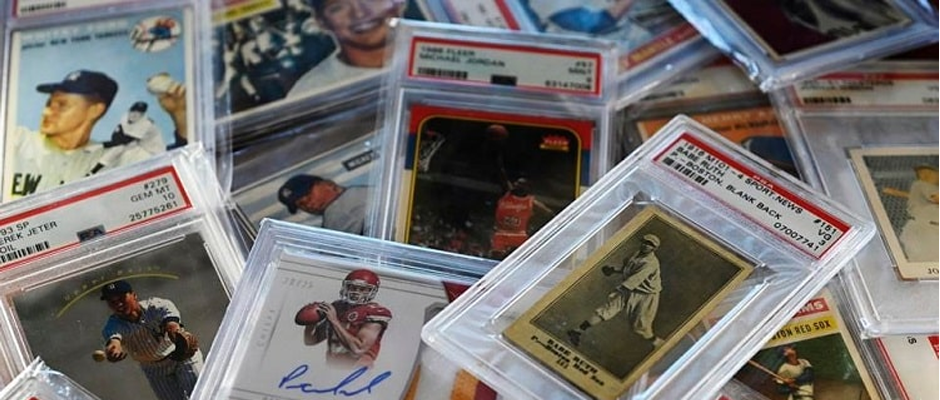
Not long ago, telling someone you were investing in basketball cards was a reliable way to end a dinner party conversation. People assumed you meant a shoebox under your bed and a childhood obsession that never quite grew up. The perception has shifted dramatically. According to research firm Circana, sports trading card sales increased approximately 48% year-over-year in recent data, and venture capital funds now hold equity in trading card operations, with some portfolios reporting asset appreciation rates exceeding 40%.
The NBA is the engine behind much of this growth. Basketball cards lead the global market due to the sport’s international appeal, transcending North American boundaries unlike baseball or American football. Historic record-breaking sales of cards featuring iconic players like Michael Jordan, LeBron James, and Kobe Bryant have attracted significant investment interest. The NBA’s global marketing strategy has built worldwide recognition for its stars in ways that other North American sports leagues simply haven’t matched, and that international demand is a structural tailwind for basketball card values that doesn’t look like it’s slowing down.
The pandemic-era boom and subsequent correction actually helped the market mature in a healthy way. The pandemic boom was an obviously unsustainable market anomaly that inflated prices and brought in a bunch of get-rich-quick pump-and-dumpers. But it also brought in countless genuine hobbyists – hobbyists who’ve stuck around and contributed to a thriving market that continues to grow at a healthy rate. The froth is gone. What’s left is a more serious, more informed collector-investor community, better pricing data, better grading infrastructure, and better online marketplaces – which is exactly the environment where thoughtful, strategic investing makes the most sense.
One more thing worth noting: basketball cards held up surprisingly well during the 2008 financial crisis – better than most people realise. Tangible assets with genuine collector demand don’t follow stock market cycles in the same way. They’re not immune to economic pressure, but the correlation is weaker than with traditional financial assets, which is exactly what makes them interesting from a portfolio diversification perspective.
Are NBA Basketball Cards a Good Investment for Financial Goals?
The honest answer is yes – with the right strategy, the right timeline, and the right expectations. The dishonest answer is either “absolutely, you’ll make a fortune” or “it’s too risky, don’t bother.” Both of those are wrong, and both will cost you either money or opportunity.
NBA basketball cards are a genuine alternative investment when approached like one. That means defining your financial goal before you spend a single dollar, understanding the liquidity limitations of the asset class, sizing your position appropriately relative to your overall financial situation, and treating grading and storage costs as genuine investment expenses rather than afterthoughts. The success of your sports card investments relies on strategy, patience, and awareness of market dynamics. While there’s no certainty your investment will reap returns, there are several best practices you can follow to maximise your chances.
The strongest use cases for card investing as a financial tool are medium to long-term goals – building towards a specific purchase in five to ten years, diversifying a broader investment portfolio with a non-correlated tangible asset, or building a collection that has genuine resale value when you eventually choose to downsize. Cards are not the right vehicle for short-term financial goals or for money you might need in a hurry, because liquidity is real. Selling a card quickly without accepting a price haircut is harder than selling a stock.
The key is to go in knowing exactly which goal you’re working towards, because that determines which strategy makes sense. A five-year goal looks very different from a twenty-year hold, and a $500 budget looks very different from a $10,000 one. Get that clarity first and everything that follows becomes a lot easier to navigate.
What Is the Best NBA Card Investment Strategy for Beginners?
If you’re just starting out, the single most important thing I can tell you is this: set a budget and stick to it. Card investing has a way of expanding to fill whatever financial space you give it, particularly when you’re excited about the hobby. Decide what you can genuinely afford to put in – money you won’t need for at least two to three years – and don’t go a dollar over that until you’ve got real experience under your belt.
Building a basketball card investment strategy is easier than you might think. You need to decide whether you’re prioritising long or short-term profits before investing in sports cards. This will help you decide which cases and cards to spend on later. Sensible investors will often prioritise rookies and prospects. That’s the right framework. Know your timeline before you know your picks.
For beginners, there are three starter strategies worth considering. The first is rookie speculation by buying early on players you believe in before the market confirms what you see. This is the highest-risk, highest-reward approach and requires genuine basketball knowledge to do well. The second is blue-chip legends by buying established cards from players with settled legacies like Michael Jordan, Kobe Bryant, or Steph Curry. The floors on these are high, the ceilings are substantial, and you can sleep at night knowing demand isn’t going anywhere. The third is parallel flipping by buying numbered parallels of trending players low and selling into hype spikes. This is more active that requires market monitoring, and suits collectors who enjoy the trading side of the hobby.
For platforms, eBay is still the dominant marketplace for buying and selling, with the widest buyer pool. Whatnot is excellent for live breaks and direct purchases from other collectors. COMC is great for building a wishlist of specific singles at set prices. Card Ladder and Sports Card Investor are both essential tools for tracking prices and spotting trends before they become obvious. Budget for all of these – the data tools especially are worth the investment.
The best advice I can give beyond all of that: there’s nothing wrong with looking to make money in this hobby, but you won’t be here long if that’s all you care about. Collect what you love. It makes the research feel like fun rather than homework, and it means you’ll still be happy with your collection even if the market goes sideways for a while.
Should I Invest in Vintage or Modern NBA Cards? What’s the Difference?
This is one of the most important strategic choices you’ll make, because vintage and modern cards represent fundamentally different risk and return profiles, require different amounts of starting capital, and suit different types of investors.
Vintage cards – broadly speaking, anything from before the mid-1980s – are the blue-chip end of the market. The supply is completely fixed (no one is printing more 1961-62 Fleer cards), the players are legends with settled histories, and demand is deep and global. A 1986-87 Fleer Michael Jordan rookie in PSA 9 or PSA 10 condition is the most recognisable asset in the hobby, and it has demonstrated decades of value appreciation. The catch is the entry cost – quality vintage cards cost thousands to hundreds of thousands of dollars, which puts genuine vintage investment out of reach for most beginners.
Modern cards – roughly 2003 to 2015 – represent the sweet spot for mid-range investors. LeBron James’ 2003-04 Upper Deck rookie, Kobe Bryant’s 1996-97 Topps Chrome rookie, and Dwyane Wade’s 2003-04 Topps Pristine Auto are examples of cards in this era where the legacy is largely settled, the market is deep, and entry points are more accessible than true vintage while still being meaningfully above zero in terms of floor value.
Current era cards – 2015 to present – are where the highest risk and highest potential reward lives. This is the Cooper Flagg, Victor Wembanyama, and Luka Dončić territory. Prices are driven heavily by hype and performance narrative, print runs can be significant, and the distance between a card being worth $500 and $5,000 can be one great playoff run or one serious injury.
| Era | Risk Level | Capital Required | Liquidity | Time Horizon |
|---|---|---|---|---|
| Vintage (pre-1986) | Low | High ($1,000+) | High | 5–20 years |
| Modern (1986–2015) | Medium | Medium ($100–$1,000) | High | 3–10 years |
| Current (2015–present) | High | Low–Medium ($20–$500+) | Medium | 1–15 years |
A smart portfolio has exposure to more than one era. The vintage or modern tier provides your stable foundation. The current era provides your growth potential. The exact split depends on your budget and risk tolerance.
Which NBA Rookie Cards Are the Best Investment in 2026?
Rookie cards remain the cornerstone of basketball card investing. Rookie cards are the first cards issued for a player and often hold the highest value over time. A breakout season, championship win, or record-breaking performance can send a player’s card values soaring overnight. Here’s who the market is most focused on heading into 2026.
Cooper Flagg – Dallas Mavericks
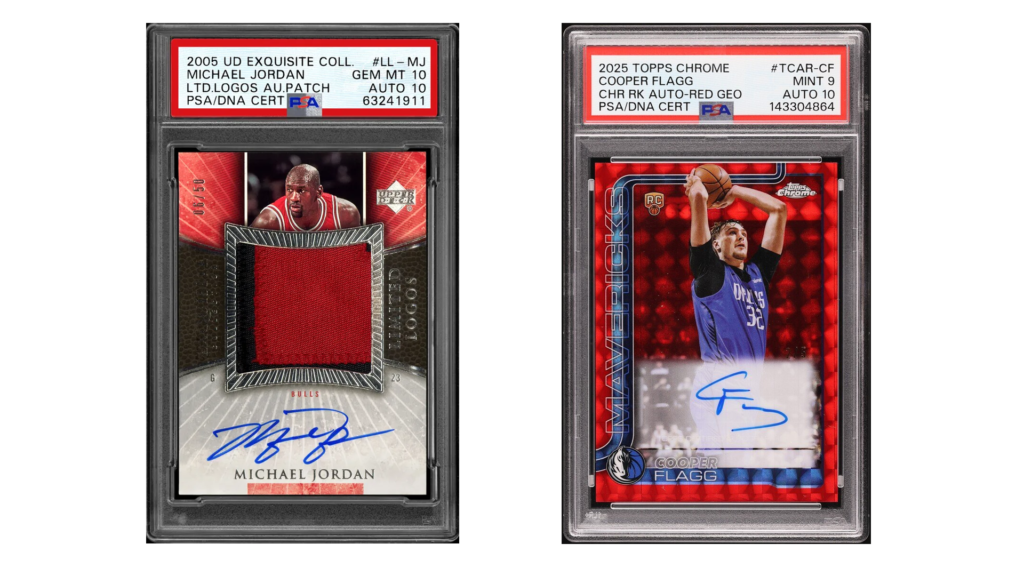
Flagg is the headline investment target of the 2025-26 NBA season, and the numbers back it up. Averaging 18.4 points, 6.3 rebounds, and 3.5 assists per game for the Dallas Mavericks as a 19-year-old, his on-court performance has been as advertised – and his card values have followed. His Topps flagship Real One on-card auto sits in the $500–$800 range, with Chrome Mojo parallels reaching $3,000 and his New School Foilfractor 1/1 topping $7,000. The on-card auto premium is real and worth prioritising over sticker autos for investment purposes.
Victor Wembanyama – San Antonio Spurs
Wembanyama’s rookie year cards generated extraordinary initial demand, and his second-year trajectory is providing a strong floor for anyone who bought in early. His first official Topps autographs in a Spurs jersey – available through the 2025-26 Topps Basketball release – add a new layer of collector appeal to his already established Panini rookie card market. For collectors who missed the initial Wembanyama wave, second-year cards at current prices represent a more measured entry.
Dylan Harper – Rookie Class 2025-26
Several rookies are generating significant buzz, driving interest in their basketball cards. Dylan Harper headlines the secondary chase in the 2025-26 rookie class. As Flagg’s most frequently cited peer and dual auto partner in the Topps flagship, Harper’s cards carry genuine upside if his development curve matches early expectations. His base autos are still accessible in the $150–$400 range – well below Flagg’s floor – making him an attractive asymmetric play.
Jaylen Wells – Memphis Grizzlies (Sleeper Pick)
Jaylen Wells, as a second-round pick, has surprised many with his performance, averaging nearly 12 points per game. His card values are considered a “sleeper” investment with high growth potential. Second-round sleepers are one of the most underrated plays in card investing – the base prices are low enough that the downside is limited, and a single All-Star appearance can multiply values dramatically.
Jared McCain – Philadelphia 76ers (High Risk)
Despite an injury, McCain’s elite scoring ability, including a 34-point game, makes his cards a speculative but potentially high-reward investment. Injury risk is real and it’s the biggest single variable in rookie card investing. McCain’s upside is elite-level. His downside is a long injury absence and the market softening accordingly. Small position only.
For all of these players, prioritise on-card autos over sticker autos, numbered parallels over open-edition base cards, and PSA 10 graded copies over raw cards for anything you plan to hold longer than 12 months.
How Do I Build a Diversified NBA Card Investment Portfolio?
Diversification in card investing works on the same principle as in any other asset class – spreading risk across different players, eras, and card types means that one bad outcome doesn’t wipe out your entire position. Here’s the framework I use.
The 70/20/10 split is a starting point worth considering. Put approximately 70% of your card investment budget into blue-chip legends with settled legacies – Jordan, LeBron, Kobe, Bird, Magic, Curry. These provide your stable foundation. Allocate roughly 20% to proven current stars with strong performance and growing legacy – Giannis, Luka, KD, Wembanyama. These offer upside while still having significant floors. The final 10% goes into speculative rookie cards with high ceilings – Flagg, Harper, Wells, and whoever else the upcoming draft class produces. This is your lottery ticket portion, and sizing it at 10% means a complete miss doesn’t materially damage your portfolio.
Diversification through holding a diverse portfolio of players and card types mitigates risk. Investing across eras and skill levels enhances value retention. That’s the principle in a sentence. Don’t put everything into one player, one era, or one product line.
Tracking your portfolio properly is underrated as a practice. Card Ladder gives you historical price data and trend lines on specific cards. Sports Card Investor’s tools let you monitor market movement across categories. eBay completed listings – filtered to “sold” – give you real transaction data rather than wishful asking prices. Set quarterly reviews for yourself: look at what you own, what it’s worth now versus what you paid, and whether anything has crossed your pre-set sell threshold. Discipline in the review process is what separates strategic card investors from collectors who just accumulate and hope.
Short-Term Flipping vs Long-Term Holding – Which Strategy Wins?
Both strategies work. Neither strategy is right for everyone. The question is which one fits your temperament, your time availability, and your financial goal.
Short-term flipping is essentially market timing applied to cards. You buy into hype early – on draft night, at product release, during a playoff run – and sell into the elevated demand before it softens. Short-term investing in sports cards is all about being the first in line. It requires constant market monitoring, quick decision-making, and the ability to move without emotional attachment to the card. The margins on a well-timed flip can be excellent. The margin for error is small. I’ve seen collectors flip a Panini Immaculate case for a quick profit before the hype cooled, and I’ve also seen people buy at the top of a hype wave and sell below cost three weeks later when the narrative shifted.
Long-term holding is a fundamentally different mindset. You buy a quality card at a fair price, grade it properly, store it well, and hold for years or decades while the player’s career and legacy develop. Long-term investors generally pivot away from Day 1 releases to focus more on relatively vintage cards that can reliably appreciate in value over the years. Collectors investing in sports cards go for long-term plays as they can be surprisingly resistant to market conditions. The LeBron James rookie card that sold for $5.2 million in 2021 was bought by someone who understood that LeBron’s legacy trajectory pointed in one direction. They didn’t need to time the market perfectly – they just needed to be right about the player.
The hybrid approach is what most experienced investors end up using. Grade and hold your highest-conviction cards long term. Flip raw parallels and short-cycle hype cards to generate active returns. Use the flip proceeds to fund the grading costs on your hold pieces. It keeps the hobby financially self-sustaining while building long-term positions in the cards you believe in most.
How Do Graded NBA Cards Compare to Stocks as an Investment?
This is a comparison that comes up constantly and it’s worth addressing honestly, because the answer is more nuanced than most people on either side of the debate acknowledge.
On raw return figures, the numbers are striking. The Sports Trading Card market is expected to grow at a CAGR of 9.4% during 2026-2030. The S&P 500 averages approximately 10% annually over the long term. At the index level, they’re roughly comparable. But the averages hide enormous variance – the top basketball cards have delivered multiples of that return, while cards of busted prospects have gone to near zero.
The key structural differences between cards and stocks are important to understand. Stocks generate dividends and are backed by company earnings – cards generate nothing passively and are worth only what someone will pay for them. Stocks trade on open exchanges with instant liquidity – cards require finding a buyer, listing, waiting, paying platform fees, and sometimes accepting below-market prices for speed. Stocks are regulated financial instruments – cards are unregulated collectibles with no consumer protection framework if a deal goes wrong.
What cards do offer that stocks generally don’t: genuine non-correlation with equity markets during normal conditions, tangible ownership of a physical asset, personal enjoyment from the collection itself, and the possibility of outsized returns on individual assets that no index fund can replicate. A well-chosen PSA 10 Cooper Flagg auto bought today at $600 could be worth $6,000 in five years if his career trajectory holds. No S&P 500 holding will give you that kind of leverage on a single position.
The risk factors unique to cards also don’t apply to stocks: physical damage, counterfeiting, grading cost increases eating into margins, player injuries collapsing a market overnight, and overproduction by card manufacturers diluting supply. These are real risks that require active management in ways that a diversified stock portfolio does not.
The right framing is that cards are an alternative asset – best understood as part of a broader portfolio that includes traditional financial assets, not as a replacement for them.
How Do I Know When to Sell My NBA Basketball Cards?
This is the question that trips up even experienced collectors, because the emotional pull of a card you love working against the financial logic of selling at the right time is a real tension that doesn’t go away just because you know the theory.
There are three clear sell signals worth watching for. The first is a milestone achievement such as a Championship win, MVP award, All-Star selection, or scoring record. These events create demand spikes that are often temporary, and selling into the spike rather than waiting for “even higher” is usually the right call. The second is career peak plateau – when a player’s stats stabilise at their ceiling and the narrative shifts from “how good can he get” to “he’s as good as he’s going to be.” The growth story is over, and holding beyond this point means waiting for legacy appreciation rather than career appreciation. The third is product oversaturation – when a manufacturer releases so much product featuring a particular player that supply overwhelms demand and prices soften broadly across that player’s market.
For timing, use eBay sold listings as your primary data source. Filter to completed sales within the last 30 days on the specific card, parallel, and grade you hold. That’s your real market price. Card Ladder gives you the trend line – is your card’s value moving up, flat, or down? If it’s been flat for six months and there’s no obvious catalyst coming, that’s a hold-or-sell decision you need to make deliberately rather than by default.
Never sell on emotion. The two worst sell decisions in card investing are panic-selling a card after a single bad game from a player who’s fundamentally fine, and holding a card too long out of sentimental attachment when the financial logic for selling is clear. Set your sell targets before you buy, not after.
What Are the Biggest Risks of NBA Card Investing?
No honest investment guide leaves out the risks, and card investing has specific ones that deserve direct attention.
Player injury is the single biggest uncontrollable variable. A star player’s cards can drop 30–50% overnight on a serious injury announcement, as collectors reprice for the uncertainty around their return and long-term health. You cannot predict or prevent this – the only mitigation is diversification across multiple players so no single injury wrecks your portfolio.
Overproduction is a structural risk specific to the hobby. Card manufacturers control print runs, and if they flood the market with more product featuring a specific player than demand can absorb, base card values compress. This is why numbered parallels hold value better than open-edition cards – the scarcity is verifiable and permanent. Always prefer numbered to unnumbered where budget allows.
Market sentiment swings are real and sometimes dramatic. Market volatility: prices can fluctuate depending on player performance or market trends. A player who misses three games with a minor injury can see their card values soften by 20% on social media panic, then recover fully within two weeks. This is noise. Distinguishing noise from signal – genuine career concerns versus short-term performance variance – is one of the most valuable skills a card investor can develop.
Counterfeits and trimmed cards are a genuine threat, particularly in the vintage market. Always buy graded cards from reputable grading companies (PSA, BGS, SGC, CGC) for significant investments, and be very cautious buying raw vintage cards without provenance. The authentication that grading provides isn’t just about condition – it’s about knowing the card is genuine.
Finally, platform fees eat into returns more than most beginners account for. eBay charges approximately 13.25% in final value fees. PWCC and Goldin take commissions on auction sales. Grading costs, shipping, and insurance all add up. Run the full maths on every potential flip before you commit – the margin between a profitable and unprofitable flip is often slimmer than it looks on the surface.
Step-by-Step Guide: How to Start Investing in NBA Basketball Cards
Here’s the practical, step-by-step process for getting started with a genuine NBA basketball card investment strategy tied to a real financial goal.
Step 1: Define your financial goal and investment horizon.
Are you building towards a specific target – a house deposit contribution, a child’s education fund, a retirement supplement – or are you purely growing wealth? How many years until you’ll want to access the value? Write this down. Seriously. It determines every decision that follows.
Step 2: Set your budget and stick to it absolutely.
Decide how much you can commit without it affecting your financial stability, your emergency fund, or your sleep quality. This is your card investment budget and it is a hard ceiling, not a guideline. Card investing is fun and it’s easy to rationalise spending more than you planned. Don’t.
Step 3: Choose your primary strategy.
Blue-chip legends for stability and long-term appreciation. Rookie speculation for higher upside with higher risk. Parallel flipping for active returns. Or a hybrid across all three. Match the strategy to your timeline and risk tolerance, not to what’s currently generating the most excitement on social media.
Step 4: Research before every purchase.
Check eBay completed sales for the specific card, grade, and parallel you’re targeting. Check Card Ladder for the price trend over the last 90 days. Read recent hobby news on Sports Card Investor and Beckett for any developments affecting your target player. Never buy on impulse without checking comps.
Step 5: Grade your best cards through PSA.
For any card worth $100 or more raw that you plan to hold for more than 12 months, grading through PSA is worth the cost. The resale premium on a PSA 10 versus a raw card of the same card is typically significant enough to cover grading fees and then some on quality cards.
Step 6: Store and protect every card properly.
Penny sleeve into a toploader or Card Saver for raw cards. Slab sleeve for graded cards. UV-protective display case for anything on display. Climate-controlled storage – not a garage or car. This is not optional for investment-grade cards.
Step 7: Review your portfolio quarterly.
Check current values against purchase prices. Assess whether your sell thresholds have been reached. Look for rebalancing opportunities – are you overweight in one player or one era? Is there a card you’ve been holding out of sentiment that the financial logic says to sell? The quarterly review keeps your strategy disciplined rather than drifting.
The Final Buzzer: Building Wealth One Card at a Time
NBA basketball card investment strategies for financial goals work best when you combine genuine passion for the hobby with investment discipline that most collectors never bother to apply. The market is real, the returns are real, the risks are real, and the enjoyment is real – and none of those things cancel each other out.
The fundamentals are straightforward even if the execution takes practice. Know your goal before you spend. Diversify across eras, players, and card types. Prioritise on-card autos, numbered parallels, and PSA 10 grades for anything you hold long-term. Use data – eBay comps, Card Ladder, Sports Card Investor – to buy and sell based on evidence rather than emotion. Grade your best cards. Protect everything properly. Review quarterly and sell when the numbers say to, not when sentiment says to.
The rise of online marketplaces and platforms like Whatnot has made trading and flipping cards easier than ever. In 2025, sales trends show that modern cards with rare parallels or autographs are performing well. Vintage cards of legends like Michael Jordan and Kobe Bryant also remain in high demand, solidifying their status as blue-chip cards. Both ends of the market are healthy, which means there’s a genuine strategy available for almost every budget and timeline.
The best card investment portfolios I’ve seen belong to people who are deeply passionate about basketball and obsessively curious about the hobby. They know the players, they follow the careers, they read the market, and they make decisions based on conviction rather than panic. That’s the version of this hobby I’d encourage anyone to build towards – not because it’s more fun, but because it also tends to produce better returns.
What’s your current NBA card investment strategy – are you going blue-chip, chasing rookies, or doing a bit of both? Drop it in the comments below. And if you’ve made a card investment decision you’re particularly proud of, or one that went spectacularly wrong and taught you something valuable, I genuinely want to hear about it!
This article is for informational and educational purposes only. It does not constitute financial or investment advice. NBA basketball card values are volatile and subject to significant change. Collectors should consult a qualified accountant regarding capital gains tax obligations on card sales. Always do your own research before making investment decisions.