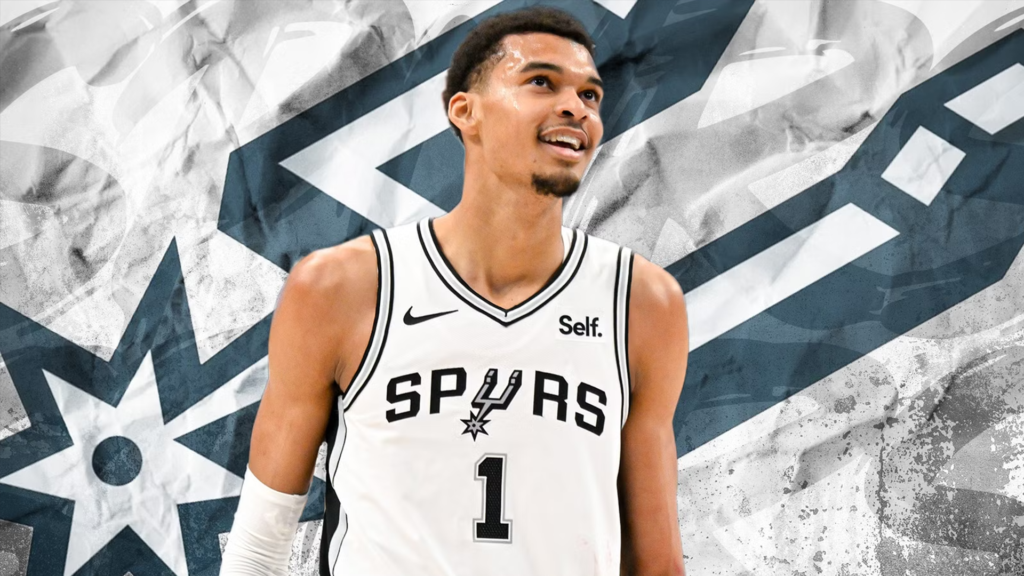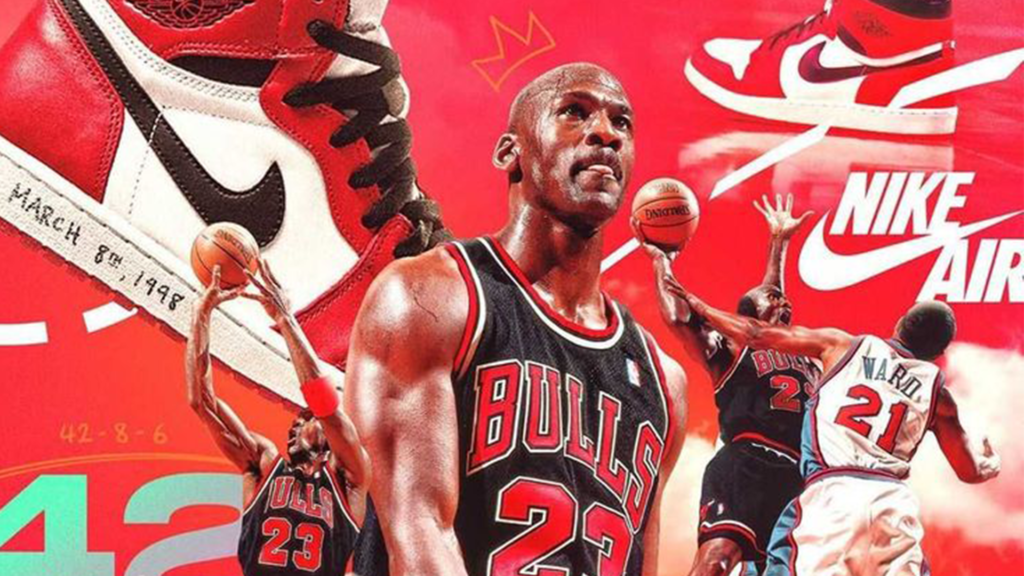
Forty years after his NBA debut, Michael Jordan basketball cards still dominates basketball card collecting with the same ruthless efficiency he once brought to opponents on the court. A PSA 8 of his 1986 Fleer rookie sold for $11,211 in January 2026. An autographed version fetched $2.5 million. Raw copies where cards that sold for maybe $8 in packs four decades ago are now commanding $2,100. That’s not appreciation, that’s transformation into alternative investment asset class.
I remember the exact moment I understood Jordan’s significance to card collecting. I was browsing my local shop when the owner pulled out a Fleer Jordan PSA 9, asking $28,000. “That’s insane for a basketball card,” I said. He smiled: “That’s not a basketball card. That’s the Mona Lisa of sports collectibles.” He was right. Nothing in basketball card collecting – not LeBron, not Kobe, not Wemby – approaches Jordan’s combination of on-court greatness, cultural impact, and sustained card value appreciation.
Throughout this comprehensive guide, I’ll explore why Michael Jordan cards remain the gold standard of basketball card collecting, which cards deserve your attention and budget, and whether Michael Jordan basketball cards still represent smart investments 40 years into their existence. Let’s examine the GOAT whose cardboard legacy matches his basketball one!
Why Is Michael Jordan Still the GOAT?

The “greatest of all time” debate generates endless arguments, but Michael Jeffrey Jordan’s resume presents a case so overwhelming that even his detractors acknowledge his place at basketball’s summit. Understanding his accomplishments contextualizes why his cards command premium valuations decades after retirement.
Six NBA championships with the Chicago Bulls (1991-93, 1996-98) represent the foundation of Jordan’s GOAT case. He didn’t just win titles, he dominated Finals performances so thoroughly that he won Finals MVP all six times, an unprecedented achievement demonstrating consistent excellence on basketball’s biggest stage. The 1998 Finals holds the highest television rating in NBA history, proving Jordan’s ability to capture mainstream attention beyond just basketball fans.
The 30.1 points per game career average remains the highest in NBA history, a testament to sustained scoring excellence across 15 seasons. Jordan led the league in scoring ten times, including seven consecutive seasons from 1987-1993. His playoff average jumped to 33.4 PPG where he literally got better when stakes increased. That clutch gene separates legends from superstars.
Five regular season MVP awards (1988, 1991, 1992, 1996, 1998) validated Jordan’s dominance amongst his peers. Only Kareem Abdul-Jabbar won more MVPs with six. The 1987-88 season saw Jordan achieve something no player before or since has matched: winning MVP and Defensive Player of the Year in the same season whilst leading the league in scoring. That triple crown of excellence proved he dominated both ends of the court.
Defensive Player of the Year in 1988 demonstrated Jordan’s two-way brilliance. Guards rarely win DPOY because rim protection typically drives that award. Jordan’s ability to disrupt passing lanes, force turnovers, and lock down opponents’ best perimeter players whilst averaging 35 PPG that season showcased unprecedented complete-game impact.
Ten scoring titles spanning his Bulls career proved consistency that transcended hot stretches or fortunate circumstances. Jordan didn’t just have great seasons, he had great careers stacked consecutively. The scoring dominance became expected rather than surprising, raising the question of how dominant he’d have been without two retirements interrupting his prime.
Cultural impact beyond statistics separates Jordan from merely great players. The Air Jordan sneaker line generated more revenue than many NBA franchises’ entire operations. His global recognition extended basketball’s reach into markets that barely followed the sport. “Space Jam” introduced Jordan to children who’d never watched basketball. That mainstream cultural penetration creates demand for his cards from non-collectors recognizing his significance.
The Air Jordan brand influence transformed athlete marketing forever. Before Jordan, athletes endorsed products. After Jordan, athletes became brands. Every modern player’s sneaker deal, every personal logo, every “brand building” strategy traces lineage to Jordan’s pioneering work with Nike creating something bigger than basketball shoes.
Global basketball ambassador status makes Jordan recognizable worldwide in ways that transcend sports. My grandmother, who’s never watched an NBA game, knows who Michael Jordan is. That universal recognition creates worldwide card demand from collectors in Europe, Asia, Australia, and South America, not just American fans.
I’ve watched the GOAT debate evolve over two decades, with LeBron James mounting the strongest challenge to Jordan’s throne. Yet even LeBron’s most ardent supporters acknowledge Jordan’s unique position in basketball history. Whether you believe MJ is the GOAT or simply one of several candidates, his cards’ continued appreciation suggests the market has crowned him basketball’s king permanently.
What Made the 1986 Fleer Rookie Card Legendary?
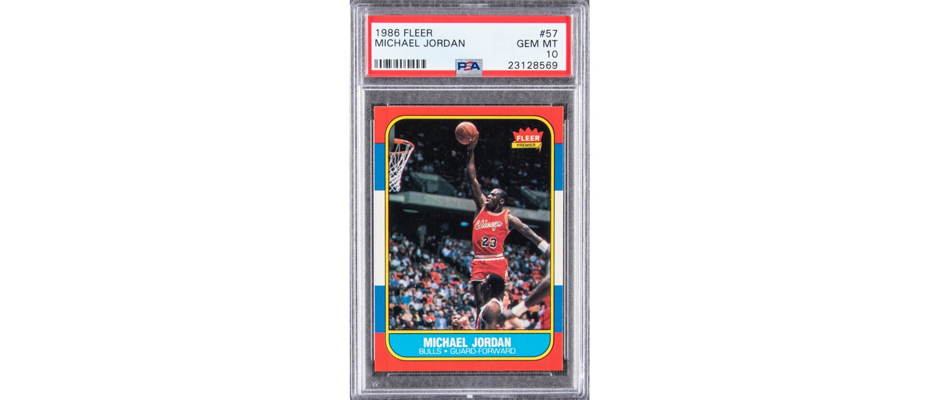
The 1986-87 Fleer Michael Jordan basketball card #57 rookie card transcends being merely “Michael Jordan’s rookie card” – it represents the card that saved basketball card collecting from extinction whilst becoming the hobby’s most iconic modern issue. Understanding its legendary status requires historical context most collectors don’t fully appreciate.
Basketball card collecting nearly died in the mid-1980s. Topps quit producing basketball cards after the 1981-82 season because demand couldn’t justify production costs. The NBA’s popularity had sagged throughout the 1970s and early 1980s, and cards simply weren’t selling. When Jordan entered the league in 1984, no mainstream manufacturer was producing NBA cards.
The three-year gap from 1982-1986 created what collectors call the “Star Company years.” Star Company, a smaller non-traditional manufacturer, produced limited-distribution NBA cards during this period. Jordan’s 1984-85 Star Company #101 technically predates the Fleer card, creating ongoing debate about which represents his “true” rookie. However, Fleer’s widespread distribution and official recognition by grading authorities have cemented the 1986 Fleer as the definitive Jordan rookie.
Fleer’s September 1986 return to basketball cards launched one of the most important sports card sets ever produced. Created in response to NBA’s popularity surge driven by Magic Johnson, Larry Bird, and especially Jordan, the 132-card set featured rookie cards of future Hall of Famers including Charles Barkley, Karl Malone, Hakeem Olajuwon, Patrick Ewing, Clyde Drexler, and Dominique Wilkins alongside Jordan.
The design featuring red, white, and blue borders creates instant recognition whilst introducing condition challenges. Those coloured borders chip easily, and the card stock quality from that era often resulted in fuzzy corners and chafed edges. This condition sensitivity makes high-grade examples genuinely scarce despite large overall production numbers.
Population reports reveal the scarcity in top grades. PSA has graded over 8,000 Jordan Fleer rookies with total auction value exceeding $74 million. However, only a tiny fraction achieve PSA 10 gem mint status. The borders’ susceptibility to wear means most surviving cards show at least minor imperfections that prevent perfect grades.
Current values in January 2026 range dramatically by grade:
- Raw (ungraded): $2,100 (up $600 or 40% in 30 days)
- PSA 5: $21.50 to $4,450 depending on specific condition
- PSA 7: $8,100
- PSA 8: $7,655 to $11,200
- PSA 9: $20,950 to $29,211
- PSA 10: $105,000 to $438,750+ with record sales reaching $700,000
The $2.5 million autographed sale in June 2025 set records as the highest price ever paid for a Jordan rookie card in any grade. Jordan personally signed just nine Fleer rookies at his private golf course in Florida in 2024, creating instant legends. The PSA 9 with PSA/DNA 10 autograph that sold for $2.5M represented the only publicly available example, with six PSA 10/10 versions remaining exclusively in one private collector’s hands.
Why it’s the definitive basketball rookie requires understanding its perfect timing. Jordan was entering his third season when these cards released, his stardom established but his dynasty not yet begun. The cards captured Jordan at the exact moment before he transformed from individual superstar into championship legend. That timing, combined with saving basketball card collecting from extinction, elevates this card beyond mere rookie status into cultural artifact.
I’ve handled maybe a dozen raw Fleer Jordan rookies over the years, and every single one showed at least minor border issues. The few PSA 9s I’ve seen in person looked flawless to my untrained eyes, making me understand why PSA 10s command six-figure premiums. The condition sensitivity isn’t marketing hype – it’s genuine scarcity created by production methods from an era when nobody anticipated these cards becoming quarter-million-dollar investments.
What Are Michael Jordan Basketball Cards Worth in 2026?
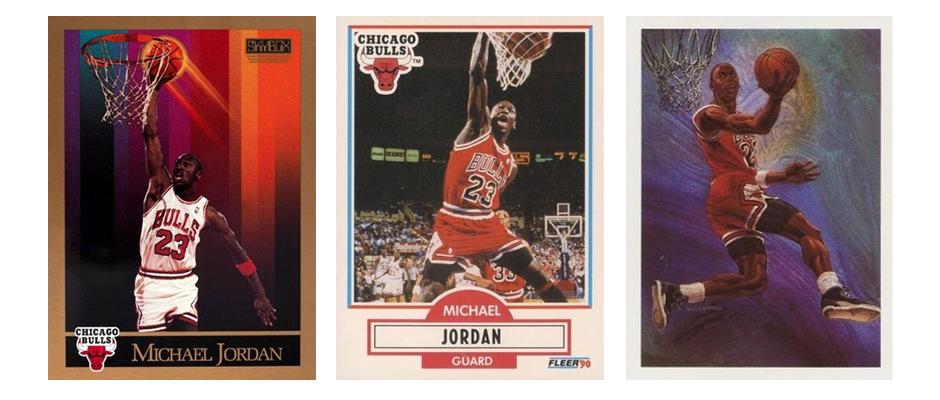
Michael Jordan’s extensive card checklist spans from his 1984 Star Company issues through modern premium releases, creating collecting opportunities at virtually every price point. Understanding current market values helps collectors identify which cards fit their budgets and investment strategies.
The 1986 Fleer values across all grades we covered above, but it’s worth noting the recent upward trend. Raw copies increased $600 (40%) in just 30 days during late 2025/early 2026, suggesting renewed collector interest or market correction from previous dips. This appreciation demonstrates Jordan cards’ continued vitality four decades after issue.
Star Company cards from 1984-85 represent the contentious “true rookie” debate. Jordan’s Star #101 predates the Fleer rookie by two years, showing him in his actual rookie season. However, Star’s limited distribution and non-mainstream status mean these cards command premiums as rare alternatives rather than replacing Fleer as the definitive rookie. High-grade Star Jordans fetch $10,000-50,000+ depending on specific issue and condition.
Upper Deck cards from the 1990s introduced premium photography and quality whilst maintaining affordable modern-era prices. Jordan’s 1991 Upper Deck #44 base card trades around $50-150 depending on grade. Special inserts like Beam Team or other premium variations command hundreds to thousands. Upper Deck’s exclusive Jordan autograph rights (maintained even today) make their signed cards particularly valuable.
Topps Chrome variations don’t exist for Jordan’s playing years because Topps lacked NBA licensing during his prime. However, Topps produced Jordan cards during his early career (until 1981-82) and his Wizards comeback (2001-03). These bookend Jordan’s Bulls dynasty create interesting collecting angles but lack the cache of his Bulls-era cards.
Autograph card premiums reflect both scarcity and authentication importance. Jordan’s signature commands massive premiums across all card types. Autographed Fleer rookies reach $2.5M as we discussed. Upper Deck autographs from the 1990s trade in the $1,000-5,000 range for base cards, whilst premium inserts with autos can exceed $50,000. The key is authentication – only buy Jordan autos authenticated by PSA/DNA, BGS, or directly from Upper Deck.
Memorabilia and game-used cards introduced in the late 1990s created entirely new Jordan collecting category. Upper Deck Game Jerseys from 1997-98 featured actual swatches from Jordan’s uniforms, revolutionising basketball cards. These trade from $200 for common jersey cards to $50,000+ for rare patch versions or logoman 1/1s.
Insert cards create vast collecting landscape with wildly varying values:
- 1997-98 Metal Universe Precious Metal Gems Green (serial numbered /10): $300,000-500,000
- 1997-98 Metal Universe PMG Red (#23/23): Over $1,000,000
- Various 1990s refractors and parallels: $100-10,000 depending on scarcity
- Common inserts from mass-produced sets: $10-100
Market trends show Jordan cards appreciating steadily with occasional corrections. The COVID boom saw Jordan cards surge alongside all sports cards. Subsequent corrections brought prices down 20-40% from peaks. Recent data suggests stabilisation and renewed growth, with raw Fleer rookies climbing 40% in recent months whilst graded examples hold steady or appreciate modestly.
Recent sales from January 2026 demonstrate active market:
- PSA 9 Fleer: $28,350 (December 2025)
- PSA 8 Fleer: $11,211
- Complete 1986 Fleer set (all PSA 9): $26,301
The breadth of Jordan’s card market means collectors can participate at $50 budgets (common 1990s base cards) or $500,000+ budgets (grail-level rookies and inserts). This accessibility combined with sustained value appreciation makes Jordan cards unique in sports collecting – truly something for everyone whilst maintaining blue chip investment characteristics at the high end.
Which Michael Jordan Basketball Cards Should Collectors Buy?

Navigating Michael Jordan’s extensive card checklist requires strategic thinking about budget, collecting goals, and investment time horizon. The sheer variety creates both opportunity and paralysis for collectors trying to identify the “right” Jordan cards for their specific situations.
Budget options under $500 provide accessible entry into Jordan collecting:
- 1990s base cards from Hoops, Fleer, SkyBox: $10-50
- Mid-grade (PSA 6-7) common inserts: $50-200
- Low-grade (PSA 4-5) Fleer rookie: $2,000-4,000 (exceeds $500 but represents minimum Fleer entry)
- Upper Deck base cards from 1990s: $50-150
These budget cards let you own genuine Michael Jordan cards without major financial commitment. Perfect for casual collectors or those building broad 1990s collections rather than focusing solely on investment-grade pieces.
Mid-range investments from $500-5,000 target meaningful Jordan cards with appreciation potential:
- PSA 7-8 Fleer rookie: $7,000-11,000
- Mid-tier 1990s inserts in high grade: $500-2,000
- Upper Deck autographs (base cards): $1,000-3,000
- Game-used jersey cards (common swatches): $300-1,500
This range provides balance between affordability and owning cards with genuine scarcity or premium content like autographs and memorabilia.
Premium grails from $5,000-50,000 represent serious collecting commitments:
- PSA 9 Fleer rookie: $20,000-30,000
- Rare insert cards (PMG, numbered parallels): $5,000-50,000
- Premium autographs with memorabilia: $10,000-40,000
- Low-population vintage cards in high grades: $5,000-20,000
These cards combine Jordan’s significance with genuine scarcity, creating investment-grade pieces suitable for serious collectors building blue chip portfolios.
Ultra-high-end above $50,000 represents the peak of Jordan collecting:
- PSA 10 Fleer rookie: $105,000-438,750+
- Precious Metal Gems (Green /10, Red /23): $300,000-1,000,000+
- 1/1 logoman or unique memorabilia: $50,000-500,000+
- Autographed Fleer rookies: $2,500,000 (recent sale)
Only pursue this tier if you’re treating cards as serious alternative investments with six-figure budgets allocated to collectibles.
Best value propositions currently:
- PSA 8 Fleer rookies around $8,000-10,000 offer solid Jordan rookie exposure at fraction of PSA 9 costs
- 1990s Upper Deck autographs provide authenticated MJ signatures for $1,000-3,000
- Mid-tier inserts from the 1990s in PSA 10 combine scarcity with manageable prices
Cards to avoid:
- Unlicensed or questionable modern Jordan “rookies” from fly-by-night manufacturers
- Extremely low grades (PSA 1-3) even of the Fleer rookie – condition matters enormously
- Overpriced common base cards from junk wax era (shouldn’t pay premiums for mass-produced commons)
- Unauth enticated autographs or memorabilia cards – counterfeits exist
My strategic collecting approach focuses on PSA 8-9 Fleer rookies as core holdings (if budget allows), supplemented by authenticated Upper Deck autographs and select high-grade 1990s inserts. This creates exposure to Jordan’s most iconic card whilst building broader collection showcasing different eras and card types.
Why Do Jordan Cards Hold Value Better Than Others?
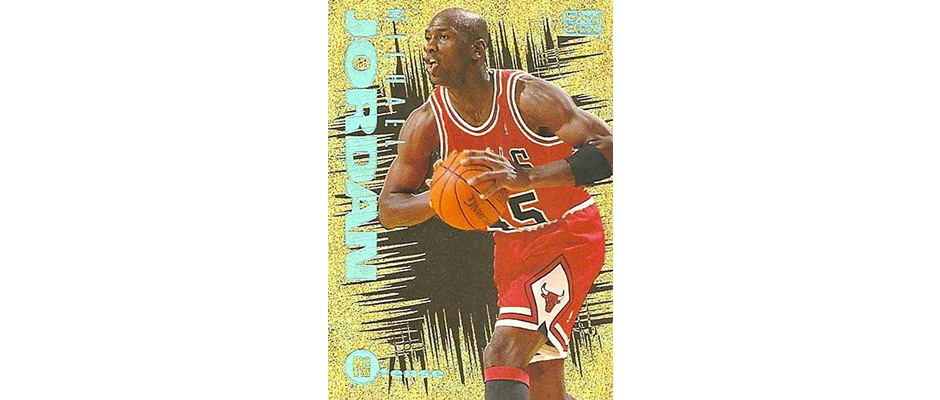
Michael Jordan cards demonstrate sustained value appreciation and market resilience that separates them from virtually all other athletes’ cards. Understanding why requires examining both Jordan-specific factors and broader market dynamics creating blue chip investment characteristics.
Sustained demand across generations creates foundation for long-term value. Collectors who grew up during Jordan’s 1990s Bulls dynasty are now in their 40s and 50s with disposable income to pursue childhood dreams of owning premium Jordan cards. Meanwhile, younger collectors discovering Jordan through “The Last Dance” documentary or cultural osmosis create ongoing new demand. This generational overlap prevents the boom-bust cycles that plague cards of players whose appeal concentrates in single age cohorts.
“The Last Dance” documentary impact in 2020 introduced Jordan to audiences too young to have watched him play whilst rekindling nostalgia for older fans. The 10-episode series became cultural phenomenon, driving immediate surges in Jordan card prices. More importantly, it created permanent awareness bump ensuring future generations know Jordan’s greatness even without witnessing it firsthand.
Cultural icon status beyond basketball separates Jordan from contemporaries with comparable on-court achievements. Tim Duncan won five championships with consistent excellence, yet his cards trade at fractions of Jordan’s values because Duncan lacked mainstream cultural penetration. Jordan transcended basketball into global brand recognised by people who’ve never watched sports.
Fixed supply meeting growing demand creates classic economics favouring appreciation. No new Jordan cards from his playing days will ever be produced. The 1986 Fleer population is frozen, so what exists today is all that ever will exist. Meanwhile, wealth creation globally expands the pool of collectors who can afford premium Jordan cards. This supply-demand imbalance structurally supports long-term price growth.
Blue chip characteristics distinguish Jordan cards from speculative investments:
- Proven 40-year appreciation track record
- Sustained demand through multiple market cycles
- Universal recognition and liquidity
- Established grading populations eliminating uncertainty
- Cultural significance ensuring cross-generational appeal
Comparison to other athletes reveals Jordan’s unique position. Babe Ruth cards from the 1930s maintain value through historical significance but limited audience. Modern athletes like LeBron generate current excitement but lack Jordan’s completed legacy and proven appreciation history. Jordan occupies the sweet spot – historical enough to have established value, recent enough to remain culturally relevant.
Investment track record speaks clearly: PSA 8 Fleer Jordan rookies that sold for maybe $200 in 2000 now command $8,000-11,000. That represents roughly 40-55x appreciation over 25 years, outperforming most traditional investments. Even accounting for the 2020-2021 bubble and subsequent correction, long-term trend lines point consistently upward.
I’ve tracked Jordan card values for 15 years, watching them weather the 2008 financial crisis, multiple sports card market corrections, and changing collector demographics. Through all volatility, Jordan cards demonstrated resilience that confirmed their blue chip status. That proven ability to maintain and grow value across economic conditions separates genuine blue chips from flavor-of-the-month speculations.
The sustained value isn’t about Jordan being immune to market forces – it’s about representing the single safest basketball card investment available. If basketball card collecting continues existing in any form, Jordan cards will remain its crown jewels. That near-certainty creates investment floor that few other cards can match.
How Do Jordan’s Cards Compare to LeBron and Kobe?
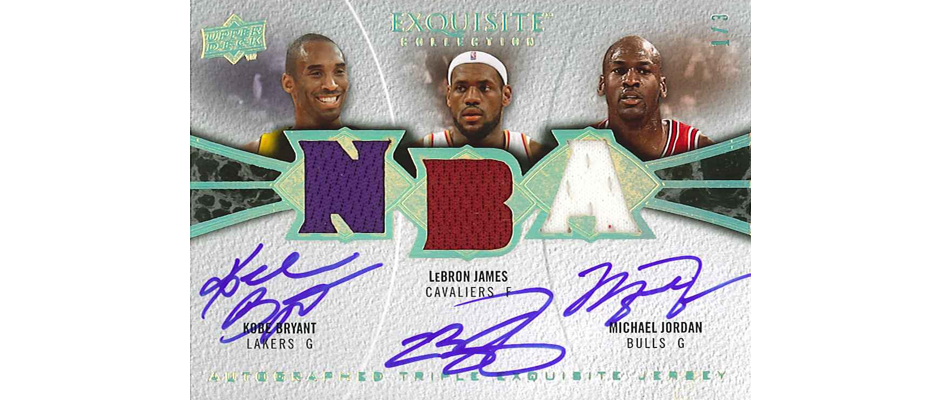
The three names dominating basketball card collecting are Michael Jordan, Kobe Bryant, and LeBron James – each offer distinct value propositions and investment characteristics worth examining comparatively. Understanding these differences helps collectors allocate portfolios strategically across basketball’s premier talents.
Value comparison across eras reveals Jordan commanding dramatic premiums:
- Jordan 1986 Fleer PSA 9: $20,000-30,000
- Kobe 1996 Topps Chrome Refractor PSA 9: $3,000-6,000
- LeBron 2003 Topps Chrome PSA 9: $8,000-12,000
Jordan’s rookie commands 3-6x premiums over LeBron and Kobe despite all three being first-ballot Hall of Famers with multiple championships. This gap reflects both Jordan’s GOAT status and his cards’ 40-year head start on appreciation.
Appreciation rates analysis shows different trajectories:
- Jordan cards: Steady 40-year climb with proven resilience
- Kobe cards: Surge following 2020 tragic death, sustained by cultural significance
- LeBron cards: Volatile with current performance, appreciate as career cements legacy
Jordan’s completed career creates certainty that LeBron’s ongoing journey lacks. Kobe’s frozen-in-time legend following his death created permanent reverence that supports card values.
Cultural significance differences affect long-term value sustainability:
- Jordan: Global icon transcending sports, Air Jordan brand, “GOAT” consensus
- Kobe: “Mamba Mentality,” international appeal (especially China), tragic legend status
- LeBron: Modern greatness, social impact, GOAT challenger but lacks consensus
Jordan’s cultural penetration remains unmatched. However, Kobe’s international appeal (particularly in Asian markets) and LeBron’s social impact create demographic strengths Jordan’s cards don’t fully capture.
Market dynamics unique to each player:
- Jordan: Blue chip stability, minimal volatility, proven appreciation
- Kobe: Post-2020 premium pricing, strong international bidding, emotional collecting
- LeBron: Performance-dependent fluctuations, age-related ceiling questions, modern abundance
Portfolio allocation strategies depend on risk tolerance and investment horizon:
- Conservative (70% Jordan, 20% Kobe, 10% LeBron): Prioritises proven value and stability
- Balanced (50% Jordan, 30% LeBron, 20% Kobe): Captures blue chip security with upside exposure
- Aggressive (40% Jordan, 40% LeBron, 20% Kobe): Bets on LeBron’s ongoing legacy building
My personal allocation skews heavily toward Jordan (60%) with meaningful Kobe (25%) and modest LeBron (15%) positions. This reflects belief that Jordan’s GOAT status is permanent, Kobe’s tragic legend sustains values, whilst LeBron’s cards carry more uncertainty despite his brilliance.
The comparison isn’t about diminishing LeBron or Kobe where both are all-time greats whose cards deserve serious consideration. Rather, it’s acknowledging that Jordan occupies singular position in basketball collecting that the other two, despite their excellence, haven’t quite matched. Whether that gap narrows over coming decades remains one of collecting’s most interesting questions.
What Is the Investment Thesis for Jordan Cards?
Michael Jordan cards present one of the strongest investment theses in all of sports card collecting, combining proven historical appreciation with structural factors suggesting continued growth. Understanding this thesis helps collectors make informed allocation decisions.
Historical appreciation data provides foundation for bullish outlook. The 1986 Fleer Jordan rookie appreciated from approximately $8 in packs (1986) to $2,100 raw in 2026 – representing roughly 26,000% return. Even accounting for the card’s increased prominence over time, a collector buying a PSA 8 for $200 in 2000 now sits on an asset worth $8,000-11,000, representing 40-55x return over 25 years.
These returns exceed most traditional investments over comparable periods:
- S&P 500 (2000-2025): Roughly 3-4x including dividends
- Real estate (national average): Roughly 2-3x
- Gold: Roughly 5-6x
- Jordan Fleer PSA 8: 40-55x
Obviously, cherry-picking the best-performing asset class creates selection bias. However, Jordan cards didn’t just outperform – they crushed traditional investments for patient holders.
Risk assessment for Jordan cards sits remarkably low given blue chip status. Key risks include:
- Generational shift (younger collectors not valuing Jordan)
- Market bubble bursting (2020-2021 correction already happened)
- Condition issues (only affects improperly stored cards)
- Counterfeits (mitigated by professional grading)
However, Jordan’s sustained demand across 40 years, cultural icon status, and proven appreciation suggest these risks are manageable rather than prohibitive.
Time horizon recommendations favour long-term holders. Jordan cards aren’t day-trading vehicles – they’re buy-and-hold investments rewarding patience. Minimum recommended holding period of 5-10 years lets you weather market volatility whilst capturing long-term appreciation. The collectors who profited most from Jordan cards bought in the 1990s or early 2000s and held through multiple market cycles.
Portfolio diversification approach suggests Jordan cards as blue chip anchors:
- 30-50% of basketball card portfolio in Jordan cards provides stability
- Mix grades (PSA 8-10) and card types (rookie, inserts, autos) for exposure diversity
- Supplement with other Hall of Famers and carefully selected modern rookies
Grading importance for Jordan cards cannot be overstated. The difference between PSA 8 and PSA 9 represents $10,000-20,000 in value. Between PSA 9 and PSA 10, the gap exceeds $100,000. For any Jordan card worth grading (generally $100+ raw value), professional authentication and grading through PSA, BGS, or SGC is essential.
Liquidity and exit strategies benefit from Jordan’s universal recognition. Unlike obscure players’ cards that might take months to sell, Jordan cards move quickly at fair prices. PSA-graded Jordan cards sell daily on eBay, through auction houses, and via private sales. This liquidity provides flexibility unavailable with less-established collectibles.
Conservative allocation (10-15% of overall investment portfolio) treats Jordan cards as alternative assets alongside stocks, bonds, and real estate. Aggressive allocation (30-50% of investment portfolio) requires genuine comfort with collectibles and belief in continued appreciation, suitable only for serious collectors with expertise and risk tolerance.
My investment thesis: Jordan cards represent the single best risk-adjusted basketball card investment available. The combination of proven appreciation, low volatility, high liquidity, and structural factors favouring continued growth creates compelling value proposition. I allocate roughly 40% of my basketball card portfolio to Jordan cards, treating them as foundation upon which all other positions are built.
Are There Risks to Investing in Jordan Cards?
While Michael Jordan cards present compelling investment characteristics, honest risk assessment requires acknowledging potential downsides and scenarios where values could decline or fail to appreciate as expected.
Generational shift concerns represent the primary long-term risk. Jordan retired over 20 years ago. Kids born after his retirement are now adults with purchasing power, yet many have never watched him play. Will collectors born in 2010 care about Jordan in 2040 when they’re 30 with disposable income? Or will they prioritise players from their own era?
The counterargument: Jordan’s cultural icon status transcends his playing career. “The Last Dance” introduced him to Gen Z audiences. The Air Jordan brand remains Nike’s most valuable sneaker line. His GOAT status feels permanent rather than generational. However, the risk remains that future collectors might not share current generation’s reverence.
Market bubble possibilities always threaten collectibles. The 2020-2021 sports card boom saw Jordan cards surge 100-200% before correcting 20-40%. Could another bubble/burst cycle eliminate recent gains? Absolutely. The key is whether you’re buying during bubble peaks (risky) or corrections (opportunistic). Current prices suggest post-correction stabilisation rather than new bubble forming.
Overproduction of modern Jordan cards creates headwinds. While vintage Jordan cards enjoy fixed supply, manufacturers continue producing new Jordan cards decades after retirement. Panini and Upper Deck release Jordan inserts, autographs, and memorabilia cards annually. This ongoing supply could dilute vintage card values by providing alternative Jordan collecting options.
I worry less about this risk than others because vintage rookie cards maintain prestige that modern releases can’t match. The 1986 Fleer rookie specifically feels immune to modern dilution – it remains THE Jordan rookie regardless of how many modern cards exist.
Condition sensitivity and grading costs affect returns. Jordan’s Fleer rookie with coloured borders chips easily, making high grades scarce. However, this same sensitivity means raw cards risk condition decline over time. Proper storage in controlled environments with professional grading becomes necessary expense eating into returns. For a card bought at $2,000 raw, spending $100 for grading plus insurance plus time without the card represents 5% immediate cost.
Counterfeit awareness grows increasingly important as values climb. The higher Jordan cards climb, the greater incentive for counterfeiters to produce fakes. While professional grading largely eliminates this risk, collectors buying raw Jordan cards face authentication challenges. I never buy raw Jordan cards worth more than $100 without expert authentication – the downside risk outweighs potential savings.
Market timing considerations affect short-term returns significantly. Buying Jordan cards at market peaks (like early 2021) led to immediate losses as corrections followed. Conversely, buying during troughs (like late 2022) captured subsequent recovery gains. Predicting these cycles is nearly impossible, making dollar-cost averaging or opportunistic buying during obvious corrections the smartest approaches.
Honest risk assessment concludes that Jordan cards carry lower risk than most alternative investments whilst offering similar or better return potential. However, they’re not risk-free. Market corrections happen. Generational preferences shift. Condition deteriorates without proper care. These risks are manageable through smart buying, proper storage, and long-term horizons, but they exist nonetheless.
My approach: treat Jordan cards as 10-20 year holds rather than short-term flips, buy during market corrections rather than peaks, prioritise graded cards from reputable companies, and maintain proper storage protecting condition. This risk management strategy has served me well whilst acknowledging that unexpected developments could always undermine even the safest investment thesis.
What Are the Most Valuable Jordan Cards Ever Sold?
Michael Jordan’s card market has produced numerous record-breaking sales demonstrating the ceiling for premium MJ cards whilst providing benchmarks for valuing similar items.
The $2.928 million record represents the highest price ever paid for any Michael Jordan basketball card. This record, specific details of which aren’t fully public, likely involves either an ultra-rare insert with perfect grading or a uniquely significant memorabilia card. The exact card setting this record has been debated in collecting circles.
The $2.5 million autographed 1986 Fleer rookie sale in June 2025 through Joopiter (Pharrell Williams’ auction platform) set records as the highest price for a Jordan rookie in any grade. The PSA 9 card with PSA/DNA 10 autograph came from Jordan’s private 2024 signing session where he signed just nine Fleer rookies total. The scarcity (only nine signed, with this being the sole publicly available example) combined with the iconic card drove stratospheric pricing.
High-grade Fleer sales history shows steady appreciation:
- PSA 10 examples selling in $400,000-700,000 range regularly
- PSA 9 examples at $20,000-30,000 (without autographs)
- PSA 8 examples at $8,000-11,000
The PSA 10 population remains tiny despite over 8,000 total Fleer Jordans graded, creating genuine scarcity that supports six-figure valuations.
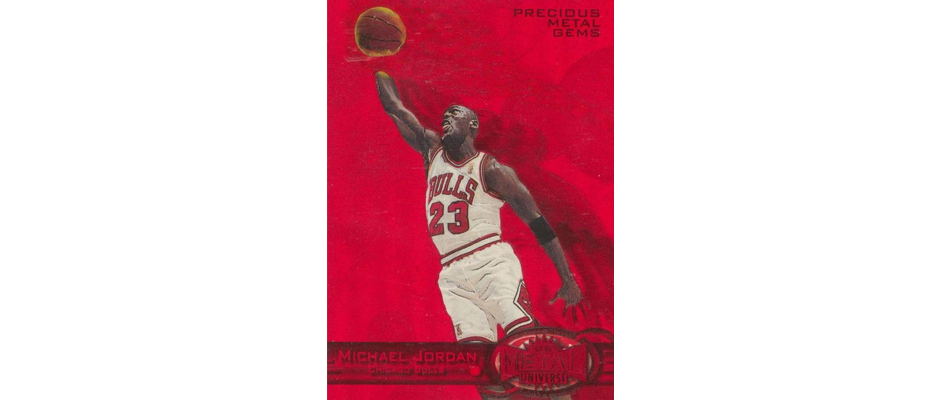
Precious Metal Gems sales represent basketball’s most coveted insert cards. The 1997-98 Metal Universe PMG Green (numbered /10) sells in the $300,000-500,000 range for gem mint examples. The PMG Red (#23/23, matching Jordan’s number) exceeded $1 million in private sales according to industry reports. These cards combined extreme scarcity with spectacular design creating modern Holy Grails.
Game-used jersey card records include sales exceeding $50,000 for rare logoman cards (1/1 featuring the NBA logo from Jordan’s jersey). Upper Deck’s Game Jerseys from the late 1990s pioneered memorabilia cards, and Jordan’s examples from his final Bulls championships command massive premiums.
Autograph card premiums vary wildly by card type, grade, and serial numbering. Upper Deck autographs from premium products can reach $50,000-100,000 for the rarest examples, whilst more common auto cards trade in $1,000-5,000 range.
Auction house records from major houses like Goldin, Heritage, and PWCC show Michael Jordan basketball cards among top sports card sales quarterly. The sustained auction presence demonstrates active market and price discovery that benefits all Jordan card holders through established comparable sales.
These record sales provide important context: they represent the absolute ceiling for Michael Jordan basketball cards, not typical values. However, they demonstrate that blue chip Jordan cards can appreciate to levels comparable to fine art or rare coins. This legitimacy attracts serious collectors and investors treating cards as alternative assets rather than childhood nostalgia.
Should Beginners Buy Michael Jordan Basketball Cards?
New collectors face unique challenges approaching Michael Jordan basketball cards given the premium prices and established market. Strategic guidance helps beginners participate wisely without costly mistakes.
Starting budget recommendations depend on seriousness:
- Casual collectors ($50-200): Buy affordable 1990s base cards or low-grade commons
- Hobbyists ($200-1,000): Target mid-grade (PSA 6-7) inserts or authenticated memorabilia
- Investors ($1,000+): Save for PSA 7-8 Fleer rookie or premium authenticated autographs
Entry-level card suggestions for different budgets:
- Under $50: 1990s Hoops, Fleer, or SkyBox base cards
- $50-200: Upper Deck base cards or common inserts in high grades
- $200-1,000: PSA 6-7 mid-tier inserts, authenticated jersey cards
- $1,000-5,000: PSA 7-8 Fleer rookie or premium Upper Deck autographs
Building knowledge before buying prevents expensive mistakes. Research which Michael Jordan basketball cards exist, understand grading scales and population reports, follow sold listings on eBay for market values, and join collecting communities learning from experienced collectors. I spent six months researching before buying my first significant Jordan card, and that education saved me from overpaying based on ignorance.
Grading considerations become critical as budgets increase. For cards under $100, keeping them raw in quality holders makes sense. For $100-500 cards, consider grading if condition appears gem mint. For any Jordan card worth $500+, professional grading through PSA, BGS, or SGC is essential both for authentication and value maximisation.
Authentication importance cannot be overstated, especially for autographs and memorabilia. Only buy Jordan autographs authenticated by PSA/DNA, BGS, or JSA. Upper Deck cards come with built-in authentication. Avoid unauth enticated signatures regardless of seller assurances – the risk isn’t worth potential savings.
Long-term versus short-term approach affects which cards to buy. Short-term flippers might target underpriced listings for quick resale, though this strategy requires expertise and market knowledge beginners lack. Long-term investors should buy quality cards they’re comfortable holding 5-10+ years, focusing on iconic pieces likely to appreciate steadily.
Learning from the GOAT’s cards provides educational foundation for all basketball card collecting. Understanding why Jordan’s Fleer rookie matters teaches lessons about scarcity, condition sensitivity, and market dynamics applicable to all cards. Starting with Jordan – even at modest budget levels – builds knowledge transferring to collecting modern rookies, other Hall of Famers, and niche interests.
My recommendation for beginners: start small with affordable 1990s Jordan base cards ($20-50) to participate in Jordan collecting without financial stress. Simultaneously, study the market intensively for 6-12 months. As knowledge grows and budget allows, upgrade to meaningful Jordan cards (PSA 7-8 Fleer rookie or premium autographs) representing serious collecting commitments backed by informed decision-making rather than impulse purchases.
The worst beginner mistake? Dropping $10,000 on a Jordan card during your first week collecting without understanding grading, populations, market cycles, or authentication. The best approach? Patient accumulation of knowledge followed by strategic purchases of quality cards at fair prices. Jordan’s cards reward educated collectors whilst punishing those who rush in blindly.
His Airness, Your Portfolio’s Foundation
Michael Jordan’s cards represent the pinnacle of basketball card collecting, combining athletic greatness, cultural significance, and proven investment appreciation into a package unmatched by any other player. Four decades after his NBA debut, MJ’s cardboard legacy continues dominating the hobby with the same excellence he brought to the court.
The blue chip status of Jordan cards reflects rare convergence of factors: fixed supply meeting growing demand, sustained appeal across generations, universal recognition driving liquidity, and 40-year track record proving appreciation isn’t speculation but established pattern. Whether you’re collecting for enjoyment or investing for returns, Jordan cards deserve serious consideration as portfolio anchors.
The balanced collecting approach combines iconic centerpiece cards (PSA 8-9 Fleer rookie if budget allows) with supplementary pieces showcasing Jordan’s career breadth (1990s inserts, autographs, memorabilia cards). This creates comprehensive Jordan collection whilst managing budget across multiple card types and price points.
Now I want to hear from you! What Michael Jordan basketball cards anchor your collection? Are you chasing the Fleer rookie grail, or do you prefer specific insert sets or autographs? What’s been your experience with Jordan cards as investments versus pure collecting enjoyment? Share your MJ card stories in the comments below!
The GOAT’s cardboard legacy mirrors his basketball one – unprecedented excellence creating lasting value that transcends temporary trends. Whether Jordan remains the consensus GOAT as decades pass or whether future generations crown new kings, his cards have achieved permanent status as basketball’s blue chip investments. That permanence creates foundation upon which serious collections are built.
My final advice? Every basketball card portfolio should include Michael Jordan basketball cards proportional to budget and goals. Conservative collectors might allocate 30-40% to Jordan as bedrock holdings. Aggressive investors might reach 60-70% convinced of continued appreciation. Even pure collectors focused on modern rookies benefit from owning MJ cards connecting their collections to basketball’s greatest player and card collecting’s most iconic issues.
Welcome to Michael Jordan card collecting – where His Airness continues dominating long after retirement, proving excellence truly is timeless. May your Michael Jordan basketball cards appreciate handsomely, your purchases prove wise, and your collection honour the GOAT who made basketball cards what they are today. Happy collecting!
Essential Michael Jordan Basketball Cards Resources
Product Information:
- Beckett Product Pages – Release schedules and reviews
- Cardboard Connection – Comprehensive product guides and checklists
Market Data:
- eBay Sold Listings – Real-time pricing
- 130 Point – Market tracking
- Card Ladder – Price history
- COMC – Singles marketplace