Disclaimer: As an Amazon Associate I earn from qualifying purchases from our site. Thank you for your support!
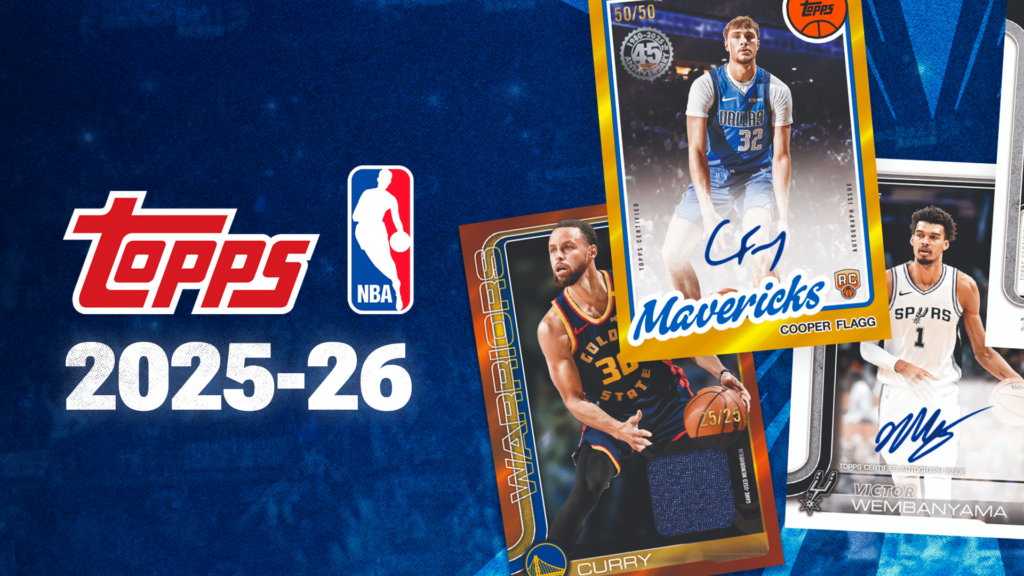
After 15 years away from basketball, Topps is back. Their return to NBA licensing for the 2025-26 season marks a historic moment in the hobby, the first Topps NBA products since 2009-10. As someone who collected Topps basketball back in the 90s and 2000s, seeing those iconic designs return hits differently. The nostalgia is real, and so is the collector excitement.
Cooper Flagg as the cover athlete? Brilliant move. The#1 overall pick who became the youngest player to score 40 points in an NBA game at just 18 years old. Victor Wembanyama’s first licensed autographs in a Spurs jersey. LeBron James autographs in Topps products. Dylan Harper, Ace Bailey, and an absolutely stacked rookie class. The 2025-26 Topps Basketball release has everything collectors could want.
But here’s the thing, Topps basketball isn’t Panini Prizm. It’s not National Treasures. It has its own legacy, design language, and place in the hobby. Understanding what makes Topps special, how their products work, which cards to chase, and how to maximize value requires deep knowledge. That’s exactly what this guide provides.
We’ll cover flagship Topps products, Topps Chrome, rookie card checklists, parallel structures (including those valuable Gold and Black parallels), autograph and memorabilia content, insert sets, variations, print runs, investment considerations, and product comparisons. Whether you’re ripping packs or buying singles, this is your complete Topps Basketball playbook for 2025-26.
The Topps Return: Why This Matters Historically
Topps produced NBA cards from 1957-1981 and again from 1992-2009 before losing licensing to Panini. Their absence lasted 15 years, that is an entire generation of collectors who grew up without Topps basketball. The 2025-26 return isn’t just another product launch; it’s a historical reset.
Topps’ basketball legacy includes some of the hobby’s most iconic cards. The 1969-70 Topps Lew Alcindor (Kareem Abdul-Jabbar) rookie is legendary. The 1980-81 Topps Larry Bird/Magic Johnson/Julius Erving rookie card is one of the most significant basketball cards ever. The 1992-93 Topps Shaquille O’Neal rookie introduced many to the modern hobby. Topps has heritage.
Design philosophy differs from Panini. Topps traditionally favored cleaner, more classic designs. While Panini went for flashy chromium and prizmatic effects everywhere, Topps balances classic aesthetics with modern elements. The 2025-26 designs pay homage to vintage Topps while incorporating contemporary features collectors expect.
Refractor technology is Topps’ signature innovation. They invented the refractor in the 1990s which is that prismatic, rainbow-light-effect coating on chromium cards. Topps Chrome refractors became THE chase cards across sports. Bringing refractors back to basketball after 15 years creates instant nostalgia and collector demand.
Exclusive licensing means Topps has the NBA rights to themselves and no competition from Panini (who can still make Players Association cards without team logos). This exclusivity focuses the market. When everyone chases the same product, demand concentrates, potentially driving values higher.
Collector demographics play into this. Collectors in their 30s-50s remember Topps basketball fondly where they might have collected in the 90s or 2000s. Topps’ return taps that nostalgia powerfully. Younger collectors raised on Panini get introduced to Topps’ different aesthetic. This cross-generational appeal broadens the market.
I remember pulling Topps basketball packs in 2002-03. The LeBron James rookies, Carmelo Anthony, Dwyane Wade, that was Topps’ last great rookie class before losing the license. Holding 2025-26 Topps cards brings those memories flooding back. The packaging, design language, even the card stock feel familiar yet fresh. It’s a weird, wonderful nostalgia trip.
Market positioning targets mainstream collectors. Topps flagship products price accessibly ($100-150 hobby boxes), not ultra-premium like National Treasures ($500+). This accessibility democratizes collecting and you don’t need thousands to participate in Topps basketball. That mass-market approach could drive broader adoption and stronger long-term values.
2025-26 Topps Basketball Flagship: The Foundation
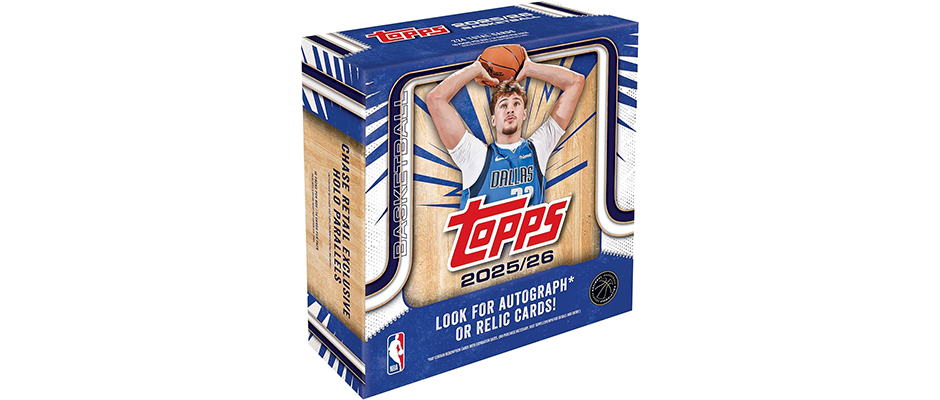
Topps flagship is the core product with standard base set, rookies, inserts, and hits. It’s where most collectors start.
Set structure includes 300 base cards (#1-300) featuring current stars, rookies, veterans, and legends. The checklist balances popular players with complete team representation. Card designs pay homage to classic Topps basketball layouts while incorporating modern elements.
Rookie cards are numbered #201-250 typically. Cooper Flagg leads the class as #201, where his base rookie will be the most sought-after card in the set. Dylan Harper, Ace Bailey, Tre Johnson III, Kon Knueppel, and Egor Demin round out the top rookie tier. These base rookies establish the market are they’re the “true” rookies collectors will reference for years.
The RC logo appears on all official rookie cards, confirming their status. Don’t confuse second-year players or inserts with true rookie cards, the base rookies with RC logos are what matters for long-term value.
Hobby box configuration typically delivers 24 packs per box, 10-12 cards per pack. Hobby boxes guarantee one autograph OR memorabilia card per box, plus numerous inserts and parallels. At $100-150 per hobby box, expected value runs slightly negative (as with most sealed products), but the fun of opening packs and potential for big hits justify costs for many collectors.
Parallel structure creates rainbow-chasing opportunities. Topps uses colour-coded parallels with varying scarcity:
- Base (unnumbered): Standard cards, unlimited print run
- Teal (/399): First numbered parallel
- Gold (/299): Mid-tier scarcity
- Orange (/199): Getting scarce
- Purple (/99): Solid scarcity
- Red (/75): Tough pull
- Blue (/50): Very scarce
- Green (/25): Extremely rare
- Black (/10): Elite rarity
- Printing Plates (1/1): Ultimate 1-of-1s, four exist per card (Cyan, Magenta, Yellow, Black)
- Superfractor (1/1): The crown jewel Topps parallel
Chasing complete rainbows of favourite players drives secondary market demand. A Cooper Flagg base might be $15-25, but the Superfractor could hit five figures. That scarcity creates excitement and value.
Insert sets add chase elements beyond base cards. The 2025-26 Topps Basketball includes:
- All Kings SP: Short-print insert featuring elite players
- New School: Highlighting young stars
- Rookie Showcase: Premium rookie designs
- NBA Champions: Celebrating recent title winners
- Legends: Honoring all-time greats
Insert designs typically feature enhanced graphics, special card stock, or unique themes. They’re not as valuable as autographs or memorabilia but provide affordable chase cards for set builders.
Photo variations create additional scarcity. Select cards have alternate photos printed in smaller quantities than base versions. These SSPs (super short prints) can be worth multiples of base versions. Identifying photo variations requires comparing your card against checklists as it could be the same card number, different image.
The 2025-26 Topps Baskbetball brings Golden Mirror photo variations, short-printed alternate images with special gold-foil elements. These SSPs generate significant collector interest and command premiums.
Autograph content includes rookies and veterans signing for Topps. Rookie autographs are most coveted, players such as Cooper Flagg, Dylan Harper, and Ace Bailey autographs are chase hits. Eastablished players autos featuring stars like LeBron, Victor Wembanyama, and Stephen Curry provide alternative hits.
Topps uses both sticker and on-card autographs. On-card autos (signature directly on card) command premiums over sticker autos (signature on applied sticker). Check card backs for “authentic autograph” holograms and manufacturer authentication.
Memorabilia cards feature game-used or player-worn jersey swatches. Single-color swatches are common. Multi-color patches are rarer and more valuable. Topps’ memorabilia cards traditionally feature cleaner designs than Panini’s, letting the patch take center stage.
Buying strategy: Hobby boxes provide the full experience, with pack-opening excitement, potential hits, and building base sets. Singles make sense for specific player collectors or investment-focused buyers targeting exact cards. Hobby boxes run $100-150, while Cooper Flagg base rookies sell for $15-30 as singles. Buy boxes for fun, singles for precision.
Topps Chrome: The Premium Refractor Experience
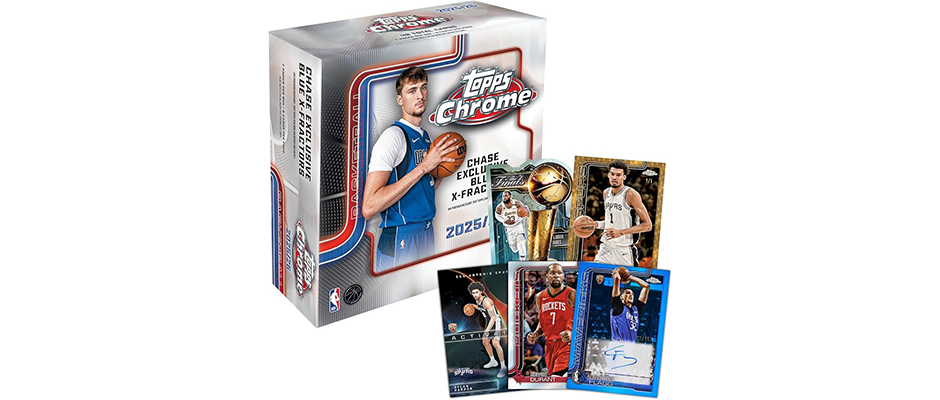
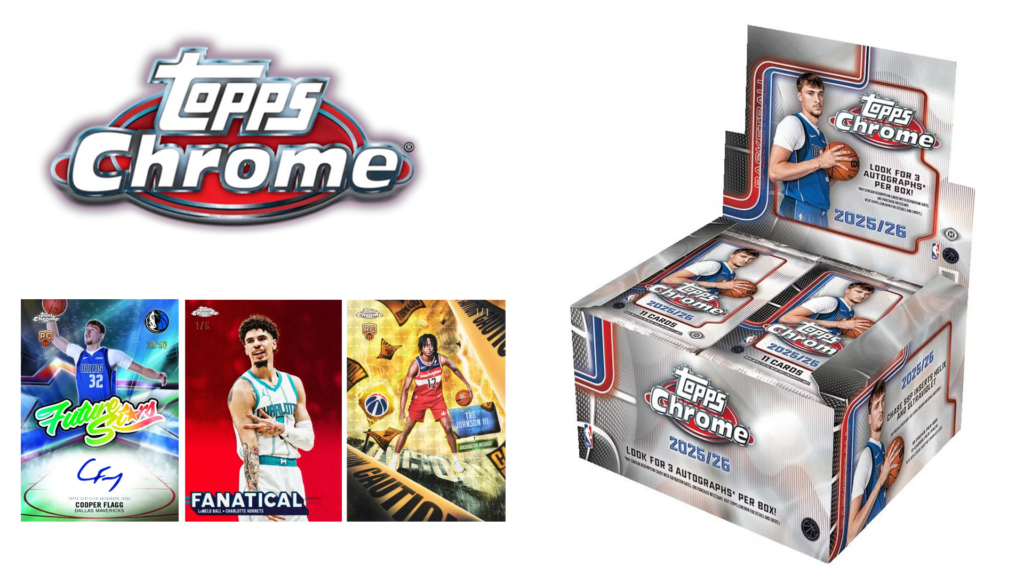
Topps Chrome is where things get serious. Chromium card stock, refractor technology, and premium rookie cards make Chrome the flagship product’s cooler older sibling.
Chromium technology creates that distinctive refractor look where cards shimmer with prismatic rainbow effects when tilted in light. The card stock is thicker, more durable, and premium-feeling than standard cardboard. Chrome cards simply look and feel better. Collectors pay premiums for that quality.
Refractors are THE chase. Base Chrome cards aren’t technically refractors as they’re chrome finish without the prismatic effect. True refractors add that rainbow coating. Beyond base refractors, color refractors introduce parallel structures:
- Refractor (unnumbered): Base chrome rainbow effect
- Speckle (/299): Colored speckle pattern
- Blue Refractor (/150): Blue-tinted prismatic effect
- Green Refractor (/99): Green tint
- Purple Refractor (/75): Purple tint
- Gold Refractor (/50): Gold tint, highly desirable
- Orange Refractor (/25): Orange tint, very rare
- Red Refractor (/5): Extreme rarity
- Black Refractor (/10): Elite parallel
- SuperFractor (1/1): Ultimate Chrome card, rainbow-colored 1-of-1
Topps Chrome rookies of stars become definitive rookie cards. The 2003-04 LeBron James Topps Chrome rookie is more valuable and sought-after than his flagship Topps rookie despite both being legitimate rookies. Chrome commands respect.
Set size for Chrome is typically smaller than flagship – maybe 200-250 cards total. This concentrated checklist means hitting specific players is more likely than in flagship’s 300-card sprawl.
Hobby box configuration delivers fewer packs than flagship but higher average card value. Chrome hobby boxes run $200-300 and typically guarantee 2 autographs per box (on-card chrome autographs command massive premiums) plus numerous refractors and parallels.
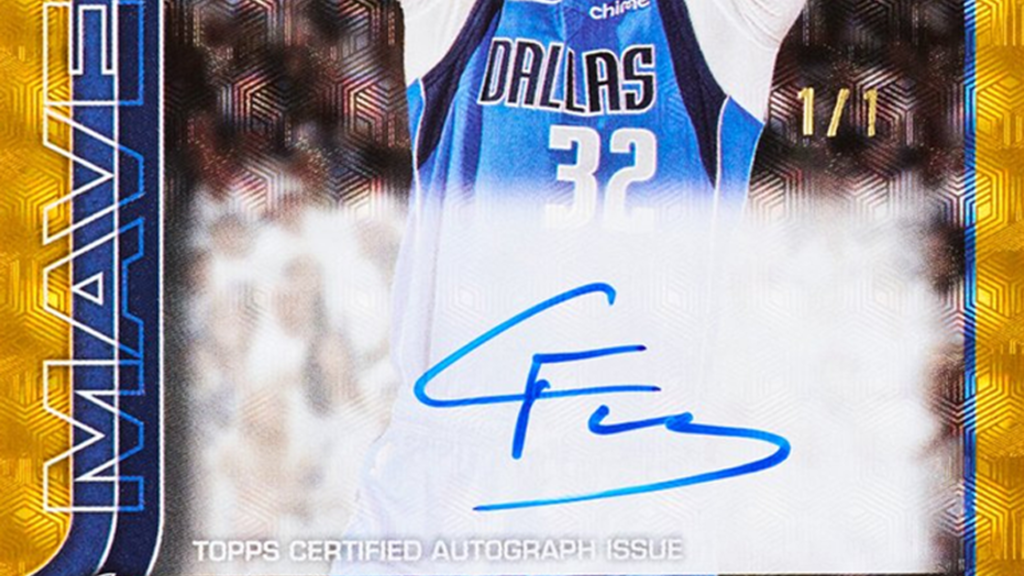
Autograph refractors combine chrome technology with autographs. An on-card chrome refractor autograph of Cooper Flagg? That’s a five-figure card potentially. These represent the pinnacle of Topps Chrome—signature on chromium with refractor effect.
The 2025-26 Topps Chrome features rookie autograph refractors numbered to various quantities (/99, /50, /25, /10, /5, 1/1). Lower numbered versions command exponentially higher prices. A /99 might be $500-800. A /5 could hit $3,000-5,000. The 1/1 Superfractor auto? Five figures easily for top rookies.
Veteran autographs provide alternative hits. Victor Wembanyama’s first licensed autographs in a Spurs jersey appearing in Topps Chrome creates historical significance. LeBron James chrome autos after his long Topps absence hold special meaning. These veteran autos aren’t cheap ($300-1,000+) but offer established star alternatives to speculative rookies.
Image variations exist in Chrome too. SSP variations with alternate photos trade at premiums. The 2025-26 Topps Chrome includes various photo variations and special insert designs creating additional chase.
Investment perspective: Chrome rookies historically appreciate better than flagship rookies. The premium presentation, refractor technology, and collector preference make Chrome rookies market leaders. If buying just one Cooper Flagg rookie for investment, most would choose Chrome over flagship. That market preference drives value.
However, Chrome boxes cost 2-3x flagship boxes. The higher entry price means fewer casual buyers, concentrating demand among serious collectors. This creates strong support for Chrome cards but less liquidity than flagship.
Buying strategy: Hobby boxes if you love opening premium packs and can afford $200-300. Singles for targeted buying such as a Chrome refractor rookie costs $40-80 typically, versus $200-300 for the box with no guarantee of hitting that specific card. Singles eliminate randomness.
Rookie Class Breakdown: Who to Collect
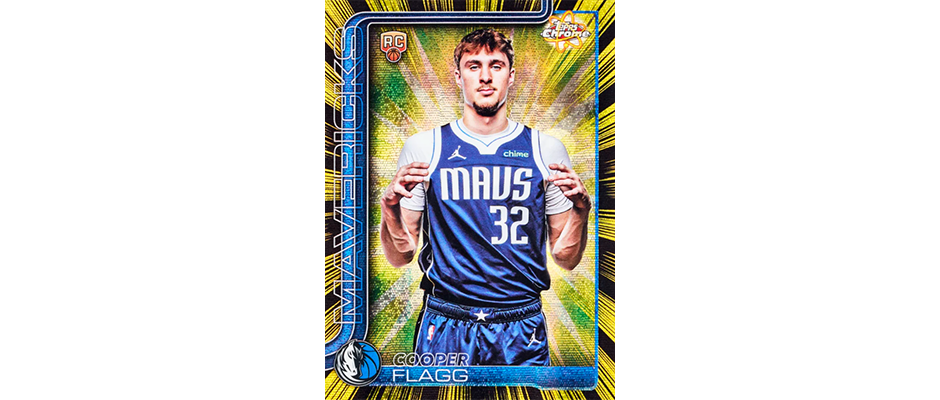
The 2025-26 Topps Basketball rookie class features exceptional talent. Understanding which rookies warrant collecting focus optimizes your investment.
Tier 1 – Blue Chip Rookies:
Cooper Flagg is the headliner as the #1 overall pick, immediate impact player, youngest to score 40 points at age 18, elite two-way skills, and franchise-player potential. His cards lead the rookie class in value and demand. Base rookies: $15-30. Chrome refractors: $60-120. Autographs: $400-1,500+ depending on scarcity. Parallels and low-numbered cards can reach five figures.
Flagg checks every box – talent, situation (Cleveland Cavaliers have good player development), marketability, and performance. He’s the Cooper Flagg, a #1 overall pick through decades showing that top picks have the best hit rate for Hall of Fame careers. Flagg feels like a generational talent worth betting on heavily.
Dylan Harper was the #2 pick and provides an elite skill set. Guards with his size (6’6″), versatility, and scoring ability project well. Harper cards run slightly behind Flagg in pricing but offer better value propositions. Base: $8-15. Chrome: $30-60. Autos: $250-800+.
Harper plays for the Brooklyn Nets, providing big-market exposure. If he performs, media attention will amplify card values. He’s a strong secondary bet behind Flagg.
Tier 2 – Strong Rookies:
Ace Bailey went #3 overall. Elite scorer with impressive athleticism. His cards price below Harper but offer value potential. Base: $5-10. Chrome: $20-40. Autos: $150-400.
Tre Johnson III (#4 pick) provides offensive firepower. Three-level scorer who can carry offensive loads. Base: $4-8. Chrome: $15-30.
Kon Knueppel and Egor Demin round out the top-10 picks. Both have tools and upside warranting attention. Base: $3-6. Chrome: $12-25.
Tier 3 – Sleeper Picks:
Mid-first-round picks with potential: Liam McNeeley, VJ Edgecombe, Collin Murray-Boyles. These players have lower current prices (base: $1-3, Chrome: $5-12) but could provide massive ROI if they overperform expectations.
Sleeper strategy involves buying multiple rookies at low prices and hoping one breaks out. Spending $50-100 on 10-15 different sleeper rookies provides lottery-ticket exposure, so if two become stars, you profit significantly despite others failing.
Collection strategy: Focus 50-60% of rookie budget on Flagg and Harper (blue chips), 30% on Tier 2 rookies (Bailey, Johnson), and 10-20% on sleepers. This balanced approach captures likely stars while maintaining upside from potential breakouts.
I’m personally heavy on Flagg (bought 15 base rookies, 5 Chrome refractors, and one low-numbered parallel) and Harper (10 base, 3 Chrome). I also grabbed small positions in Bailey and Johnson plus a handful of sleepers. If Flagg becomes a star, I profit handsomely. If he busts, I diversified enough that Harper or others might offset losses.
Parallel Color Guide: Understanding Print Runs and Value
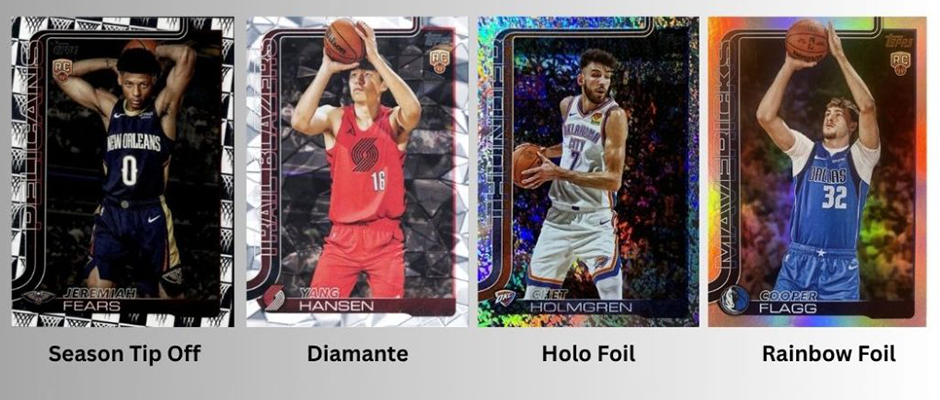
Topps parallels create tiered scarcity. Understanding print runs and relative values helps you make smart buying decisions.
Unnumbered base cards have unlimited print runs where millions exist. These are affordable ($2-30 for rookies depending on player) but appreciate slowly due to supply abundance. Base rookies serve as entry points for casual collectors or bulk speculators betting on massive player success.
High-number parallels (/299, /199, /150, /99) provide moderate scarcity. These cost 2-5x base card prices. A Cooper Flagg Gold /299 might be $50-80 versus $20 for base. These parallels offer rarity without extreme pricing.
Mid-range parallels (/75, /50, /25) hit the sweet spot of scarcity and affordability. A /50 parallel might cost $150-300 depending on player with meaningful scarcity without five-figure pricing. These parallels often appreciate well because they’re scarce enough to be desirable yet affordable enough for multiple collectors to chase.
Low-number parallels (/10, /5) are extremely rare. Only 10 or 5 copies exist worldwide. For top rookies, these command thousands to five figures. A Cooper Flagg /10 might hit $3,000-5,000. A /5? $5,000-10,000 potentially.
1-of-1 cards (Superfractors, printing plates) are ultimate rarities. For Cooper Flagg, his 2025-26 Topps Superfractor or printing plates are six-figure cards potentially. Only one person can own each. That exclusivity drives absurd pricing when owners rarely sell.
Refractor premiums: Chrome refractors typically command 50-100% premiums over flagship parallels at equivalent numbering. A /50 flagship Gold might be $200. A /50 Chrome Gold Refractor might be $350-400. Collectors value Chrome quality and aesthetics.
Color-matching premiums: Parallels matching team colors command premiums. Orange Refractors of Phoenix Suns or New York Knicks players might sell for 20-30% more than other colors at same numbering. Collectors love matched aesthetics. Black Refractors of Spurs or Bulls players similarly get bumps.
Serial number superstition: Some collectors pay premiums for specific serial numbers. #1/50 might command 20-50% premium over #48/50 despite both being equally rare. Jersey numbers also drive premiums—LeBron’s #23 or #6 serial numbers on his cards get premiums. This is mostly psychological but affects market pricing.
Pricing relativity example for a Cooper Flagg rookie:
- Base unnumbered: $20
- Teal /399: $35
- Gold /299: $60
- Purple /99: $100
- Red /75: $150
- Blue /50: $250
- Orange /25: $500
- Black /10: $2,000
- Red /5: $4,000
- Superfractor 1/1: $50,000+
These are estimates – actual prices fluctuate based on player performance, market sentiment, and sale venue. But the exponential price increases as rarity increases are consistent across players and sets.
Autograph and Memorabilia Content: The Hits
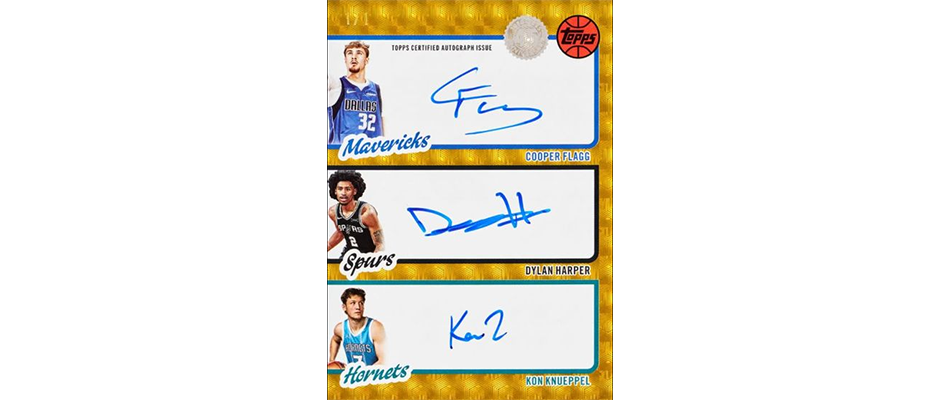
Autographs and memorabilia cards are “hits” where valuable cards justify box prices even when most packs disappoint.
Rookie autographs are crown jewels. Cooper Flagg autographs numbered to various levels (/99, /50, /25, /10, /5, 1/1) drive box values. His base flagship auto /99 might be $600-1,000. A Chrome auto /99? $1,200-2,000. The Superfractor auto 1/1? Six figures potentially.
Dylan Harper, Ace Bailey, and other top rookies have similar structures at lower absolute prices. Harper autos /99 might be $400-700. Bailey $250-450. Print runs and scarcity determine exact values.
On-card vs sticker autographs: Topps uses both. On-card autographs (signed directly on card) command 30-50% premiums over sticker autos. The 2025-26 Topps Chrome features on-card chrome autograph refractors – these are hobby highlights. Collectors strongly prefer on-card authenticity and aesthetics.
Check card backs for authentication holograms and “authentic autograph” language. Topps has strong authentication processes where their autos are legitimate.
Veteran autographs provide alternatives to rookie speculation. Victor Wembanyama’s first licensed Spurs autographs appearing in Topps products are historically significant. His autos run $500-2,000+ depending on scarcity. LeBron James, Stephen Curry, Giannis Antetokounmpo, and other stars provide blue-chip auto options.
Veteran autos appreciate slower than rookie autos but carry less risk. Wembanyama is proven as you know he’s elite. Buying his auto is safer than speculating on unproven rookies, though upside is more limited.
Dual autographs featuring two signatures on one card command massive premiums. A Cooper Flagg/Dylan Harper dual auto might hit $2,000-4,000. Veteran/rookie combos like LeBron/Flagg or Wembanyama/Flagg create cross-generational appeal.
I pulled a Flagg/Harper dual auto from a break—probably my luckiest pull ever. Those cards rarely surface, and when they do, bidding is intense. Dual autos combine scarcity (fewer produced) with double star power.
Memorabilia cards feature jersey swatches or patches. Single-color jersey pieces are common hits worth $15-50 typically. Multi-color patches are rarer and worth $75-200+. Patch autographs combining memorabilia and signature are elite cards—$300-1,500 depending on player and scarcity.
Game-used vs player-worn: Read card backs carefully. “Game-used” means worn in actual games. “Player-worn” might mean worn during photo shoots or practice. Game-used commands premiums when documented from specific games (All-Star, Finals, debut).
Logoman cards: The ultimate memorabilia cards feature the actual NBA logo patch from jerseys. Only one logoman exists per jersey, making these extraordinarily rare. Victor Wembanyama’s first licensed Spurs logoman will be a six-figure card. Cooper Flagg logomans are similar. These are investment-grade cards reserved for serious collectors.
Hit odds: Hobby boxes typically deliver one auto OR memorabilia card. Chrome boxes might deliver two autos. Knowing odds helps set expectations and you’re not getting multiple big hits per box. Premium boxes (Chrome, more expensive configurations) have better odds.
Insert Sets and Variations: The Secondary Chase
Beyond base cards, rookies, and hits, insert sets provide additional collecting challenges and value.
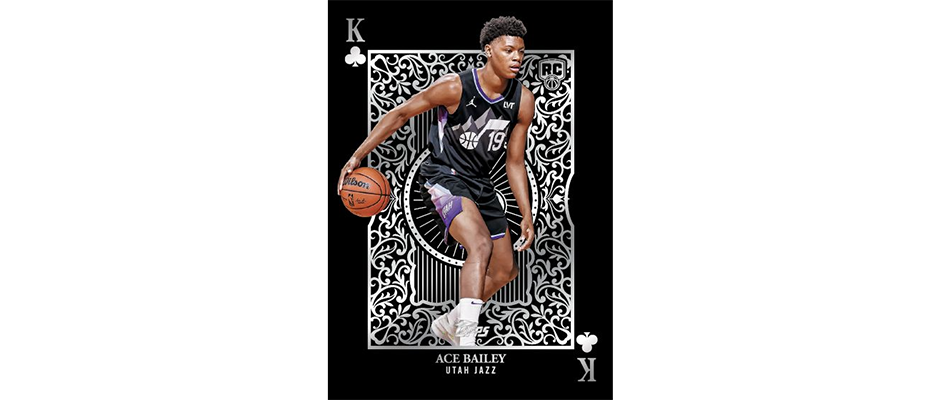
All Kings SP insert features elite current players in special short-print designs. These aren’t as scarce as numbered parallels but print in smaller quantities than base cards, creating premiums. A Cooper Flagg All Kings SP sold for $2,025, showing strong demand for premium inserts.
New School insert highlights young stars and rookies with modern, dynamic designs. These cards showcase Topps’ design capabilities beyond standard base layouts. New School inserts of top rookies command $50-150 typically.
Rookie Showcase insert dedicates special designs to the rookie class. These cards let Topps showcase rookies with premium graphics and special card stock. For set builders and rookie collectors, these inserts complement base rookies.
NBA Champions insert celebrates recent title winners. For fans of title teams or specific champions, these inserts have appeal. They’re not high-value but provide affordable chase cards for completionists.
Legends insert honors all-time greats. Michael Jordan, Magic Johnson, Larry Bird, Kareem Abdul-Jabbar, these legends remain popular. Legends inserts provide nostalgic chase without rookie price tags. Jordan inserts always command premiums ($20-75 depending on scarcity).
Photo variations create unexpected hits. The Golden Mirror variations feature alternate photos with gold foil special effects. These SSPs (super short prints) are intentionally scarce, but maybe 100-300 copies versus thousands of base versions.
Identifying photo variations requires checking against published checklists or comparing your card to base versions. Same card number, different image = variation. A Cooper Flagg Rookie Photo Shoot Auto SSP sold for $2,700, showing how variations command massive premiums.
Printing plates are true 1-of-1s. During printing, four metal plates create each card, such as Cyan, Magenta, Yellow, and Black. These plates become collectibles themselves. Owning a printing plate means you have the actual plate used to print that card. For top rookies, plates hit thousands to five figures.
Product Comparison: Flagship vs Chrome vs Future Releases
Topps will likely release multiple basketball products beyond flagship and Chrome. Understanding product positioning helps allocate budgets.
Flagship Topps ($100-150/box): Entry-level, largest base set, affordable, one hit per box, builds complete sets, offers nostalgic design homage. Best for: Casual collectors, set builders, pack rippers on budgets, introducing kids to hobby.
Topps Chrome ($200-300/box): Premium chromium, refractor technology, smaller set, better hit odds, on-card autographs, elevated designs. Best for: Serious collectors, investors prioritizing quality, refractor enthusiasts, those wanting definitive rookie cards.
Future premium products (speculated): Topps may release higher-end products like “Topps Finest” (historically $250-400/box), “Topps Dynasty” (ultra-premium $500-1,000+/box), or other lines. These would compete with former Panini premium tiers.
Premium products offer thicker cards, all-hit configurations (every card is auto/patch), lower print runs, and luxury packaging. They target serious collectors willing to spend significantly for better average card values per box.
Buying strategy based on budget:
- Under $200/month: Focus on singles of favorite players, occasional flagship box
- $200-500/month: Mix of flagship boxes, Chrome singles, strategic hobby breaks
- $500-1,000/month: Chrome boxes, select flagship, premium singles of top rookies
- $1,000+/month: Premium boxes when released, graded cards, low-numbered parallels
Investment Outlook: Long-Term Considerations
How will 2025-26 Topps basketball age as investment? Several factors support optimistic outlooks.
Topps brand strength: Collectors have 70+ year relationships with Topps across sports. That brand loyalty transfers to basketball. Topps rookies from 2025-26 become historically significant as the return-to-basketball class. This “first year back” mystique adds cachet.
Rookie class quality: Cooper Flagg appears to be generational talent. If he fulfills potential, his 2025-26 Topps rookie becomes a defining card of the 2020s, like LeBron’s 2003-04 rookies. Dylan Harper and others provide supporting value even if they don’t reach Flagg’s heights.
Exclusive licensing: Topps’ exclusivity means 2025-26 forward, Topps IS basketball cards. This eliminates competitor dilution that occurred when multiple brands shared licensing. Concentrated demand supports values.
Refractor nostalgia: An entire generation missed Topps Chrome basketball. The return of refractors to basketball energizes nostalgic collectors who remember 90s-2000s Chrome products. That nostalgia drives premium pricing.
Comparison to Panini: Initial comparisons are favorable. Topps’ cleaner designs, refractor technology, and brand strength are winning early market sentiment. If Topps maintains this momentum, their products could equal or exceed Panini Prizm’s market position over time.
Risks to consider: Player injuries (Flagg could hypothetically suffer career-altering injury), overproduction (if Topps floods market with too many products), competitive pressure from Panini (their Players Association products without logos still have market), and broader economic factors affecting collectibles demand.
My outlook is cautiously bullish. I’m building positions in Topps flagship and Chrome rookies, weighted heavily toward Flagg and Harper. I’m not betting the farm, but I’m committing meaningful capital believing 2025-26 Topps rookies will appreciate nicely over 5-10 years.
Holding period recommendations: For investment purposes, hold flagship rookies 3-5 years minimum, Chrome rookies 5-10 years. Autos and low-numbered parallels can be held indefinitely where elite scarcity protects values long-term. Don’t expect quick flips, so let player careers develop and Topps’ NBA legacy rebuild.
Your 2025-26 Topps Basketball Journey Begins
The 2025-26 Topps Basketball release marks the start of a new era. Whether you’re collecting for nostalgia, building sets, investing, or simply enjoying the hobby, Topps provides quality products worth your attention and money.
Cooper Flagg’s rookies will define this class. Dylan Harper and others provide supporting opportunities. The refractor technology, clean designs, and Topps brand strength create collecting experiences that feel both familiar and fresh. For anyone who collected Topps basketball before 2010, it’s like welcoming an old friend back. For younger collectors, it’s discovering what made Topps legendary.
Start with what excites you. Love ripping packs? Grab a flagship hobby box. Want the best single card? Buy a Flagg Chrome refractor. Building complete sets? Start accumulating base cards. Whatever approach resonates, jump in now while the release is fresh.
Share your Topps pulls and purchases below. What products are you targeting? Which rookies are you chasing? Have you pulled any big hits? Let’s celebrate Topps’ return together.
Essential 2025-26 Topps Basketball Resources
Product Information:
- Topps Basketball Official Site
- Beckett Product Pages – Release schedules and reviews
- Cardboard Connection – Comprehensive product guides and checklists
Buying Locations:
- Topps Direct – Factory direct
Market Data:
- eBay Sold Listings – Real-time pricing
- 130 Point – Market tracking
- Card Ladder – Price history
- COMC – Singles marketplace
Community:
- r/basketballcards – Reddit Topps discussions
- Blowout Cards Forums – Product reviews and pulls
- YouTube – Box break channels covering Topps releases
- Instagram – Follow #ToppsBasketball for community pulls
Checklists & Variations:
- Cardboard Connection Checklists – Complete card lists
- Beckett Checklists – Variation guides