I thought I’d made a brilliant investment buying a raw Cooper Flagg rookie for $30, getting it graded PSA 9, and selling it for $200. When I sat down to calculate my actual return, I was shocked to discover that after accounting for grading fees, shipping to PSA, insurance, return shipping, seller fees, and payment processing my net profit was just $67 on that $200 sale, a 120% ROI that seemed great until I realised I’d tied up capital for 5 months and spent 3 hours on the entire process. That experience taught me that understanding true ROI requires accounting for every cost, not just the obvious ones.
To calculate ROI for graded sports cards accurately is what separates successful card investors from those who think they’re profitable while actually losing money. With grading costs continuing to rise, selling fees approaching 15-20% of sale prices, and time investments that most collectors never account for, knowing your real returns is essential for making smart submission and investment decisions.
In this comprehensive guide, I’ll break down exactly how to calculate ROI for graded cards, reveal the hidden costs that destroy profits, show you break-even analysis frameworks, and provide spreadsheet templates and tools for tracking your investment performance accurately.
What Is ROI and Why Does It Matter for Card Collecting?
ROI (Return on Investment) measures the profitability of an investment relative to its cost, expressed as a percentage. The basic formula is straightforward: ROI = (Net Profit / Total Investment) × 100.
If you invest $100 and make $150, your net profit is $50, giving you an ROI of 50%. If you invest $100 and make $300, your net profit is $200, giving you an ROI of 200%. Simple enough, except calculating “total investment” and “net profit” for graded cards involves dozens of cost components that most collectors overlook.
Understanding ROI matters because it provides objective performance measurement across different investments. A $1,000 profit sounds impressive, but if it required a $10,000 investment, your ROI is only 10% and potentially worse than simply investing that money in index funds returning 10-12% annually.
ROI also enables comparison between different collecting strategies. Is buying raw cards and grading them more profitable than buying already-graded cards and holding? Is flipping modern rookies more lucrative than holding vintage? Without accurate ROI calculations, you’re flying blind.
The investment versus collecting mindset distinction is crucial here. If you’re collecting purely for enjoyment, ROI doesn’t matter, you spend whatever brings you happiness. However, the moment you start thinking about cards as investments, profit as return, or submissions as calculated risks, you need to treat card collecting like any other investment requiring rigorous performance tracking.
I collect certain players regardless of financial returns because I love the hobby. But for cards I’m treating as investments, I track ROI meticulously and make ruthless decisions based on numbers rather than emotions.
What Costs Must Be Included in Your Total Investment?
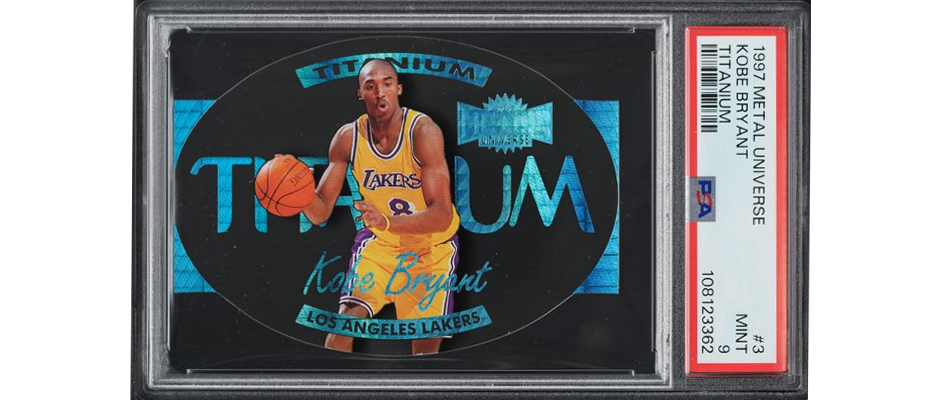
Accurately calculating ROI requires identifying every dollar spent acquiring and preparing your card for sale. Missing even small costs creates artificially inflated ROI calculations that misrepresent actual performance.
Purchase price: The amount you paid for the raw card including any applicable sales tax. If you pulled the card from a pack, use the pack’s cost divided by the number of cards (or just the pack cost if you’re specifically chasing that card).
I pulled a Dylan Harper rookie from a $50 blaster containing 28 cards. If I’m calculating ROI on that specific card, I use either $50 (if I bought the blaster specifically hoping for Harper) or $1.79 per card ($50 ÷ 28) if treating all cards equally.
Grading fees: The service level cost you paid PSA, BGS, SGC, or other grading companies. Currently, PSA Value Bulk costs $21.99 per card, Value costs $27.99, and Value Plus costs $44.99. Don’t forget that grading companies charge based on declared value, cards worth $500+ require more expensive service levels.
Shipping to grading company: The cost of mailing your submission to PSA including packaging materials. For bulk submissions, divide total shipping cost by number of cards submitted. A $15 shipping cost for a 20-card bulk submission adds $0.75 per card.
Insurance: The cost of insuring your shipment to the grading company. For valuable cards, this is non-negotiable. Shipping insurance for a $500 declared value package costs roughly $5-10 depending on carrier.
Return shipping from grading company: PSA charges return shipping based on service level and value. Bulk submissions typically cost $15-25 return shipping for 20 cards, adding $0.75-1.25 per card.
Protective supplies: Card Savers ($0.25 each), penny sleeves ($0.03-0.05 each), team bags, and shipping boxes all contribute to total investment. These seem minor but accumulate significantly across multiple submissions.
For my Cooper Flagg example:
- Purchase price: $30.00
- PSA Value Bulk grading: $21.99
- Shipping to PSA (share of bulk): $0.75
- Insurance (share of bulk): $0.40
- Return shipping (share): $0.80
- Card Saver: $0.25
- Penny sleeve: $0.05
- Total investment: $54.24
Most collectors would have to calculate ROI for graded sports cards using just the $30 purchase price and $22 grading fee ($52 total), underestimating actual investment by $2.24. Multiply this error across 50 cards, and you’re off by $112, thats enough to significantly distort ROI calculations.
How Do You Calculate the Basic ROI Formula?
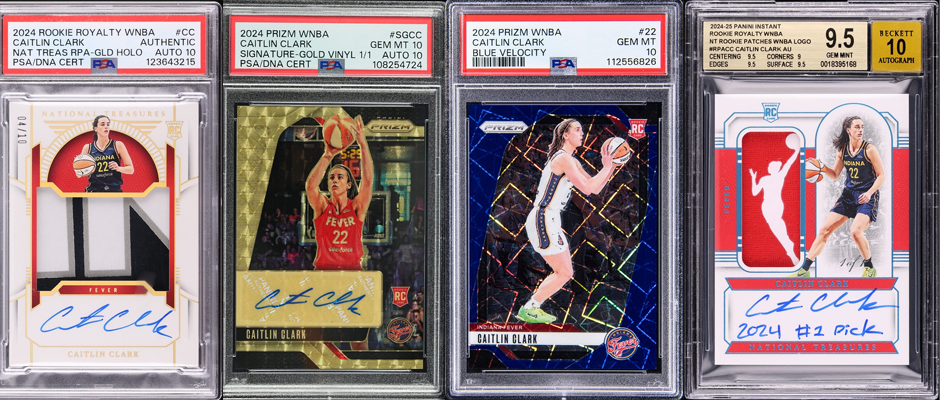
Once you’ve identified total investment, to calculate ROI for graded sports cards requires determining net profit by subtracting all costs (including acquisition and selling costs) from final sale price.
The complete ROI formula:
ROI = [(Sale Price – Total Investment – Selling Costs) / Total Investment] × 100
Selling costs include:
Platform fees: eBay charges 13.25% final value fee for cards (12.9% + $0.30 per order). PWCC charges 10-20% depending on sale price. Goldin charges 15-20%. Private sales via social media or forums might be fee-free but carry other risks.
Payment processing fees: PayPal charges 3.49% + $0.49 per transaction for Goods & Services. Even eBay’s managed payments system charges processing fees included in their overall fee structure.
Shipping costs to buyer: Tracked shipping for a graded slab costs $5-8 depending on carrier and speed. Add $1-2 for packaging materials (bubble mailer, cardboard stiffeners).
Let’s calculate ROI for my Cooper Flagg PSA 9:
Total Investment: $54.24 (calculated above)
Sale Price: $200.00
Selling costs:
- eBay fees (13.25%): $26.50
- PayPal fees (included in eBay managed payments): $0
- Shipping to buyer: $6.00
- Packaging materials: $1.50
- Total selling costs: $34.00
Net Profit = $200.00 – $54.24 – $34.00 = $111.76
ROI = ($111.76 / $54.24) × 100 = 206%
That’s a solid 206% return, but notice it’s dramatically lower than the naive calculation most collectors use:
Naive calculation: ($200 – $52) / $52 = 285% ROI
The 79 percentage point difference represents the hidden costs that destroy profitability when ignored.
Common mistakes in ROI calculation:
Mistake #1: Using sale price as profit rather than net profit after all costs.
Mistake #2: Forgetting platform and payment processing fees that consume 15-20% of sale price.
Mistake #3: Not accounting for failed submissions that graded too low to sell profitably.
Mistake #4: Ignoring time investment (more on this later).
Mistake #5: Calculating ROI per card without considering portfolio-level performance including losers.
What Hidden Costs Reduce Your Actual Returns?
Beyond the obvious costs, several hidden expenses drain profits that most collectors never account for until they sit down and truly calculate ROI for graded sports cards.
Failed submissions and low grades: Not every card grades as hoped. If you submit 10 cards at $22 each ($220 total) expecting PSA 9s but receive five PSA 8s that aren’t worth selling, you’ve wasted $110 in grading fees that must be amortized across your successful sales.
I submitted 20 cards in my first bulk order. Only 12 graded high enough to sell profitably, meaning I needed to add $8.80 to each successful card’s cost basis ($176 wasted on 8 failures ÷ 12 successes) to accurately calculate ROI for graded sports cards.
Time investment: Your time has value. If you spend 10 hours researching cards, photographing listings, answering buyer questions, packaging sales, and managing submissions for a $500 profit, you’ve earned $50 per hour. If your opportunity cost (what else you could earn with that time) exceeds $50 per hour, you’re losing money despite “positive ROI.”
Storage and organisation costs: Slabs take up space. If you’re renting a storage unit partially for cards ($50/month), need shelving ($100), or maintain climate control ($20/month extra electricity), these overhead costs reduce portfolio returns.
Failed sales and relisting costs: Not every card sells first listing. If you relist 3 times before selling, you’ve invested additional time and potentially incurred multiple insertion fees (if using auction format).
Market timing losses: Cards decline in value while waiting for sales. A Cooper Flagg card worth $200 today might be worth $150 in three months if his performance declines. This opportunity cost of delayed sales reduces effective ROI.
According to grading cost analysis, the costs include purchase price and grading costs, with the formula being: ROI = Graded Card Value / (Grading Costs + Raw Card Value). However, this simplified formula ignores the significant selling costs that can consume 20-25% of sale proceeds.
How Do You Calculate Break-Even Point for Grading?
Understanding break-even analysis prevents submitting cards that can never be profitable regardless of grade received.
The break-even formula:
Break-Even Sale Price = (Total Investment) / (1 – Selling Costs Percentage)
For a card with $54.24 total investment and 20% total selling costs (platform fees + payment processing + shipping):
Break-Even Sale Price = $54.24 / (1 – 0.20) = $67.80
This means the card must sell for at least $67.80 just to break even. Any sale below that represents a loss.
Grade-specific break-even analysis:
Smart investors calculate break-even for each potential grade before submitting:
Let’s use a modern rookie base card with these estimated values:
- Raw (current): $25
- PSA 8: $40
- PSA 9: $120
- PSA 10: $400
Total investment:
- Raw card: $25.00
- Grading (bulk): $21.99
- Shipping/fees: $2.25
- Total: $49.24
With 20% selling costs:
- Break-even sale price: $61.55
Analysis:
- PSA 8 outcome: Sell for $40, lose $9.24 plus selling costs ≈ -$20 loss
- PSA 9 outcome: Sell for $120, net profit $46.76, ROI = 95%
- PSA 10 outcome: Sell for $400, net profit $270.76, ROI = 550%
If you estimate a 10% chance of PSA 10, 40% chance of PSA 9, and 50% chance of PSA 8 or lower, the expected value calculation becomes:
Expected Value = (0.10 × $270.76) + (0.40 × $46.76) + (0.50 × -$20.00) Expected Value = $27.08 + $18.70 – $10.00 = $35.78
With a positive expected value of $35.78, this card merits submission despite the 50% chance of losing money.
For a grading profitability analysis, you should calculate expected value by multiplying the resale value for each potential grade with estimated odds, then summing all values. If potential revenue exceeds costs, grading probably makes financial sense.
Service level break-even comparison:
Using the same card but different service levels:
Value Bulk ($21.99, 95 days):
- Break-even: $61.55
- Expected value: $35.78
- Time-adjusted annual ROI: 145% ($35.78 profit / $49.24 investment / 95 days × 365 days)
Value Plus ($44.99, 40 days):
- Total investment: $72.24
- Break-even: $90.30
- Expected value: $12.78
- Time-adjusted annual ROI: 158% ($12.78 / $72.24 / 40 days × 365 days)
Despite lower absolute profit, Value Plus offers higher annualised ROI due to faster turnaround enabling capital recycling.
What Tools Help Track Card Investment Performance?
Accurate ROI tracking requires systematic record-keeping that captures every transaction and cost across your entire portfolio.
Spreadsheet templates (my preferred method):
I maintain a Google Sheet with these columns:
- Card Description
- Purchase Date
- Purchase Price
- Purchase Source
- Grading Company
- Service Level
- Grading Cost
- Submission Date
- Grade Received
- Grade Date
- Sale Date
- Sale Price
- Selling Fees
- Shipping Costs
- Net Profit
- ROI %
- Days Held
- Annualized ROI %
This granular tracking enables filtering and analysis by player, grade, service level, time period, or any other dimension.
Online tools and calculators:
NoOffseason Sports Card Formula Calculator provides raw-to-grade formula analysis helping determine whether grading makes financial sense before submission.
Pokemon Price Tracker PSA Grading Calculator (applicable to all cards despite the name) analyzes submission costs, turnaround time, current raw card value, potential PSA grade, and market price differences to provide comprehensive ROI analysis.
Portfolio tracking apps:
CollX (formerly CardLadder) offers portfolio tracking with automatic price updates based on recent sales data. Take photos of cards, the app identifies them, and tracks current market value against your purchase prices.
Market price databases:
eBay sold listings provide real-world sale prices for specific grades and cards. Search “completed listings” filtered by “sold items” to see actual sale prices, not asking prices.
130 Point aggregates sales data across multiple platforms (eBay, PWCC, Goldin) providing comprehensive market pricing.
PSA CardFacts shows population reports and auction prices realized for PSA-graded cards.
I cross-reference multiple sources before assigning estimated sale prices to cards in my spreadsheet because relying on single data points leads to optimistic valuations that don’t match selling reality.
How Do You Account for Time Value of Money?
Cards held for extended periods tie up capital that could generate returns elsewhere, creating opportunity costs that reduce effective ROI.
Holding period impact:
A 100% ROI over one year equals 100% annualized return. The same 100% ROI over three years equals only 33.3% annualized return. Time matters.
The annualized ROI formula accounts for holding periods:
Annualized ROI = [(1 + ROI)^(365 / Days Held) – 1] × 100
For my Cooper Flagg card held 150 days with 206% ROI:
Annualized ROI = [(1 + 2.06)^(365/150) – 1] × 100 Annualized ROI = [(3.06)^(2.43) – 1] × 100 Annualized ROI = [24.44 – 1] × 100 = 2,344%
That extraordinary annualized return reflects the short holding period combined with strong absolute return. However, few cards replicate this performance consistently.
Opportunity cost considerations:
Every dollar invested in card grading is a dollar not invested elsewhere. If the S&P 500 returns 10% annually and your card investments return 8% annually, you’re losing 2% annually in opportunity cost.
I maintain a target of 50%+ annualized ROI for card investments to justify the time commitment and opportunity cost versus passive index fund investing. Anything below 50% annual returns makes me question whether the hobby investment justifies itself financially.
Capital recycling and velocity:
Fast turnarounds enable capital recycling, using the same dollars for multiple investments within a year. A $1,000 investment generating 50% returns four times annually produces $1,000 × (1.5)^4 = $5,062.50, whilst the same 50% return once annually produces only $1,500.
This principle favours faster grading services despite higher costs when you can redeploy capital multiple times annually.
What’s a Realistic ROI Expectation for Sports Cards?
Setting appropriate expectations prevents disappointment and helps benchmark performance objectively.
Industry averages and realistic returns:
Most profitable card investors target 30-100% ROI per investment, with portfolio-level performance averaging 20-50% annually after accounting for losers.
According to market analysis, getting the perfect grade on a prized card can multiply its value tenfold, turning small investments into massive profits. However, these exceptional outcomes represent statistical outliers rather than typical results.
The 1952 Topps Mickey Mantle PSA 10 exemplifies extreme ROI—original purchase price of perhaps $5 in 1952, current value $12.6 million, representing an ROI of over 251,999,900%. However, focusing on such outliers creates unrealistic expectations.
More realistic examples:
Successful modern rookie investment: Buy raw Rookie of the Year candidate base card for $20, grade PSA 10, sell for $200. After all costs, net $120 profit on $45 investment = 267% ROI over 4-6 months.
Moderate success: Buy raw card for $10, grade PSA 9, sell for $60. After costs, net $25 profit on $35 investment = 71% ROI.
Breakout star multiplication: Buy player’s cards before breakout, hold 1-2 years, sell during peak. A $100 investment could become $500-1,000 = 400-900% ROI, though this requires impeccable timing and player selection.
Failed investment: Submit card hoping for PSA 9, receive PSA 8. Card worth less than raw value. Net loss of 20-40% of investment.
Portfolio-level reality check:
If you make 20 grading submissions:
- 5 cards exceed expectations (PSA 10s or 9s that sell well): +500% average ROI
- 10 cards meet expectations (PSA 8-9s that break even or profit modestly): +25% average ROI
- 5 cards disappoint (PSA 7-8s that lose money): -30% average ROI
Portfolio ROI = [(5 × 500%) + (10 × 25%) + (5 × -30%)] / 20 = 128% average ROI per card
This 128% figure seems excellent until you realize it took 5 months to complete, represents just 307% annualized, required 40 hours of work, and included significant stress and effort.
Comparison to other investments:
- S&P 500 index funds: ~10% annually (historical average)
- Real estate: 8-12% annually (varies by market)
- Bonds: 3-6% annually
- Sports cards (successful investors): 20-100% annually
- Sports cards (average collectors): -10% to +20% annually (most people lose money)
The key insight: sports cards can generate superior returns but require expertise, time investment, and risk tolerance that most investors lack. Treating it as passive investment guarantees losses.
How Do You Calculate Portfolio-Level ROI?
Individual card ROI matters less than aggregate portfolio performance including all successes and failures.
Portfolio ROI calculation:
Portfolio ROI = [(Total Sale Proceeds – Total Investment) / Total Investment] × 100
Example portfolio:
Card A: $100 investment, $300 sale = $200 profit Card B: $100 investment, $80 sale = -$20 loss Card C: $100 investment, $400 sale = $300 profit Card D: $100 investment, $110 sale = $10 profit Card E: $100 investment, not yet sold = $0 profit
Total investment: $500 Total sales: $890 (only counting sold cards) Total profit: $490
Current portfolio ROI = ($490 / $500) × 100 = 98%
However, this excludes Card E (unsold). If Card E sells for $150 later, total profit becomes $540, raising portfolio ROI to 108%.
Winners versus losers analysis:
Track your hit rate: What percentage of investments generate positive returns?
My tracking shows:
- 55% of submissions generate positive ROI (winners)
- 15% break even (±5% return)
- 30% generate negative ROI (losers)
The winners must generate sufficient returns to offset losers and produce positive portfolio returns. My average winner returns +180%, whilst my average loser returns -25%, producing portfolio-level returns around +65% per investment.
Diversification impact:
Concentrating capital in few cards creates binary outcomes—huge gains or huge losses. Diversifying across 20-50 cards provides smoother, more predictable returns.
I limit single-card investments to 5% of total portfolio to prevent one bad submission from destroying overall returns. If I have $10,000 capital, no single card exceeds $500 total investment.
When Does Grading Add Positive ROI?
Not every card benefits financially from grading. Understanding when grading makes sense prevents wasting money on unprofitable submissions.
Card characteristics that benefit from grading:
High-grade potential cards: Visually stunning cards likely to achieve PSA 9-10 grades benefit enormously. A raw card worth $50 becomes $300+ as PSA 10.
Cards with authentication concerns: Vintage cards, autographed cards, and valuable cards benefit from third-party verification reducing counterfeit fears.
Scarce or rare cards: Limited print run cards command premiums in graded form because collectors want protection for irreplaceable items.
Market-appropriate cards: Cards with established graded markets where buyers prefer slabs over raw cards.
Card characteristics that DON’T benefit from grading:
Low-value commons: A $2 card that grades PSA 10 might sell for $10—not nearly enough to justify $22 grading cost.
Already-damaged cards: Cards obviously flawed won’t grade high. Paying $22 to confirm a card grades PSA 6 is pointless.
Cards with weak graded markets: Some cards lack collector demand even graded. Research sold listings before submitting.
Market conditions matter:
Favorable conditions: Player performing exceptionally, strong overall card market, established demand for graded versions of specific cards.
Unfavorable conditions: Player slumping, weak card market, oversupply of graded versions creating price compression.
I submitted Dylan Harper rookies during his hot start to the season, selling PSA 9s for $180. The same cards three months later sold for $120. Market timing generated extra $60 profit per card—a 50% increase purely from strategic timing.
Break-even analysis by grade scenario:
For a $25 raw card with $49 total investment after grading:
If PSA 10 (estimated $300): ROI = 313% If PSA 9 (estimated $100): ROI = 51% If PSA 8 (estimated $45): ROI = -30%
The decision hinges on estimated probabilities of each outcome. If you estimate 60%+ chance of PSA 9 or better, submission makes sense. If you estimate 70%+ chance of PSA 8 or lower, skip it.
Mastering Card Investment Math
After tracking hundreds of card investments over several years, I’ve learned that profitable card investing requires rigorous mathematical discipline that most collectors never develop.
The fundamental truth is that most collectors overestimate their returns by 50-100% because they don’t account for hidden costs, failed submissions, and time investment. Thinking you’re making 200% ROI when you’re actually making 80% leads to poor decision-making and capital allocation.
Key calculation principles:
Account for every dollar. Every shipping fee, every PayPal charge, every penny sleeve contributes to total investment. Small costs accumulate into significant amounts across portfolios.
Track at portfolio level, not just individual cards. Your winners look amazing, but do they offset your losers sufficiently to generate positive overall returns?
Adjust for time and opportunity cost. A 100% return over 2 years underperforms a 40% return over 3 months when accounting for capital velocity.
Benchmark against alternatives. Your 30% annual returns seem great until you realize index funds provide 10% returns with zero effort and lower risk.
Be ruthlessly honest about performance. It’s easy to remember winners and forget losers, creating survivorship bias that inflates perceived performance.
My personal ROI tracking revealed that I was losing money my first year of “investing” in cards despite thinking I was profitable. The spreadsheet doesn’t lie—I had submitted too many marginal cards hoping for PSA 10s, paid too much for raw cards, and not accounted for time investment.
After implementing rigorous tracking, my submission strategy became far more selective, my purchase prices more disciplined, and my actual returns improved from -15% to +55% annually. The difference was purely mathematical discipline, not luck or skill.
Action steps:
- Download or create a comprehensive tracking spreadsheet today
- Input every card investment you’ve made this year with complete cost data
- Calculate actual portfolio-level ROI including all winners and losers
- Compare your returns to investment alternatives (S&P 500, real estate)
- Commit to tracking every future investment prospectively
The collectors who succeed financially in this hobby are those who treat it like a business requiring rigorous financial analysis rather than a hobby where “gut feel” suffices.
What ROI are you actually generating on your card investments? Have you been surprised by true returns once you accounted for all costs? Drop a comment below and share your ROI tracking journey, let’s learn together about what really drives profitability.