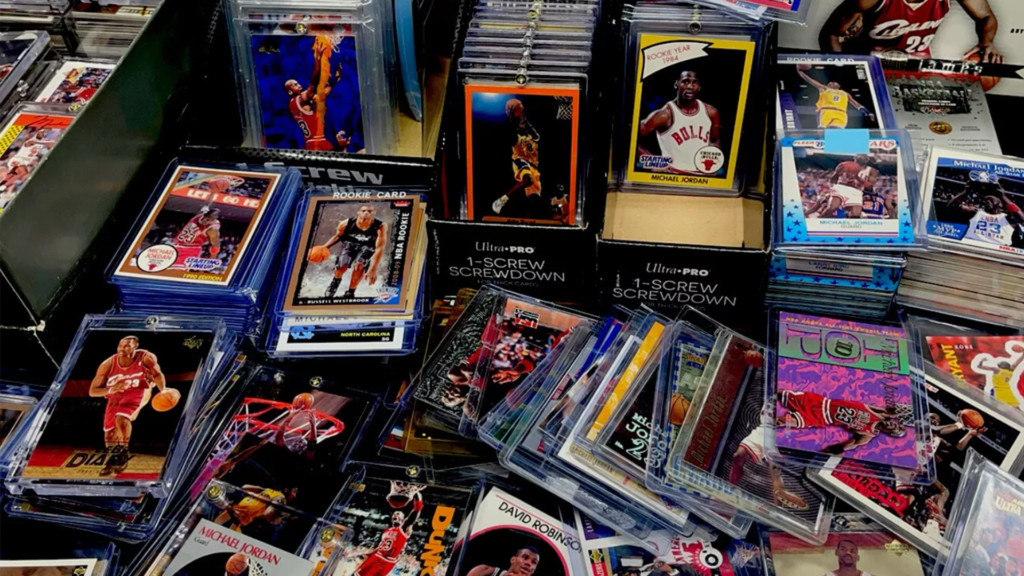
There is nothing quite like the thrill of finding a future hall-of-famer’s first card hiding in a cheap pack. Collecting has been a massive part of my life since I was young.
I reckon the hobby of collecting is a lot like cooking a massive weekend roast. You need patience, the right ingredients, and a good understanding of what makes the final product valuable. The absolute centrepiece of any serious collection is the Rookie Card. This is the foundation of the hobby. It is the one item that dictates a player’s legacy in the eyes of collectors.
Today, we are going to dive deep into the world of rookie cards. I will walk you through everything from identifying a true rookie to understanding market values. We will cover the mistakes I have made, so you do not have to repeat them. Grab a cuppa, sit back, and let us get stuck into the most important piece of cardboard you will ever own.
What counts as a “true” rookie card?
A true rookie card is defined as a player’s first appearance in a major, fully licensed base set. It is widely recognised as their official debut card by the collecting community.
Figuring out what counts as a true rookie card can be confusing for a lot of new collectors. The industry standard dictates that a true rookie is part of a standard base set. It cannot be an insert, a sticker, or a special promotional subset. It has to be a regular card that you can pull from a standard pack of licensed trading cards. The licensing part is incredibly important here.
Think about making a proper beef stock from scratch on a Sunday afternoon. You need real, roasted beef bones to create that deep, rich flavour profile. If you just chuck a powdered bouillon cube into hot water, you are getting an imitation. Base rookie cards are the real roasted bones of the card collecting world. Inserts and flashy subsets are just the quick powdered stuff.
The history of true rookie cards goes back decades. In the old days, a player only had one card in their debut year, usually printed by Topps. There was no confusion because there was only one set available on the shelves at the local card shop. Today, the landscape is flooded with different variations and brands. This makes identifying the true rookie a bit of a chore for the uninitiated.
The base card must be part of the primary checklist. For example, card number 200 in the base set is the true rookie. If that same player has a shiny insert card numbered out of 10 in the same box, that is just a rookie-year insert. It is not classified by purists as the true rookie card. The core value always traces back to that foundational base card.
The cards were sorted by me last weekend, and I found heaps of rookie-year inserts. They look brilliant, but they simply do not hold the same historical weight as the base versions. Serious collectors want the traditional first appearance. They want the card that was intended to be the player’s primary introduction to the hobby. Keep your eyes peeled for those base cards.
How do I identify a rookie card?
A rookie card is typically identified by an official “RC” shield logo located on the front of the card. You also need to verify the card number and the year of manufacture against the player’s debut year.
Identifying a rookie card is a lot easier today than it used to be. Most modern cards feature a specific RC logo or stamp right on the front. This little shield is usually tucked into one of the top corners or next to the player’s name. It is a visual cue designed to help collectors instantly recognise a debut card. Panini, Topps, and Upper Deck all use their own variations of this logo.
It reminds me of checking the labels at the supermarket when I am hunting for gluten-free flour. You look for the little certified stamp so you know exactly what you are getting. Without that clear label, you have to spend ten minutes reading the fine print on the back of the packet. The RC logo saves collectors a massive amount of time. You can flip through a stack of cards and spot the rookies in seconds.
However, you cannot always rely purely on the logo. Sometimes you need to check the card number and the set information on the back. Many people never read the instructions on their Ikea bookshelf, and they always mess up. Collectors do the exact same thing when they ignore the back of the trading card. The back tells you the year of manufacture and gives you the player’s minor stats.
A player might debut late in the sporting season. Because of this, their official rookie card might not get printed until the following calendar year. You have to match the player’s actual professional debut with the copyright year on the cardboard. If you are struggling to read that tiny text, you definitely need some visual help. I highly recommend picking up a Jewelers Loupe/Magnifier to inspect the fine details.
I once bought a card thinking it was a rookie because it had a player in his college uniform. I did not read the back properly. It turned out to be a retrospective insert printed five years after he retired. It was a rookie mistake by me. Always use your magnifier, check the logo, and read the fine print on the back.
Why are rookie cards worth more than other cards?
Rookie cards are worth more because they represent a player’s very first official appearance. This creates historical scarcity and intense demand driven by the “first-come, first-served” rule of collecting.
The value of a rookie card boils down to historical significance and scarcity. A player will have dozens of cards printed throughout a ten-year career. But they will only ever have one rookie season. That debut year represents the genesis of their professional story. Collectors place a massive premium on being able to own the very first chapter of that story.
There is a first-come, first-served rule when it comes to card values. The earlier a card is printed in a player’s career, the more desirable it becomes. As a player starts winning championships or MVP awards, their career trajectory shoots upward. Everyone suddenly wants a piece of their legacy. The rookie card is the universally agreed-upon item that captures that legacy.
I was reading an excellent breakdown over at Cardboard Connection the other night about historical pricing trends. They showed how a base rookie card of a superstar can be worth thousands of dollars. Meanwhile, a beautifully designed card of the exact same player from their fifth season might only fetch twenty dollars. The market is entirely driven by the debut factor. It is the ultimate status symbol.
You also have to consider attrition and survival rates. Rookie cards are often mishandled by collectors who do not know any better. Because they are the oldest cards of a given player, fewer of them survive in pristine condition over time. This natural scarcity drives the prices up even higher. The rookie card will always be the king of the hobby.
What is the difference between an “RC” card and a “First Bowman”?
A First Bowman is a prospect card issued while a player is still in the minor or college leagues. An official RC card is printed only after the player has made their debut in the professional league.
The distinction between a First Bowman and an official RC card is a massive topic in card collecting. A First Bowman card is essentially a pre-rookie card. It features the “1st Bowman” logo and is printed when a player is drafted or playing in the minor leagues. The official RC card does not come out until the player is officially called up to the big leagues.
Interestingly, the First Bowman card is almost always more valuable than the official RC card. This is because it is the absolute chronologically first piece of licensed cardboard featuring that player. Prospectors go absolutely crazy for 1st Bowman Chrome autographs. They buy them years before the player ever sets foot on a major league field. It is a highly speculative market.
The chronology of a player’s cardboard history is quite strict. First, they get their 1st Bowman prospect card. Next, they might have a few smaller subset cards over the next couple of years. Finally, when they make the professional league roster, they get the official RC logo card. It is a very structured progression.
For me personally, I always preferred the official rookie card because it had the player in their proper league uniform. But the market has firmly decided that the 1st Bowman is the premium asset. If you are getting into cards, you have to respect the power of the Bowman brand.
Are modern rookie cards a good long-term investment?
Modern rookie cards can be a great investment if you focus on rare parallels, short prints, and autographs. However, mass-produced base rookies are risky due to high print runs.
Investing in modern rookie cards is a bit of a rollercoaster ride right now. We are currently in an era where card companies are printing a massive amount of product. Many collectors are worried about a “Junk Wax 2.0” scenario, referring to the overproduction of the late 1980s. Because of this, buying thousands of standard base rookies might not be the smartest financial move.
Card companies are dumping way too much base product into the market right now. Too many base cards spoil the long-term value.
To make a safe long-term investment, you have to pivot toward scarcity. The modern market is all about low-numbered parallels and Short Prints (SP). A standard base rookie might have a print run of half a million copies. But a Gold Refractor parallel of that exact same rookie is strictly limited to 50 copies. That manufactured scarcity is what protects your investment.
The impact of on-card autographs is also huge. If a modern rookie card features a verified signature in blue ink, its value skyrockets. The player physically held that card in their hands and signed it. That creates a tangible connection that mass-produced base cards simply lack. Autographs and parallels are the safest bets for modern prospecting.
I made a terrible mistake a few years back. I bought heaps of base rookies of a basketball player who I thought was the next big thing. He ended up blowing out his knee, and the cards became worthless overnight. The market was flooded with his base cards anyway. If I had just bought one rare autograph instead, my financial risk would have been much lower.
How does grading (PSA 10 vs. Raw) affect a rookie card’s price?
Grading significantly increases a rookie card’s price by verifying its authenticity and condition. A card graded a perfect PSA 10 Gem Mint commands a massive premium over a raw, ungraded card.
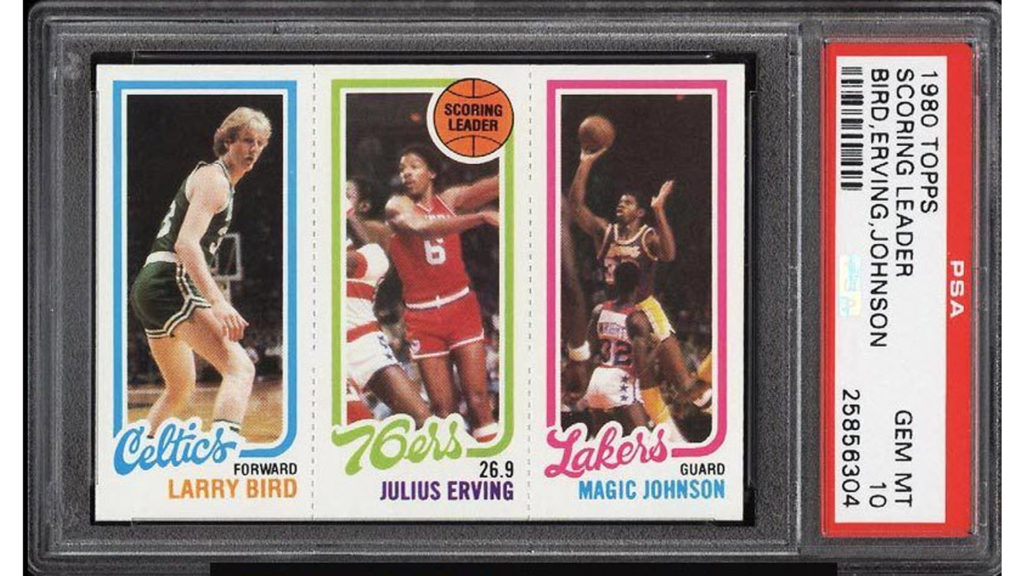
Grading has completely taken over the modern card collecting hobby. When you pull a fresh rookie card from a pack, it is considered “raw.” It has not been assessed by a professional. If you send that card to a third-party company like PSA, they evaluate its centring, corners, edges, and surface. They then seal it in a tamper-proof plastic slab with a numeric grade from 1 to 10.
The premium on a Gem Mint condition card is absolutely staggering. A raw rookie card might sell for fifty dollars on the open market. But if that exact same card is graded a PSA 10, it could easily sell for five hundred dollars. Buyers are willing to pay huge multipliers for the peace of mind that comes with a perfect grade. You can learn more about the grading scales directly at PSA’s official website.
Ungraded cards are seen as a major risk for high-end buyers. Photos on the internet can easily hide tiny surface scratches or soft corners. When a buyer purchases a graded slab, the risk is completely removed. The plastic slab also protects the long-term value by preventing any future physical damage to the cardboard.
Before sending cards off in the mail, they are always thoroughly inspected by me. I use a bright desk lamp and a proper Ultra Pro Card Sorting Tray to keep everything organised. If a card has an obvious flaw, I do not waste my money grading it. Grading is an expensive process, so you only want to send in the cream of the crop.
Can a player have more than one rookie card?
Yes, a player can have multiple rookie cards because different manufacturers and brands produce their own licensed sets. Collectors categorise these into primary flagship rookies and secondary rookies.
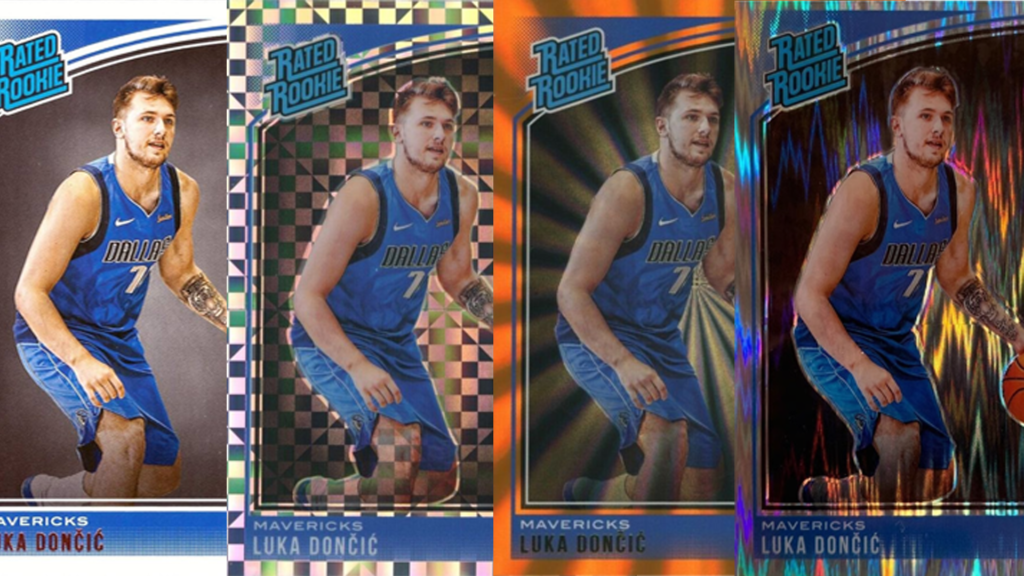
One of the most common questions from my friends is whether a player can have more than one rookie card. The short answer is yes, they absolutely can. In a single debut season, a popular player might have dozens of different rookie cards. This is due to multi-brand licensing agreements. A company like Panini will produce Prizm, Select, Optic, and Hoops all in the same year.
Collectors separate these multiple cards into “Primary” rookies and “Secondary” rookies. The primary rookie is usually the flagship release of the year. For baseball, it is Topps Series 1 or Topps Chrome. For basketball, it is Panini Prizm. These flagship sets are universally agreed upon as the most desirable baseline rookies to own.
The secondary rookies are from lower-tier sets or late-season releases. They still feature the official RC logo, but they do not carry the same prestige. A Panini Hoops rookie card is fantastic, but it will never match the value of a Panini Prizm rookie card. The hobby collectively decides which brand holds the most weight.
I usually tell new collectors to focus on the flagship sets first. It is very easy to get overwhelmed trying to collect every single rookie variation of a specific player. Pick the primary brand that you like the look of, and stick to it. It makes organising your binders much easier, and it is kinder to your wallet.
How do I check the value of my old rookie cards?
You can check the value of your old rookie cards by searching eBay sold listings. You can also consult legacy pricing guides or use modern third-party portfolio apps.
Everyone has that old shoebox full of cards sitting in the back of the wardrobe. Figuring out what those old rookie cards are actually worth requires a bit of detective work. The most accurate and real-time tool you have is eBay sold listings. You do not look at what people are asking for the card. You only filter by what the card has actually sold for recently.
Back in the day, the only way to check values was the monthly Beckett magazine. The Beckett pricing legacy is still incredibly strong today. You can still access their massive database over at Beckett’s official website to find historical pricing floors.
Today, there are also heaps of third-party apps that act like a digital stock portfolio for your cardboard. You scan the card with your phone camera, and the app aggregates recent auction house data. It gives you a highly accurate average price. It is brilliant technology that saves you from scrolling through thousands of old forum posts.
Just remember that condition is everything. Your old 1989 Ken Griffey Jr. rookie card might be worth a fortune in perfect condition. But if the corners are chewed up and there is a massive crease down the middle, the value plummets. Always compare your card to sold listings of cards in a similar physical state. Be honest with yourself about the condition.
What is the difference between a rookie card and a prospect card?
A prospect card features a player who has not debuted yet. A rookie card is only printed after they officially join the top professional league.
Understanding the difference between a prospect card and a rookie card is crucial for managing your budget. A prospect card is printed while the player is still grinding away in the minor leagues. He might be playing in front of two hundred people in a small country town. He has not made it to the big show yet.
Buying prospect cards is exactly like buying a bag of hard, unripe avocados at the supermarket. You leave them on the kitchen bench for a week and hope they ripen perfectly for your morning toast. Sometimes they mature beautifully into a delicious asset. But half the time, they go black, mushy, and completely useless. Prospecting is a massive game of risk and reward.
When a prospect card finally “matures” into a valuable asset, the payoff can be huge. You bought the card for two dollars, and suddenly the player gets called up and dominates the stat board. That two-dollar card is now worth fifty dollars. This is why people love prospecting. It rewards deep sporting knowledge and extreme patience.
However, the risk is incredibly high. So many highly touted prospects fizzle out. They get injured, they lose their confidence, or they just cannot handle the professional level. When that happens, your shiny prospect cards become completely worthless. The official rookie card is slightly safer because the player has actually proven they belong in the top league.
I have a whole binder full of prospect cards from 2012. I was convinced these players were going to be superstars. Looking back now, I do not recognise half the names in the binder. It is a harsh lesson in the realities of sports. Always balance your portfolio with established rookies rather than just unproven prospects.
Does a rookie card have to have the “RC” logo on it?
A true rookie card does not always have the RC logo. Vintage cards printed before 2006 do not feature the stamp, and some modern error cards miss the logo entirely.
A common misconception among new collectors is that every single rookie card must have the RC logo. This is simply not true. The official RC shield was only standardised across the industry around 2006. Any vintage rookie card printed before that era will not have a dedicated logo on the front. You have to rely purely on the copyright year and the player’s history.
The iconic 1986 Fleer Michael Jordan card is the most famous rookie card in basketball history. It does not have an RC logo anywhere on it. It just has the classic red, white, and blue borders. Collectors know what it is because of its historical significance. The lack of a modern stamp does not diminish its status as the holy grail of the hobby.
You also have to watch out for modern error cards. Sometimes, the printing factory makes a massive mistake. They might accidentally leave the RC logo off a player’s official debut card. The community usually still accepts these error cards as true rookies. Licensing nuances can also cause subsets to omit the stamp entirely.
I remember finding an old card from the 1990s in my dad’s shed. There were no logos or flashy foil stamps. It was just a simple piece of cardboard with the player. It turned out to be a highly sought-after debut card. Never dismiss a card just because it is missing the shiny modern shield.
What is an RPA (Rookie Patch Autograph) card?
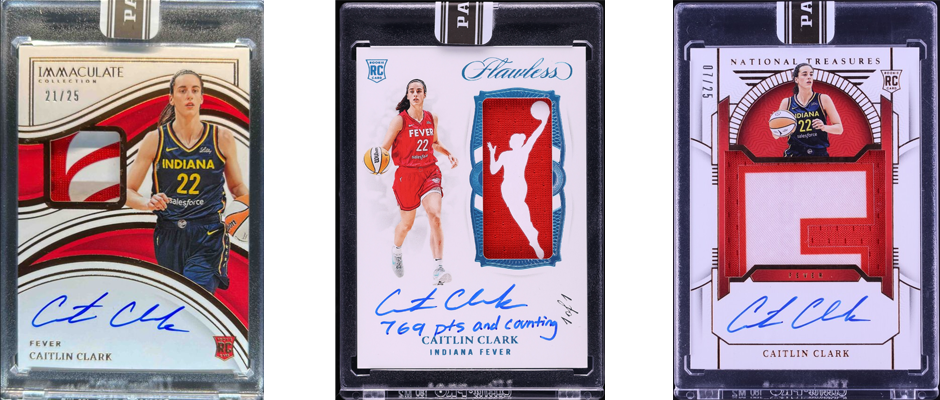
An RPA is a Rookie Patch Autograph card. It is a highly premium rookie card that features both the player’s verified signature and a piece of their game-worn jersey.
If you want to talk about the absolute peak of modern collecting, you have to talk about the RPA. The acronym stands for Rookie Patch Autograph. This card combines the three most desirable elements in the hobby into one single item. It is a rookie card, it has a piece of a game-worn jersey embedded in it, and it is signed by the player.
I always describe the RPA as the Wagyu beef ribeye of the trading card world. It is incredibly expensive, exceptionally rare, and highly sought after by connoisseurs. You do not just stumble across a Wagyu steak at your local restaurant, and you rarely pull an RPA from a retail pack. These cards are usually hidden in extremely expensive, high-end hobby boxes.
The patch itself is a massive driver of the card’s value. A standard plain white jersey swatch is cool. But a patch featuring three different colours, stitching, or part of a team logo is a premium asset. Collectors call these “nasty patches.” The better the patch looks visually, the higher the final auction price will be.
If you ever happen to pull one of these monsters, you need to protect it immediately. The cards are usually much thicker than standard cardboard because they have to hold the fabric patch. You cannot just jam them into a normal sleeve. You need specially sized storage gear to keep them safe from the elements.
Detailed Recipe Guide: Preparing Your Rookie Card for Storage
Just like prepping your kitchen bench before cooking a massive feed, you need to prep your cards for long-term storage. If you pull a valuable rookie card, you must protect it from dust, humidity, and accidental bending. Here is my foolproof recipe for keeping your cardboard pristine.
Supplies Needed:
Step 1: Clean Your Hands and Workspace
Do not touch your cards if you have just been eating greasy potato chips. Wash and dry your hands thoroughly. Clear off your desk so there are no rogue coffee mugs or crumbs around.
Step 2: The Gentle Wipe
Take your clean microfiber cloth and very gently wipe the glossy surface of the card. You are just trying to remove any fresh fingerprints or factory dust. Do not press down hard. Light strokes are all you need.
Step 3: The Penny Sleeve Drop
Take one of your soft Ultra Pro Penny Sleeves. Squeeze the edges slightly so the mouth of the sleeve opens wide. Gently drop the rookie card inside. Never force it, or you will ding the bottom corners.
Step 4: The Toploader Slide
Take the sleeved card and slide it directly into a rigid Ultra Pro Toploader. The soft sleeve protects the surface from scratching against the hard plastic. Tap the bottom of the Toploader lightly on your desk so the card settles at the bottom.
Step 5: Seal the Deal
If you are storing it in a shoebox, place a tiny piece of painter’s tape over the top opening. This stops dust from getting in and prevents the card from sliding out. Your rookie card is now perfectly plated and protected.
Product Comparison Table: Storing Your Rookie Cards
When it comes to storing your collection, you have a few different options. Here is a quick breakdown of the three main products I use every single week.
| Storage Product | Best Used For | Protection Level | Pros & Cons |
|---|---|---|---|
| Ultra Pro Penny Sleeves | Base cards, initial protection. | Low (Surface only) | Pro: Extremely cheap. Con: Offers zero protection against bending. |
| Ultra Pro Toploaders | High-value rookies, autographs. | High (Rigid plastic) | Pro: Stops cards from bending or creasing. Con: Bulky to store in large quantities. |
| Ultra Pro 9-Pocket Binder | Complete sets, visual display. | Medium (Display focused) | Pro: Great for flicking through and viewing. Con: Rings can dent cards if overfilled. |
Conclusion: Serving Up a Winner for Your Collection
At the end of the day, collecting rookie cards is about capturing a moment in time. It is about holding the cardboard origins of a player who might go on to change their sport forever. Whether it is a shiny modern parallel or a vintage piece of history, the rookie card will always remain the ultimate collectible. It is the foundation of the hobby.
I encourage you to start prospecting with care. Do your research, check the sold listings, and do not blow your entire budget on unproven minor leaguers. Treat your collection like a slow-cooked meal. Take your time, gather the best ingredients, and enjoy the process.
So, grab some penny sleeves, clear off your kitchen bench, and start sorting through those old shoeboxes. You never know what kind of hidden gems are waiting to be discovered. Happy collecting, mate. Keep your corners sharp and your surfaces clean!