Disclaimer: As an Amazon Associate I earn from qualifying purchases from our site. Thank you for your support!
Introduction
Did you know that a single scratch across a foil card can drop its grading score by an entire tier, costing you serious money at submission time? I learned that the hard way. Years ago, I slid a fresh-pulled rookie card straight into a cheap no-name sleeve I’d grabbed from the discount bin, and when I pulled it out a week later to show a friend, there was a tiny scuff running right across the holo surface. Gutted doesn’t even begin to cover it.
Here’s the thing though, not all penny sleeves are created equal, and choosing the wrong ones is one of the most common mistakes new collectors make. The best penny sleeves for cards protect your collection without scratching the surface during insertion, storage, or transport. Whether you’re sleeving up a box of bulk commons, prepping cards for PSA submission, or protecting a valuable sports card you just pulled, this guide covers everything you need to know.
We’ll walk through how scratching actually happens, which brands consistently perform best, what to look for on the label, and how to sleeve cards properly so you’re not doing damage with the very tool meant to protect them. Let’s get into it!
What Are Penny Sleeves and Why Do Collectors Swear By Them?
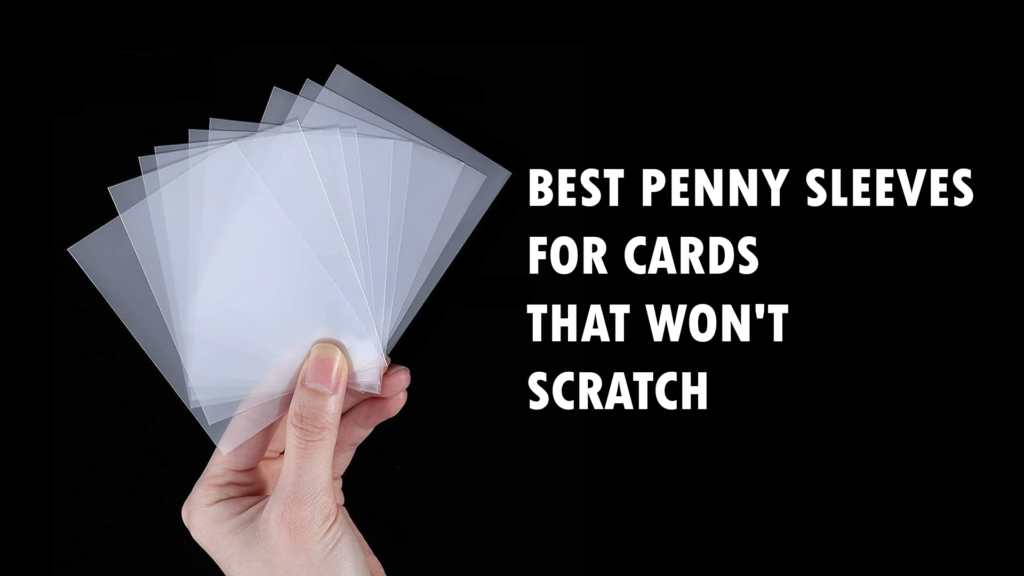
If you’re new to collecting, “penny sleeve” might sound like something from your grandad’s coin collection. But in the trading card world, it refers to the thin, soft, transparent plastic sleeves that go on every card before it goes anywhere else. The name comes from the days when you could actually buy 100 of them for just over a dollar, roughly a penny each. Those days are gone, but the name stuck, and honestly it still fits because these things are still incredibly cheap compared to what they protect.
These soft card sleeves are typically made from polypropylene, which is a type of plastic that’s both acid-free and PVC-free. That matters more than most beginners realise. PVC (polyvinyl chloride) can release chemicals over time that will literally eat into your cards – yellowing them, making surfaces sticky, and degrading the cardboard itself. Acid-free polypropylene, on the other hand, is archival safe and won’t chemically react with your cards even after years in storage.
The uses for the best penny sleeves for cards are pretty much endless. They’re the first layer of defence in a toploader setup, the go-to sleeve for grading submissions to PSA and Beckett, the standard for binder pages, and a great way to keep cards sorted without handling them directly. Even your bulk commons and uncommons deserve a sleeve. I always say, if you pulled it from a pack, it deserves at least a little bit of protection — you never know what might be worth something in ten years!
Do Penny Sleeves Scratch Cards When You Insert Them?
This is the big one, isn’t it? And yes — a poorly designed penny sleeve absolutely can scratch your cards. In fact, this is exactly how a lot of damage happens, not from general wear and tear, but from the act of putting the card into the sleeve itself. The top corners of the card catch on the edge of the sleeve opening, especially if the sleeve is too narrow or has a rough-cut edge. Next thing you know, you’ve got white edge wear on an otherwise mint card.
I’ve been there. Tried a pack of no-name sleeves I bought in bulk off an online marketplace, and every second card I loaded came out with a tiny ding on one of the bottom corners. I was sliding the card in “upside down” — a trick some collectors use, inserting it bottom first — but the sleeve was just so tight and rough-topped that it didn’t make a difference.
The key factors that determine whether a sleeve will scratch your cards are sleeve width, sleeve height, and the quality of the cut at the opening. A sleeve that’s slightly wider than the card gives you enough room to guide it in gently without forcing anything. Brands like BCW and VaultX are known for being slightly more generous in width, which makes insertion a lot smoother. Card Shellz takes it a step further with their pre-cut corner design — they’ve literally notched the top corners of the sleeve so the card has a clear path in without catching. It’s a small thing, but it’s genuinely brilliant for protecting foil surfaces and card corners.
Here’s a tip I wish someone told me earlier: always insert your card with the opening facing up and guide it in slowly at an angle, making sure both bottom corners enter at the same time. Don’t force it. If the sleeve is fighting you, ditch it and use a wider one. Your cards will thank you.
What Are the Best Penny Sleeves That Won’t Scratch My Cards?
Right, here’s what you’ve been waiting for. After years of testing different brands, there’s some great, some absolute rubbish but here are the top 5 best penny sleeves for cards options that genuinely won’t let you down when it comes to scratch protection.
VaultX Soft Card Sleeves
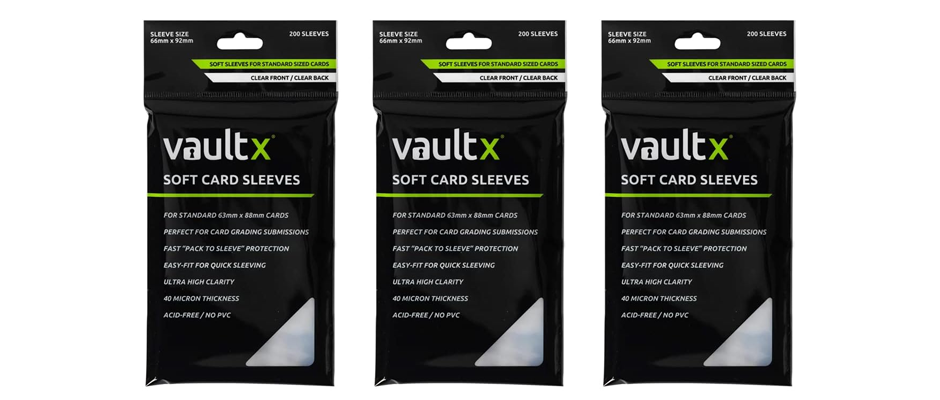
VaultX has quietly become one of the most respected names in the card collecting community, and for good reason. Their soft card sleeves are made from 40-micron polypropylene, are acid-free, PVC-free, and measure 66mm x 92mm — which is just a smidge larger than the standard 2.5″ x 3.5″ size. That extra bit of room makes a real difference when you’re loading hundreds of cards in a session. I’ve used these for bulk sports card storage and they hold up for ages. You can grab 1000 sleeves at a great price that is outstanding value.
Find VaultX Penny Sleeves on Amazon
Ultra Pro Penny Sleeves
Ultra Pro practically invented the penny sleeve category – in fact, “Penny Sleeves®” is actually a registered trademark of theirs. Their sleeves are made from non-PVC, archival safe, acid-free polypropylene film and are designed to fit standard 2.5″ x 3.5″ cards up to 35pt thickness. They’re slightly on the narrower side, which some collectors find makes insertion a bit trickier, but they’re consistently reliable and available everywhere. For everyday bulk storage, they’re a classic choice that’ll last years without yellowing.
Find Ultra Pro Penny Sleeves on Amazon
BCW Standard Card Sleeves
BCW is another widely trusted brand that’s been around long enough to earn its stripes. Their penny sleeves are made from archival-quality polypropylene and are known for being slightly wider than Ultra Pro, which makes them easier to load without corner dings. They fit standard-sized trading cards such as sports cards, Pokémon, Magic: The Gathering, Yu-Gi-Oh! — and slot nicely into 3″x4″ toploaders. BCW also offers packs of 100, 500, and 1000, so you can buy as much or as little as you need.
Find BCW Card Sleeves on Amazon
TitanShield Soft Sleeves
If you want something a bit sturdier than your average penny sleeve, TitanShield is worth a look. Their soft sleeves come in at 60 microns thick, so compared to the standard 40 microns — which makes them noticeably more robust, particularly for cards you handle regularly or display at events. They’re ideal for cards that spend a lot of time going in and out of toploaders. You can pick up 2000 for under $30, which is excellent value for the added thickness.
Find TitanShield Soft Sleeves on Amazon
Card Shellz Easy Glide Sleeves
Card Shellz is the new kid on the block, but they’ve done something genuinely clever. Their Easy Glide sleeves feature a patent-pending pre-cut corner design that removes the sharp edge at the top of the sleeve opening — which is the main culprit for corner dings on insertion. Made from 50-micron polypropylene, they’re thicker than standard sleeves and crystal clear. These are trusted by collectors for PSA, BGS, and SGC submissions specifically because the reduced insertion risk means your card arrives in the same condition it left.
Top 5 Best Penny Sleeves For Cards Comparison Table
| Brand | Thickness | Width | PVC-Free | Acid-Free | Best For |
|---|---|---|---|---|---|
| VaultX | 40 micron | 66mm x 92mm | ✅ | ✅ | Bulk storage, grading |
| Ultra Pro | ~40 micron | 63.5mm x 88.9mm | ✅ | ✅ | Everyday storage |
| BCW | ~40 micron | 66.7mm x 92mm | ✅ | ✅ | Easy loading, bulk |
| TitanShield | 60 micron | Standard+ | ✅ | ✅ | Heavy use, display |
| Card Shellz | 50 micron | Standard+ | ✅ | ✅ | Grading submissions |
Are Penny Sleeves Safe for Long-Term Card Storage?
Short answer — yes, but only if you use the right kind. The material your sleeve is made from matters enormously for long-term storage. Cheap, unbranded sleeves often don’t specify whether they’re PVC-free, and that’s a red flag. PVC plastics can off-gas chemicals over time that react with the surface of your cards, causing discolouration, stickiness, and in serious cases, irreversible chemical damage to the card’s surface.
Polypropylene — which is what all the reputable brands use — is the safe choice. It’s chemically inert, which means it won’t react with your cards no matter how long they sit together. Look for “acid-free” and “PVC-free” on the packaging before you buy anything. If the packaging doesn’t tell you what type of plastic the sleeve is made from, that’s a bad sign and I’d steer clear.
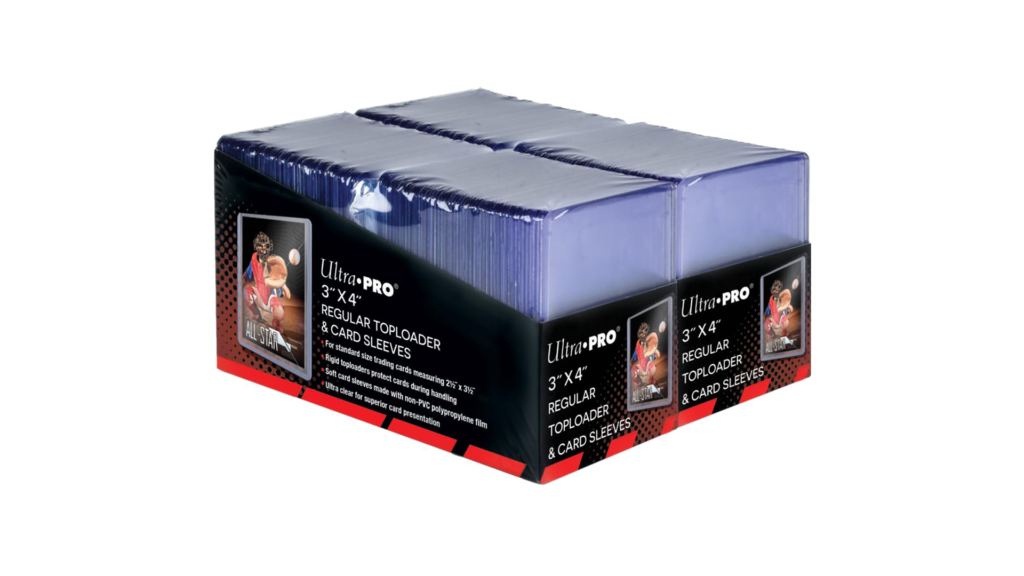
Yellowing is another thing to watch out for. Some cheaper sleeves start to yellow after a few years, particularly if they’re stored somewhere warm or exposed to sunlight. Ultra Pro and BCW both have long track records of staying clear over time. I’ve got Ultra Pro sleeves on cards from over a decade ago that are still perfectly transparent. Avoid storing sleeved cards in direct sunlight or hot spaces like a car, since even the best polypropylene can degrade faster under heat. For extra peace of mind, pair your best penny sleeves for cards with a toploader and store everything in a cool, dry place.
For more on archival card storage best practices, check out the BCW Supplies storage guide and the thorough brand comparison at Cardlines.com.
What’s the Difference Between Penny Sleeves and Perfect Fit Sleeves?
Great question, and one that trips up a lot of newer collectors. The best penny sleeves for cards are generally perfect fit sleeves that are both soft plastic card protectors, but they serve slightly different purposes and have different dimensions.
A penny sleeve is designed to have a bit of room around the card with usually a few millimetres on each side and at the top. That extra space is what makes them easy to insert cards into, and it’s also what makes them compatible with toploaders and binders. The loose fit means the card can be taken in and out without stress on the edges.
A perfect fit sleeve, on the other hand, is designed to fit the card almost exactly — hence the name. There’s minimal gap, which gives extremely tight protection and a very clean, flat look. The trade-off is that they’re harder to insert cards into without risking damage, and because they’re so snug, they can’t usually be used inside a toploader without bunching up.
The most common use of perfect fit sleeves is in a double-sleeving setup. You sleeve the card in a perfect fit inner sleeve first, then slide both into a thicker outer sleeve for tournament play or display. For everyday collecting and grading prep, penny sleeves are usually the better call. They’re faster to use, more forgiving, and work with the widest range of storage products. If you’re specifically doing grading submissions, stick with penny sleeves — that’s what PSA and BGS expect.
For a more in-depth comparison of sleeve types, Draftsim has a great breakdown at draftsim.com/mtg-penny-sleeve.
What Penny Sleeves Are Approved for PSA and BGS Grading Submissions?
If you’re sending cards to a professional grader, your sleeve choice is actually more important than you might think. PSA and BGS both ask that you sleeve cards before placing them in Card Savers or toploaders for submission. The sleeve protects the card from rattling around inside the holder during shipping, and it makes the card easier to remove at the grading facility without risking damage.
The general rule is to use a standard-size, soft, clear penny sleeve — nothing too thick, nothing with a matte back, and nothing that will cause the card to fit too tightly into the Card Saver. Ultra Pro, VaultX, and BCW penny sleeves are all widely used for grading submissions and have been accepted without issue by every major grading service. Card Shellz specifically markets their Easy Glide sleeves as “trusted for PSA, BGS, and SGC submissions” due to their pre-cut corner design that reduces insertion damage.
Here’s the method I use every time I submit a card. First, gently wipe the card surface with a clean microfibre cloth to remove any oils or dust. Then hold the penny sleeve with the opening facing up and lower the card in slowly, bottom corners first, guiding them into the sleeve without forcing anything. Slide the card all the way down so it sits flat at the bottom of the sleeve, then check both corners are sitting properly before placing it into your Card Saver.
One thing that catches people out is using a sleeve that’s too wide — if there’s too much lateral movement inside the Card Saver, the card can shift during transit and pick up internal scuffing. Aim for a sleeve that holds the card firmly but not tightly. VaultX’s 66mm x 92mm size is a great fit for this. For the current PSA and BGS submission requirements, always double-check their official sites before you send anything, as guidelines can change.
How Many Penny Sleeves Do I Need and Should I Buy in Bulk?
This one depends entirely on how serious you are about your collection, but honestly — just buy in bulk. The cost per sleeve drops dramatically the more you buy, and you will always use them. I used to buy 100-count packs and constantly find myself running out right when I’d cracked a new box. Now I buy 1000-count packs by default and I never run out.
Here’s a rough guide to how many you might need. If you’re a casual collector with a few hundred cards, a 500-count pack should keep you going for a while. If you’re actively ripping packs, buying singles, or running a sports card collection across multiple sports, start with 1000. If you’re a dealer or you’re doing bulk submissions, buy multiple 1000-count packs at once — the unit price is generally the same and you save on shipping.
The cost breakdown is pretty compelling. VaultX 1000-count packs run about $14, Ultra Pro 1000-count packs are around $17, and BCW is similar. That’s less than 2 cents per sleeve, which is genuinely nothing when you consider what some of those cards are worth. Even a card worth $20 deserves a 2-cent sleeve. This is not the place to cut costs.
For storage once you’ve sleeved everything, a good plastic storage box keeps sleeved cards tidy and protected. BCW’s card storage boxes are a solid option and pair well with their sleeves. If you want to go a step further, pairing penny sleeves with toploaders for your more valuable cards is the gold standard for most collectors.
For a broader look at how different collectors approach sleeve quantities and storage strategies, Shop Cards USA has a helpful breakdown.
Sleeve It to the Experts: Final Thoughts on the Best Penny Sleeves for Cards
At the end of the day, picking the best penny sleeves for cards comes down to three things — sleeve width, material quality, and how they feel in your hands. You want something that’s slightly wider than the card for easy insertion, made from acid-free polypropylene with no PVC, and ideally comes from a brand with a track record of staying clear over time.
For most collectors, VaultX is the top recommendation for bulk storage and grading submissions — great width, archival safe, and unbeatable value at 1000-count. Ultra Pro is the classic reliable option that’s been keeping cards safe for decades (still my ultimate favourite!). BCW is the pick if you prioritise easy loading on big sleeving sessions. TitanShield is worth the slight premium if your cards see more handling. And Card Shellz is the one to grab if you’re doing grading submissions and want that pre-cut corner peace of mind.
Whatever you choose, just use them. The biggest mistake any collector makes is leaving cards unsleeved because they “haven’t got around to it yet.” Your future self — especially if those cards turn out to be worth something — will be very glad you took five seconds to sleeve them properly today.
Got a favourite penny sleeve brand? Drop it in the comments below — I’d love to know what other collectors are using and whether there are any hidden gems out there I haven’t tried yet. And if you found this guide helpful, share it with your collecting mates so they stop scratching their cards too!