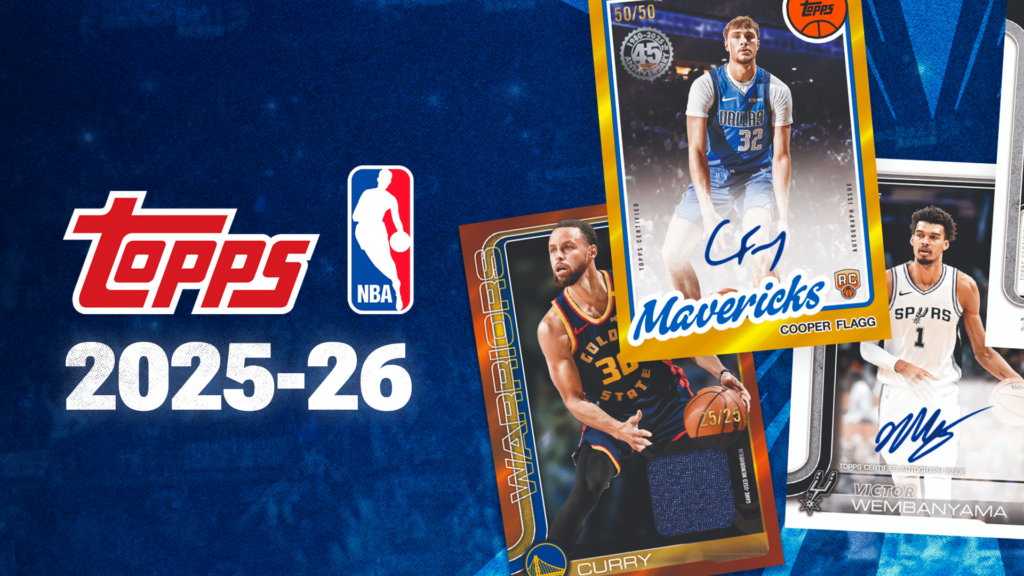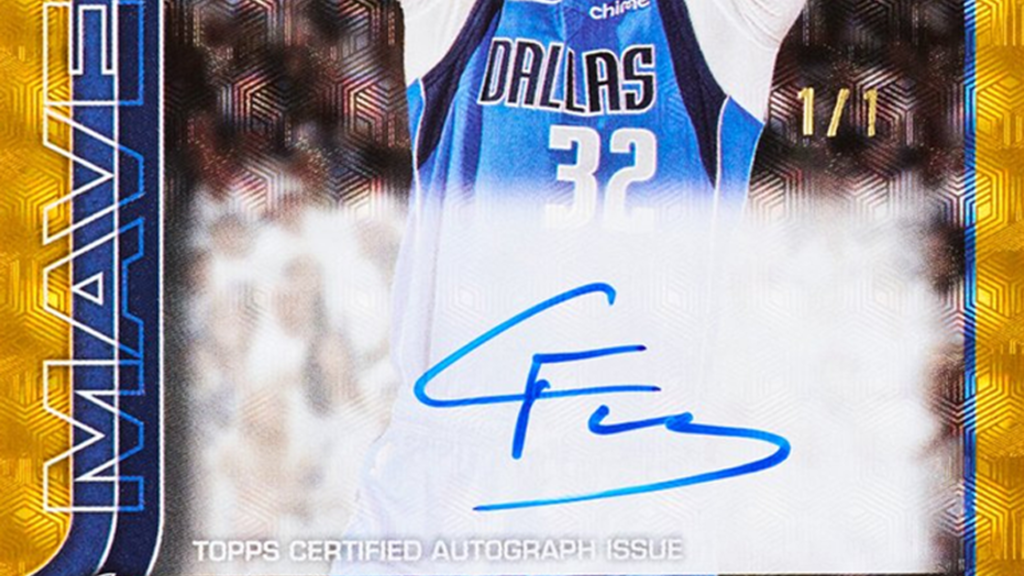
I almost traded away a Cooper Flagg Golden Mirror variation thinking it was just a base card. I was sorting through a fresh hobby box break, moving quickly, and nearly tossed it into my “base cards” pile before something made me pause. That slight gold shimmer on the back caught my eye, and when I flipped it over, I realised I’d almost given away a $300 card for cents.
Golden Mirror variations are some of the most sought-after short prints in the 2025-26 Topps Basketball set, and they’re deceptively easy to miss if you’re not paying attention. These aren’t your typical photo variations where differences jump out immediately. Golden Mirrors require careful inspection, especially when you’re ripping packs quickly and just want to find your hits.
In this guide, I’ll show you exactly how to spot Golden Mirror variations, share which players have the most valuable ones, and help you avoid making the costly mistake I almost made. Whether you’re a seasoned collector or new to variation hunting, this guide will ensure you never accidentally trade away a Golden Mirror again.
What Are Golden Mirror Variations in the 2025-26 Topps Set?

Golden Mirror Image Variations represent Topps’ translation of their successful baseball variation program into basketball. The Golden Mirror Image Variations transform the 300-card base checklist with all-new photography and a brilliant gold back design, making them one of the most distinctive short-printed variation types in modern basketball collecting.
Here’s what makes Golden Mirrors special: every single card in the 300-card base set has a corresponding Golden Mirror variation. This means whether you’re looking at card #1 or card #300, whether it’s Cooper Flagg or a veteran role player, a Golden Mirror version exists. All 300 cards on the base checklist have a Golden Mirror card, making it a very difficult set to build.
The concept originated in Topps’ flagship baseball releases where Golden Mirror variations became highly collectible chase cards. Now basketball collectors get to experience the same thrill of the hunt. Each Golden Mirror features completely different photography from the base version and it’s not just a slight crop or angle change, but an entirely new action shot or pose.
I’ve been collecting variations for years, and Golden Mirrors are particularly appealing because they serve dual purposes. They’re short prints that carry premium values, but they’re also legitimate photo variations that showcase players in different moments. Some collectors actually prefer the Golden Mirror photos to the base versions, which adds collecting appeal beyond just rarity.
The gold back design is the signature element that gives these variations their name. Whilst the front features different photography, the back has a distinctive golden background that immediately distinguishes it from base cards when you flip it over. This design choice was brilliant from a collecting standpoint as it makes variations identifiable without requiring microscopic examination of photo differences.
According to Topps’ official collector’s guide, each short-printed card features a fresh image of the same player, giving collectors a parallel that feels equal parts chase piece and showcase. The photos typically are more creative or fun compared to the standard base card photography.
How Can You Tell If You Have a Golden Mirror Variation?
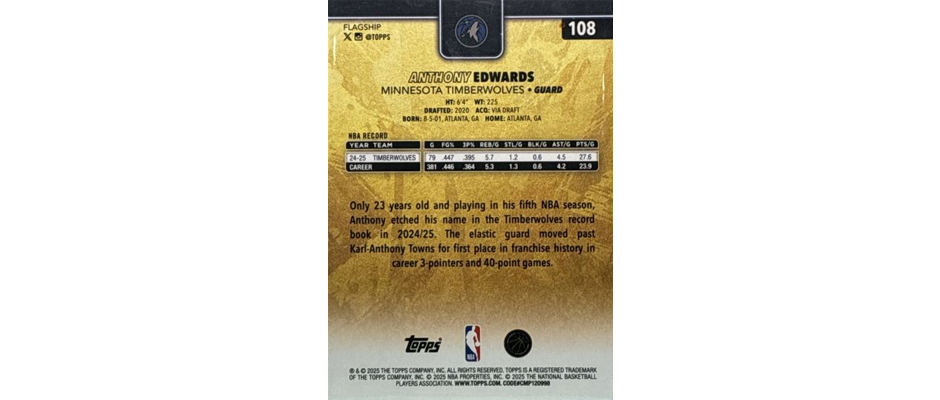
Identifying Golden Mirror variations is straightforward once you know what to look for, but it requires checking both the front and back of every card you pull. Here’s my step-by-step identification process that ensures I never miss variations.
Step 1: Check the back first. This is the fastest identification method and the one I use when sorting fresh packs. Golden Mirror cards have a golden background on the flip side, making them immediately distinguishable from base cards. The entire back of the card has a gold metallic sheen that’s unmistakable under decent lighting.
Base cards have standard white or light-coloured backs with regular stats and information. Golden Mirrors maintain the same information layout but with that golden backdrop. If you’re sorting a stack of cards quickly, flip each one over and look for the gold, you’ll spot variations instantly.

Step 2: Look for the gold Topps logo on the front. Golden Mirror variations have a gold Topps logo on the front of the card rather than the standard logo colour. This is subtle and easy to miss if you’re not specifically looking for it, but once you know, it’s a quick visual confirmation.
The gold logo appears in the same position as on base cards but uses metallic gold foil. Under direct light, it has a distinctive shimmer that differs from the standard logo. I’ve trained myself to glance at the logo position on every card as it takes half a second and prevents missing variations.
Step 3: Compare the photography. This step confirms you’ve got a variation rather than just an odd parallel. Golden Mirror variations feature completely different photos from the base versions. The poses might be different, the jerseys might be different colours (home vs. away), or the action might be from entirely different games.
I keep the Beckett variations guide bookmarked on my phone so I can quickly compare photos when I’m uncertain. Some variations are obvious with a player dunking in the base vs. shooting a three-pointer in the Golden Mirror. Others are more subtle, like similar poses from different angles.
Step 4: Check the card number. Golden Mirrors use the same card numbers as their base counterparts. So if you’ve got base card #150 LeBron James and then pull a Golden Mirror #150 LeBron James, the numbers match. This helps when cataloguing your collection when you’re not dealing with different number sequences.
Common mistakes collectors make:
Mistake #1: Only checking fronts. I’ve seen collectors examine photo differences without checking backs, leading them to miss the gold back that confirms it’s a Golden Mirror rather than another variation type.
Mistake #2: Confusing Golden Mirrors with Rainbow Foilboard parallels. The Rainbow Foilboard parallel also has a metallic sheen but appears on the front of the card, not the back. Golden Mirrors have standard fronts (aside from different photos and the gold logo) with golden backs.
Mistake #3: Assuming similar photos mean it’s not a variation. Some Golden Mirrors feature photos that look superficially similar to base versions, such as same jersey, same game, just a moment before or after the base photo. Always check the back to confirm.
Mistake #4: Not checking every card. When you’re ripping multiple boxes, fatigue sets in and you start rushing. I’ve nearly missed variations because I was sorting mechanically without really looking. Force yourself to flip every single card and glance at that back.
The identification process becomes second nature after you’ve found a few variations. Now I can sort through a complete box of cards in 10-15 minutes and spot any Golden Mirrors instantly. It’s all about building that muscle memory.
What Players Have Golden Mirror Variations?
The complete Golden Mirror checklist spans all 300 base cards, meaning every player, rookie, and legend in the set has a corresponding variation. However, certain players command significantly more collector interest and value.
Top rookie Golden Mirrors include:
Cooper Flagg: As the #1 overall pick and the biggest name in the set, Flagg’s Golden Mirror variation is the most valuable in the entire checklist. I’ve seen these selling for $250-400 depending on the photo quality and buyer demand. His base card is already sought-after, and the variation commands multiples of the base price.
Ace Bailey: The #2 pick has significant collector following, and his Golden Mirror sells in the $80-150 range. Bailey’s dynamic playing style often translates to exciting photography, making his variations particularly appealing.
Dylan Harper: Harper’s Golden Mirror has been selling consistently in the $100-180 range. He’s got long-term potential, and collectors are betting on his development making these variations even more valuable.
Veteran star Golden Mirrors include:
According to the Beckett variations guide, notable players with documented Golden Mirror variations include Jayson Tatum (#1), Jalen Brunson (#14), Cade Cunningham (#40), Tyrese Haliburton (#47), Giannis Antetokounmpo (#54), LaMelo Ball (#67), and Paolo Banchero (#87).
LeBron James (#150): LeBron Golden Mirrors are always premium pulls regardless of the set. The 2025-26 version features his earliest licensed Lakers autographs, adding extra significance to this release. Golden Mirrors have been selling for $150-250.
Victor Wembanyama (#195): Wemby’s second-year variations are highly collectible, particularly given this is Topps’ first fully licensed NBA release featuring him in Spurs gear. I’ve seen his Golden Mirrors move in the $200-300 range.
Stephen Curry (#135): Curry remains one of basketball’s most collected players, and his Golden Mirror variations consistently sell for $100-180. His global appeal keeps demand strong across all his cards.
Additional notable Golden Mirrors per the Beckett guide:
- Donovan Mitchell (#80)
- Nikola Jokić (#101)
- Anthony Edwards (#108)
- Shai Gilgeous-Alexander (#115)
- Kawhi Leonard (#142)
- Devin Booker (#156)
- Kevin Durant (#157)
- Kyrie Irving (#168)
- Ja Morant (#182)
The complete 300-card Golden Mirror checklist means you’re potentially pulling variations of role players and lesser-known veterans as well. Whilst these don’t carry the same premium as star player variations, they’re still significantly more valuable than the corresponding base cards. Even a backup center’s Golden Mirror might sell for $5-15 compared to $0.25 for his base card.
What Are the Odds of Pulling a Golden Mirror Variation?
This is where things get frustrating for collectors. Topps has not published official odds for Golden Mirror variations, which means we’re working with community-collected data and educated estimates rather than confirmed numbers.
Based on breaker data and collector reports across various forums, Golden Mirror variations appear to fall at roughly one per case (12 hobby boxes) or possibly slightly better. However, this is purely anecdotal where some cases yield multiple Golden Mirrors whilst others produce none.
I’ve personally opened 8 hobby boxes (2/3 of a case) and pulled two Golden Mirrors: a Tyrese Haliburton and a Cade Cunningham. Another collector in my group opened a full case and hit three variations. The variance is significant, which is typical for short-printed variations without published odds.
For context, other variation types in the set have much clearer frequencies:
- Rainbow Foilboard parallels fall at 1:11 hobby packs
- Clear Variations are numbered to just 10 copies
- Team Color Border Variations exist for all 300 cards but aren’t numbered
Golden Mirrors sit somewhere in between where more rare than Rainbow Foilboard but more obtainable than Clear Variations. If I had to estimate based on available data, I’d guess roughly 1 Golden Mirror per 100-150 hobby packs, which translates to 1-2 per case.
The lack of official odds makes Golden Mirrors both more frustrating and more exciting to chase. You never quite know when you’ll hit one, which keeps every pack opening suspenseful. However, it also makes calculating expected value for box purchases nearly impossible.
Retail odds appear significantly worse, as expected with short prints. I’ve opened probably 40 retail packs across blasters and hangers without pulling a single Golden Mirror. Collectors on forums report similar experiences—Golden Mirrors in retail are extremely rare, probably 1 per multiple cases if not rarer.
Jumbo boxes likely offer better odds due to the increased pack count (40 cards per pack vs. 12 in hobby). Some breakers report hitting Golden Mirrors more frequently from jumbos, though without published odds, this could just be variance and small sample sizes.
How Much Are Golden Mirror Variations Worth?
Value depends entirely on the player featured, with rookie Golden Mirrors and superstar variations commanding the highest premiums. Let me break down current market values based on recent eBay sales and active listings.
Top-tier Golden Mirrors ($200-400+):
- Cooper Flagg: $250-400
- Victor Wembanyama: $200-300
- Dylan Harper: $100-180
- Ace Bailey: $80-150
Star player Golden Mirrors ($80-200):
- LeBron James: $150-250
- Stephen Curry: $100-180
- Giannis Antetokounmpo: $90-150
- Luka Dončić: $90-140
- Jayson Tatum: $80-130
- Anthony Edwards: $70-120
Solid starter Golden Mirrors ($30-80):
- Tyrese Haliburton: $50-90
- LaMelo Ball: $50-85
- Paolo Banchero: $45-80
- Ja Morant: $45-75
- Shai Gilgeous-Alexander: $50-90
Role player Golden Mirrors ($5-30): Most veteran role players and bench players fall into this range. These variations still command premiums over base cards (which sell for $0.25-1.00), but don’t reach the values of star players.
Value multipliers compared to base cards:
For superstar rookies like Cooper Flagg, Golden Mirrors sell for 8-15x the base card price. His base card moves for $25-35, whilst the Golden Mirror commands $250-400.
For established stars, the multiplier is typically 3-6x. A LeBron James base card might sell for $40-60, whilst the Golden Mirror fetches $150-250.
For role players, multipliers can be 10-20x or even higher because base cards sell for so little. A role player base card worth $0.50 might have a Golden Mirror worth $10-15—a 20x multiplier but still low absolute value.
The market for Golden Mirrors has been active but not explosive. Prices have remained relatively stable since release, with rookie variations holding value well and star player variations seeing steady demand. I’ve been tracking sales for the past two months, and whilst there’s normal fluctuation, we haven’t seen major price movements in either direction.
One interesting trend: photo quality affects value more for Golden Mirrors than typical base cards. If the variation features particularly dynamic or aesthetically pleasing photography, it can command premiums above normal Golden Mirror values. I’ve seen this with several variations where the photo is significantly better than the base version.
What’s the Difference Between Golden Mirror and Other Variations?
The 2025-26 Topps Basketball set includes multiple variation types, and understanding the differences helps avoid confusion when identifying cards.
Golden Mirror vs. Team Color Border Variations:
Team Color Border Variations feature alternate team-colour border designs framing the card. These exist for all 300 base cards like Golden Mirrors, but they’re easier to spot because the coloured borders are immediately visible on the card front. Team Color Border variations don’t have the golden backs that define Golden Mirrors.
I actually prefer Team Color Border variations for team collecting because they’re more visually distinctive when displayed. However, Golden Mirrors typically carry higher values due to the combination of photo variations and the golden back design.
Golden Mirror vs. Player Number Variations:
Player Number Variations are a completely different type of short print. These are numbered to match the player’s jersey number—so if a player wears #23, the variation is numbered to 23 copies. Player Number Variations are easier to recognise because they feature serial numbering.
Player Number Variations are significantly rarer than Golden Mirrors for star players. A LeBron James Player Number Variation numbered to 23 copies is far scarcer than his Golden Mirror, which likely has hundreds of copies printed.
Golden Mirror vs. Clear Variations:
Clear Variations feature an acetate finish numbered to just 10 copies for a premium look. These are dramatically rarer than Golden Mirrors—you’re looking at maybe 1-2 per case at best. Clear Variations use the same photos as base cards but feature that distinctive transparent acetate construction.
I’ve never personally pulled a Clear Variation despite opening considerable product. They’re legitimate chase cards that command huge premiums when they feature desirable players.
SSP (Super Short Print) distinctions:
Topps uses SSP designations for ultra-rare inserts like Comic Court and Home Court case hits. Golden Mirrors are short prints but not SSPs, they fall into that middle rarity tier between regular parallels and true super short prints.
Understanding these distinctions prevents misidentification. I’ve seen collectors claim they pulled “SSP Golden Mirrors” when they actually pulled regular Golden Mirrors, which while valuable, aren’t SSP-level rare.
The key point is that Golden Mirrors occupy a specific niche: full-checklist photo variations with moderate short-print rarity and distinctive golden backs. They’re more rare than parallels, less rare than SSPs, and more visually distinct than subtle photo variations.
Should You Hold or Sell Golden Mirror Variations?
The hold-or-sell decision depends on which variation you pulled, your collection goals, and current market conditions. Based on my experience buying and selling variations, here’s my framework for making these decisions.
Sell immediately situations:
Role player Golden Mirrors: Unless you’re a team collector or specifically building the Golden Mirror set, role player variations should be sold quickly. Their values are already low relative to star players, and they have limited upside. A backup center’s Golden Mirror might fetch $10-20 now but could drop to $5-10 within a year as supply increases.
I pulled a reserve guard’s Golden Mirror and listed it immediately for $12. It sold within two days, and I’m glad I moved it fast rather than watching it depreciate as more copies hit the market.
Veteran star Golden Mirrors (declining players): If you pull a Golden Mirror of an ageing star past their prime, consider selling. These players might maintain short-term value but face long-term decline as their careers wind down.
Hold situations:
Top rookie Golden Mirrors: Cooper Flagg, Dylan Harper, and Ace Bailey Golden Mirrors all have significant long-term upside if these players develop into superstars. Flagg’s Golden Mirror could be worth $500-800 in 3-5 years if he becomes a perennial All-Star.
I pulled a Dylan Harper Golden Mirror and I’m holding long-term. He’s got franchise player potential, and the Golden Mirror represents his first flagship Topps variation. If he pans out, this card appreciates significantly.
Prime superstar Golden Mirrors: Players like Luka Dončić, Giannis Antetokounmpo, and Jayson Tatum are in their primes with years of elite production ahead. Their Golden Mirrors should hold value well and potentially appreciate as these players add to their legacies.
Historical significance cards: LeBron James and other players with long-term collecting appeal benefit from being in the first Topps NBA flagship release in over 15 years. This historical significance might support values better than typical variations.
Market timing considerations:
The Golden Mirror market hasn’t peaked yet because the product is still being opened. As more variations surface over the next 3-6 months, values will likely soften for common players. However, top rookies and superstars should maintain demand even as supply increases.
I recommend waiting 6-12 months before making final hold/sell decisions on premium Golden Mirrors. Let the player’s performance develop, let the market establish true values, and then decide whether to hold long-term or cash out.
My personal strategy: I’m holding all rookie Golden Mirrors unless I need immediate cash. I’m selling veteran role player variations immediately. I’m evaluating star player variations case-by-case based on age, performance, and my personal collection goals.
What Are the Most Valuable Golden Mirror Variations?
Based on current sales data and market observation, here are the most valuable Golden Mirror variations in the 2025-26 Topps Basketball set.
#1: Cooper Flagg Current value: $250-400 Why it’s valuable: #1 overall pick, massive hype, limited supply of his cards relative to demand. Every Flagg card commands premiums, and the Golden Mirror is his most desirable variation.
#2: Victor Wembanyama Current value: $200-300 Why it’s valuable: Generational talent, global appeal, first Topps licensed NBA cards in Spurs gear. Wemby collecting shows no signs of slowing, and this variation captures a historic moment.
#3: Dylan Harper Current value: $100-180 Why it’s valuable: #3 overall pick with elite offensive potential. Harper’s ceiling is superstar-level, and collectors are betting on his development.
#4: LeBron James Current value: $150-250 Why it’s valuable: All-time great, incredible longevity, consistent collecting demand across all products. LeBron variations always carry premiums.
#5: Ace Bailey Current value: $80-150 Why it’s valuable: #2 pick with developing collector base. Bailey’s got two-way potential that could make him a perennial All-Star.
#6: Stephen Curry Current value: $100-180 Why it’s valuable: One of the most collected modern players, global superstar, still producing at elite levels. Curry cards maintain strong demand.
#7: Luka Dončić Current value: $90-140 Why it’s valuable: Young superstar with MVP potential, massive international following, consistently excellent performance.
#8-10 range: Giannis Antetokounmpo, Jayson Tatum, Anthony Edwards, and Shai Gilgeous-Alexander all fall into the $70-130 range depending on specific sales.
Undervalued Golden Mirrors with upside:
Tyrese Haliburton: Currently $50-90, but if he takes another leap and leads the Pacers to playoff success, these could hit $120-150.
Paolo Banchero: At $45-80, Banchero’s Golden Mirror seems underpriced relative to his talent level. Second-year breakthrough could push values to $100+.
LaMelo Ball: Trading in the $50-85 range, Ball has superstar talent when healthy. An MVP-calibre season would significantly increase his variation values.
The key with Golden Mirror investing is remembering these are short prints but not serial-numbered. Nobody knows exactly how many exist, but it’s probably hundreds or low thousands for most players. This supply level means values won’t reach parallel heights, but they should consistently trade above base card levels.
How Do You Store and Protect Golden Mirror Variations?
Given that Golden Mirror variations carry premiums ranging from 3-15x over base cards, proper storage and protection is essential to maintain value.
Immediate protection after pulling:
Penny sleeve every Golden Mirror immediately. I keep a stack of penny sleeves right next to me when opening packs specifically for variations and hits. Don’t leave variations sitting exposed on your desk or table where they could get scratched, bent, or damaged.
After penny sleeving, use top loaders for variations worth under $50. For variations worth $50-100, consider team bags around the top loader for extra protection. For variations over $100 (top rookies, superstars), use magnetic one-touch holders.
Long-term storage:
For building the complete Golden Mirror set, use specialty storage designed for variations. I use a 9-pocket binder with acid-free pages, keeping each Golden Mirror in a penny sleeve within the pocket. This allows easy viewing whilst maintaining protection.
Label your binder pages clearly. I mark which base card number corresponds to each Golden Mirror, making it easy to identify which variations I still need for set completion.
For high-value Golden Mirrors ($100+), I store them separately in magnetic holders within a protected storage box. These cards get special treatment because they represent significant value concentrations.
Display considerations:
If displaying Golden Mirrors, use UV-protective cases. Even though these are modern cards, prolonged light exposure can cause colour fading over years. Magnetic holders with UV protection are ideal for displaying single high-value variations.
For displaying multiple variations together, consider wall-mount frames with UV-protective acrylic. Vaulted Collection and similar companies make displays specifically for trading cards that provide proper protection whilst showcasing your collection.
Handling best practices:
Always handle Golden Mirrors by the edges, never touching the card surface. The golden backs can show fingerprints and smudges more readily than standard white card backs.
When photographing variations for sales or social media, handle them over soft surfaces. I photograph all cards over a padded mat to prevent damage if I accidentally drop one.
Don’t over-handle your Golden Mirrors. Every time you pull a card out to show someone, you risk minor damage. For high-value variations, consider taking photos and showing those instead of the actual card.
Mastering Variation Hunting
After months of hunting Golden Mirror variations and helping other collectors identify them, I’ve developed a systematic approach that maximises finds whilst minimising the risk of missing valuable variations.
The most important habit is checking every single card, no matter how tedious it feels. Golden Mirrors of role players still have value, and you never know when you’ll hit a star player variation. Flip every card, glance at the back, check that logo and make it automatic.
Understanding that all 300 base cards have Golden Mirror variations changes how you approach the set. You’re not just chasing a few dozen short prints; you’re hunting within a complete parallel set. This knowledge motivates thorough checking because any card could be a variation.
Use technology to your advantage. Keep the Beckett variations guide or a photo reference bookmarked on your phone. When you think you’ve found a variation, quickly compare the photo to confirm. This prevents false positives and gives you confidence in your identifications.
Build a network of collecting friends who also hunt variations. Share finds, compare notes, and help each other identify variations. I’m part of a Discord group specifically for variation hunters, and the collective knowledge has helped me identify several variations I might have missed on my own.
Remember that Golden Mirror variations represent more than just short prints—they’re photo variations that showcase different moments and images. Even if you’re not a variation collector by nature, these cards offer collecting appeal beyond rarity. Some Golden Mirror photos are genuinely better than their base counterparts, making them desirable for display and team collections.
What Golden Mirror variations have you pulled? Have you found any that nearly slipped through your fingers, or do you have a favourite variation in your collection? Drop a comment below and share your variation hunting success stories—I’d love to hear what others are finding.
Now if you’ll excuse me, I’ve got three fresh hobby boxes arriving tomorrow, and I’m ready to hunt for more Golden Mirrors. Happy collecting, and may every flip reveal that golden back!