In this guide, I’ll share everything I’ve learnt about how to prevent sports cards from warping in humidity damage, from the science behind why warping happens to the specific products and techniques that actually work. Whether you live in Florida, the Pacific Northwest, or anywhere with seasonal humidity spikes, these strategies will help keep your collection flat and pristine.
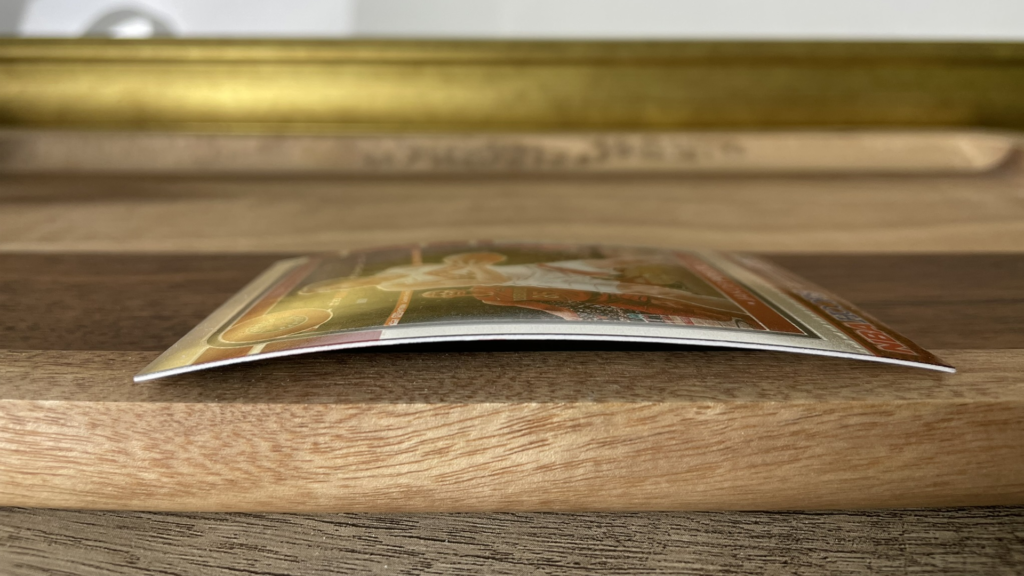
I’ll never forget opening my storage box after a humid summer and finding my entire collection of 1990s Chrome cards had developed a noticeable bow. These weren’t cheap commons either as I had several hundred dollars worth of refractors and inserts that had been perfectly flat three months earlier. The warping wasn’t catastrophic, but it was visible enough that selling them would mean accepting significant losses.
That expensive lesson taught me that humidity is one of the most insidious threats to card collections. Unlike obvious dangers like water damage or physical trauma, humidity works slowly and quietly, warping cards over weeks and months before you notice the damage. Once cards bow or curl, fixing them completely is difficult or impossible, meaning prevention is absolutely critical.
Why Do Sports Cards Warp in High Humidity?
Understanding why humidity causes warping is crucial because it explains why certain prevention methods work whilst others fail. The science is actually straightforward once you grasp the basics.
Sports cards are made from paper-based cardstock, which is hygroscopic, meaning it naturally absorbs and releases moisture from the surrounding air. When humidity levels rise, card stock absorbs moisture from the air and expands. When humidity drops, cards release moisture and contract. This constant expansion and contraction eventually causes permanent warping and bowing.
The problem gets worse with modern cards because many feature foil layers or holographic finishes. These metallic layers don’t absorb moisture or expand like paper does, creating tension between the paper base and the foil surface. The paper layer wants to expand in humidity, but the foil layer resists, causing the card to curl or bow as different layers react differently to moisture.
According to Foil Armor, foil cards warp due to humidity imbalance between paper and foil layers, with the paper stock expanding whilst the metal layer remains stable. This is why cards from the 1990s and early 2000s at the height of the chromium and refractor era – are particularly vulnerable to warping.
I’ve experienced this firsthand with my 1990s Upper Deck collection. The glossy finish on these cards makes them prone to “bricking”, when cards stick together due to humidity and become a solid block that can rip apart when separated. It’s heartbreaking to pull apart cards and watch surface paper tear away, destroying your collection.
The warping process is cumulative. Each humidity cycle causes micro-expansions in the card stock that gradually weaken the paper’s structural integrity. Over months and years, these cycles cause visible bowing that becomes permanent. Heat accelerates this process because warm, humid air contains more moisture than cool, humid air.
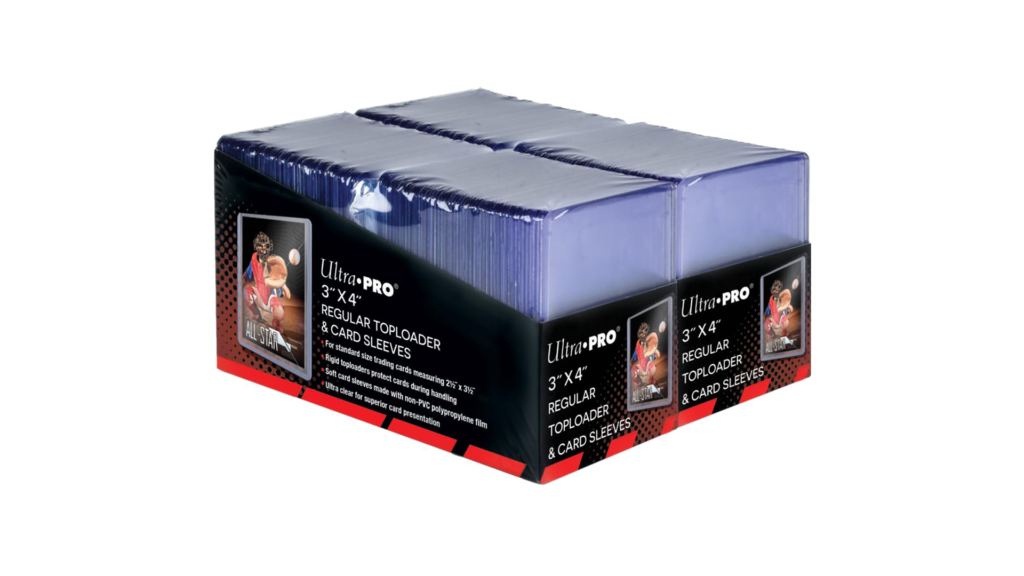
Even cards stored in penny sleeves and top loaders aren’t immune. Whilst these protection methods prevent physical damage and dust, they don’t create moisture-proof barriers. Humidity still reaches cards through the open tops of loaders and through the plastic materials themselves over time.
What Humidity Level Is Safe for Sports Cards?
Maintaining proper humidity levels is the single most important factor to prevent sports cards from warping, but the specific numbers matter more than most collectors realise.
Professional archivists recommend storing between 68 and 72 degrees Fahrenheit at a humidity level of 45-55% for optimal preservation. This range provides the sweet spot where cards remain stable without excessive moisture absorption or dangerous dryness.
However, the Library of Congress, which stores some of the country’s most important documents, advises that a temperature of about 50 degrees Fahrenheit is ideal for paper documents, corresponding to a humidity range around 35%. This lower humidity level is even safer for long-term storage but may not be practical for cards stored in living spaces.
For most collectors storing cards in their homes, targeting 45-55% humidity is realistic and provides excellent protection. Going below 35% humidity can actually cause problems—extremely dry air can make cards brittle and prone to cracking. Going above 55% significantly increases warping risk, and anything above 65% creates conditions where mould and mildew can develop.
I keep my card room at exactly 50% humidity year-round using a combination of dehumidification in summer and humidification in winter. This consistency prevents the expansion-contraction cycles that cause permanent warping. When I travel for extended periods, I set my system to maintain 48-52% humidity automatically.
Temperature stability matters just as much as humidity. Maintaining 45-55% humidity and 68-72°F temperature in a stable environment will preserve cards optimally. Fluctuating temperatures cause fluctuating humidity levels, which accelerates warping. A basement that swings from 55°F to 75°F seasonally is far worse for cards than a climate-controlled room at constant 70°F.
Seasonal considerations are crucial depending on your location. Summer humidity in Florida might regularly hit 70-80%, requiring aggressive dehumidification. Winter in Colorado might drop below 20%, requiring humidification to prevent brittleness. I adjust my humidity control strategies seasonally rather than maintaining one approach year-round.
The key insight is that consistency matters more than hitting a specific number. A collection stored at constant 60% humidity will fare better than one fluctuating between 40% and 70%, even though 60% is higher than ideal. Stable conditions prevent the expansion-contraction cycles that cause permanent damage.
How Do You Monitor Humidity in Your Card Storage Area?
You can’t control what you don’t measure, and humidity monitoring is the foundation of proper card protection. I made the mistake for years of just assuming my storage area was “fine” without actually checking—a mistake that cost me hundreds of dollars in warped cards.
Digital hygrometers are the gold standard for humidity monitoring. These devices display current temperature and humidity readings on an LCD screen, with many models recording high and low values over time. I use the ThermoPro TP55 digital hygrometer, which has proven accurate and reliable over three years of continuous use.
Place hygrometers at card level, not on walls or ceilings, because humidity varies within a room. Humidity near the floor might be 55% whilst humidity at ceiling level is 48%. Since cards are typically stored on shelves or in boxes, position your hygrometer where your cards actually sit.
I keep three hygrometers in my collection room: one near my display cases, one inside my main storage box, and one near my most valuable cards. This gives me a complete picture of humidity distribution rather than relying on a single reading that might not represent actual card storage conditions.
Smart hygrometers with app connectivity offer the ultimate monitoring solution. These devices (like the SensorPush or Govee models) connect to your smartphone via Bluetooth or WiFi, allowing you to track humidity remotely and receive alerts when levels exceed your set thresholds. I get a notification if humidity in my card room exceeds 55% or drops below 45%, letting me respond immediately.
For valuable collections stored in climate-controlled units or off-site locations, smart hygrometers are essential because they let you monitor conditions without physically visiting the storage location. I check my storage unit’s humidity daily from my phone whilst drinking morning coffee.
Analogue hygrometers are cheaper, but less accurate and harder to read. I don’t recommend these for valuable collections because the mechanical mechanisms can drift out of calibration over time. If you do use analogue models, calibrate them regularly using the salt test method to ensure accuracy.
The salt test: place a small cup of salt saturated with water in a sealed plastic bag alongside your hygrometer for 8-12 hours. The humidity inside should read exactly 75%. If your hygrometer reads differently, you know how much it’s off and can mentally adjust readings or recalibrate if possible.
Most importantly, check your hygrometers regularly. I glance at mine daily when working in my collection room, and I review the stored min/max values weekly to identify any concerning spikes or drops that might have occurred when I wasn’t monitoring.
Do Penny Sleeves and Top Loaders Prevent Warping?
This is a common misconception that I need to address head-on: penny sleeves and top loaders do NOT prevent humidity-based warping, though they do provide other important protections.
Penny sleeves are thin polypropylene bags that protect cards from fingerprints, dust, and minor scratches. However, they’re not moisture barriers. Humidity passes through the plastic material and through the open end of the sleeve, reaching the card inside. I’ve pulled cards from penny sleeves after humid summers and found them just as warped as unsleeved cards stored in similar conditions.
Top loaders provide rigid protection that prevents physical bending, but they don’t create humidity-proof seals. The open top of a top loader allows air (and humidity) to circulate freely. Additionally, the plastic used in top loaders is permeable to moisture over time but it’s not an airtight material.
That said, top loaders do help maintain card flatness through their rigid structure. A warped card in a top loader at least maintains its shape rather than continuing to curl. This can prevent minor warping from becoming severe warping, which provides some value.
The combination of penny sleeves and top loaders protects against:
- Physical damage (scratches, edge wear)
- Dust and debris
- Fingerprints and oils
- Minor impacts and pressure
They do NOT protect against:
- Humidity absorption and warping
- Temperature fluctuations
- Mould and mildew growth in humid conditions
- Long-term environmental damage
For truly humidity-proof protection, cards need to be stored in sealed, climate-controlled environments. Some collectors use sealed plastic containers with humidity control packs, creating miniature climate-controlled environments for high-value cards. This approach works brilliantly as I use it for my most expensive cards worth over $500.
The bottom line is that penny sleeves and top loaders are essential for card protection, but they’re just the first layer. Combine them with proper humidity control in your storage environment for complete protection. Don’t make the mistake I did of assuming that sleeving cards was enough to prevent sports cards from warping.
Should You Use a Dehumidifier for Card Storage?
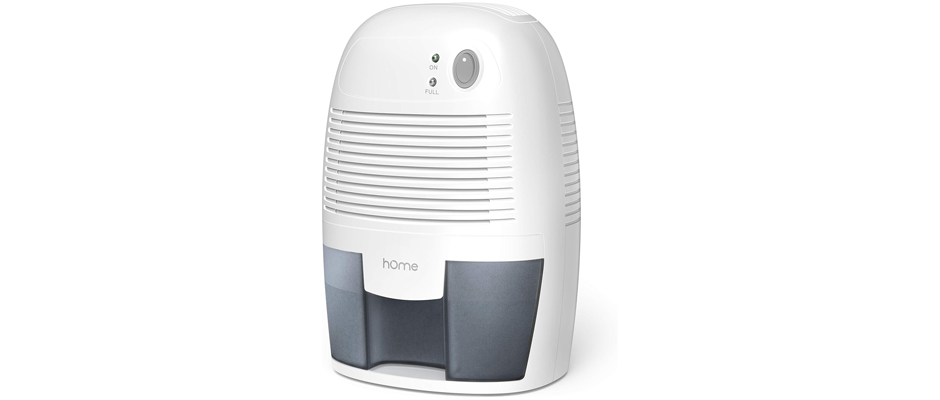
For collectors in humid climates or with large collections, dehumidifiers are genuinely worth the investment. I resisted buying one for years because of the upfront cost, but after one humid summer destroyed hundreds of dollars in cards, I finally committed—and I wish I’d done it years earlier.
Refrigerant dehumidifiers (also called compressor dehumidifiers) are the most common and effective type for room-sized spaces. These work like air conditioners, cooling air to condense moisture out before reheating and releasing dry air. They’re ideal for basements, card rooms, or anywhere you’re controlling humidity in 500+ square feet.
I use a hOmeLabs 50-Pint Dehumidifier in my 400-square-foot card storage room. It pulls 30-40 pints of water per day during humid summer months, keeping humidity at exactly 50% year-round. The built-in humidistat automatically maintains my target humidity level without constant adjustment.
Desiccant dehumidifiers work differently, using moisture-absorbing materials to pull humidity from the air without refrigeration. These are smaller, quieter, and work better in cold environments where refrigerant models struggle. However, they’re less powerful and better suited for small spaces like closets or display cabinets.
For collectors storing cards in single rooms or closets, small desiccant models like the Eva-Dry E-333 work well. These renewable units absorb moisture until saturated, then you “recharge” them by plugging them into a wall outlet to release the absorbed moisture.
Sizing matters enormously. A dehumidifier rated for 1,000 square feet won’t effectively control a 2,000-square-foot basement. Check the manufacturer’s coverage area and choose a unit rated for slightly more space than you actually have—this ensures adequate capacity during peak humidity periods.
According to Eva-Dry dehumidifying products, humidity can cause severe damage to baseball card collections, causing cards to stick together, resulting in rips when pulled apart, and heat can also warp cards and cause sleeved cards to succumb to moisture damage. A dehumidifier prevent sports cards from warping issues by maintaining consistent low humidity.
Cost considerations: A quality room dehumidifier costs $150-300 upfront, plus roughly $20-40 per month in electricity during operation (varies by climate and usage). For a collection worth thousands of dollars, this is cheap insurance. I’ve calculated that my dehumidifier has already prevented more damage than 10x its purchase price.
Placement tips: Position dehumidifiers in open areas with good airflow, not tucked into corners or behind furniture. Keep them at least 6-12 inches away from walls to ensure proper air circulation. I place mine centrally in my card room where it can draw air from all directions.
Use the continuous drain feature if available. Most dehumidifiers have a bucket that fills with extracted water and shuts off when full. Continuous drain hoses eliminate this by constantly draining water to a sink or floor drain, allowing uninterrupted operation. I installed a drain hose within a week of buying my dehumidifier—having it shut off during a humid spell defeats the entire purpose.
How Do Silica Gel Packets Help Prevent Sports Cards Warping?
Silica gel packets are the budget-friendly moisture control solution that actually works when used correctly. These are those little “DO NOT EAT” packets you find in shoe boxes, electronics packaging, and beef jerky bags.
Silica gel can absorb up to 40% of its weight in moisture, making it incredibly effective for small-scale humidity control. What makes silica gel special is that it works both ways—it absorbs excess moisture when humidity is too high and releases moisture when conditions become too dry, helping maintain equilibrium around 30-60% humidity.
However, standard silica gel packets only absorb moisture, they don’t release it when conditions become too dry. This one-way moisture control can overdry your storage environment if you use too many packets, potentially making cards brittle.
Foil Armor humidity packs maintain a precise 65% relative humidity to prevent sports cards from warping and curling, especially foils and holographic cards that are highly sensitive to moisture changes. Unlike traditional silica gel packs which only absorb moisture, Foil Armor packs both absorb and release moisture, ensuring stable humidity levels.
I’ve tested both standard silica gel and Foil Armor packs extensively. For bulk storage boxes, I use Foil Armor silica gel packets purchased in bulk from Amazon. For high-value cards and foil-heavy collections, I use Foil Armor packs because the two-way humidity control provides better stability.
How to use silica gel effectively:
Place silica gel packets in your storage boxes, binders, or display cases and not in direct contact with cards, but in the same enclosed space. They’re particularly effective in sealed environments like plastic storage containers or safety deposit boxes.
I place 2-3 packets in each of my 5,000-count storage boxes, positioning them at the bottom of the box where they don’t contact cards but remain in the enclosed environment. For smaller displays or individual card cases, one packet is sufficient.
Recharging silica gel: Quality silica gel packets include colour indicators (typically orange or blue beads) that change colour when saturated. Orange beads turn dark green/black, blue beads turn pink. When saturated, simply heat the packets in a 90°C or 200°F oven for 2-3 hours to drive out absorbed moisture, and they’re ready to reuse.
I recharge my silica gel packets every 2-3 months during humid seasons, every 4-6 months during dry seasons. This extends their life indefinitely and makes them incredibly cost-effective, $20 worth of silica gel has been protecting my collection for three years.
Foil Armor for problem cards: For cards that are already slightly warped or for foil-heavy collections, Foil Armor packs work magic. The 8g pack is ideal for flattening up to 5 warped cards in 24 to 48 hours or preserving small collections long-term. I’ve successfully flattened several Chrome cards using Foil Armor packs in sealed containers where cards that had noticeable bows became completely flat within 48 hours.
The process is simple: place warped cards in a sealed plastic container with a Foil Armor pack, leave it sealed for 24-48 hours, and the two-way humidity control gradually relaxes the paper fibres and equalises moisture throughout the card stock. The 2-way humidity control formula works within 48 hours to relax curled foils.
Can You Fix Warped Cards?
This is the question every collector asks after discovering warped cards, and the honest answer is: sometimes, but it’s not guaranteed, and you need to be very careful not to make things worse.
There are steps you can take to try and help flatten bowed cards, however, it’s not always easy, or even possible, to restore some cards to their original flat state, so you have to consider whether it’s worth the time and effort.
Method 1: Weight and time
The gentlest flattening method involves placing warped cards in penny sleeves and top loaders, then storing them under weight for extended periods. I place warped cards at the back of heavy binders where the weight of other cards helps flatten them gradually over weeks or months.
This method works for minor warping but fails with severe bows. It’s also incredibly slow as you need to expect 2-4 weeks minimum for noticeable improvement. The advantage is it’s completely safe and won’t damage cards further.
Method 2: Humidity normalisation with Foil Armor
As I mentioned earlier, Foil Armor packs in sealed containers provide two-way humidity control that can flatten warped cards. This is my preferred method for valuable cards because it addresses the root cause (moisture imbalance) rather than just applying pressure.
Place the warped card in a penny sleeve, put it in a sealed plastic container with a Foil Armor pack, and leave it sealed for 24-72 hours. Check progress daily. I’ve had excellent success with this method, maybe 70-80% of cards flatten completely, whilst the remaining 20-30% show significant improvement even if not perfect.
Method 3: The book method
Some collectors sandwich warped cards between wax paper sheets inside heavy books for several weeks. The consistent pressure combined with the card gradually equilibrating to room humidity can flatten minor warps.
I’ve tried this method with mixed results. It works for slight bows but struggles with severe warping. The biggest risk is creating pressure marks on card surfaces if you’re not careful with how you position cards within the book.
Methods to AVOID:
Don’t use heat: Some collectors suggest using hair dryers or heat guns to “relax” warped cards. This is incredibly dangerous—heat can permanently damage card stock, melt glossy finishes, and cause irreversible deterioration. I’ve seen cards destroyed this way.
Don’t use moisture directly: Suggestions like damp towels or humidifying cards directly are recipes for disaster. Excess moisture causes mould, staining, and can make warping worse. Never introduce liquid moisture to cards.
Don’t use extreme pressure: Clamping cards in vice grips or under extreme weight can crease corners, create pressure marks, or even crack card stock. Gentle, consistent pressure over time works better than aggressive flattening attempts.
The grading company perspective:
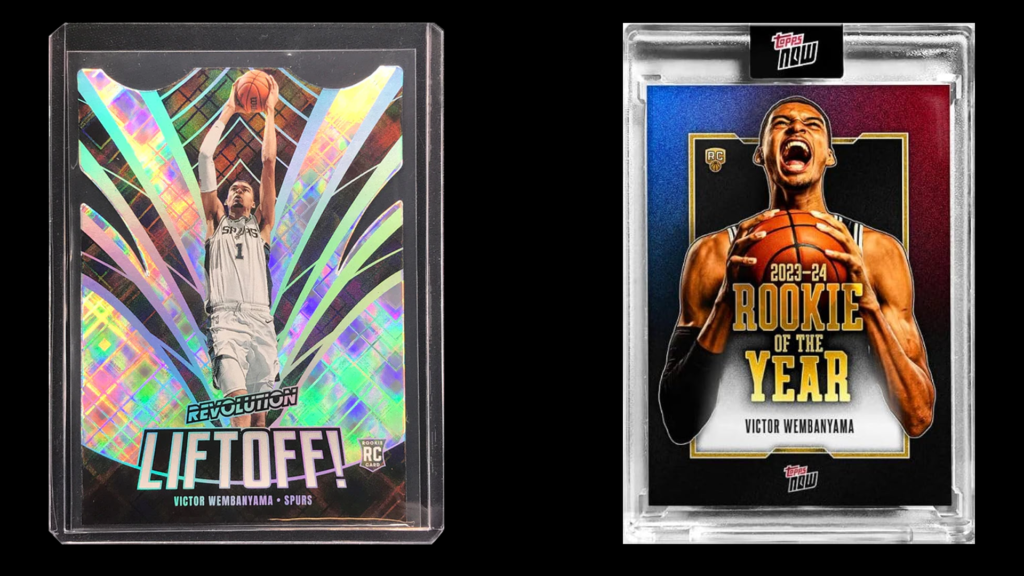
Most card grading companies won’t penalise a card that’s warped or curved, as long as there’s no permanent damage. Once it’s graded, encased in a slab and shipped back, it will be flat inside the plastic. This means if you’ve got valuable warped cards, submitting them for grading actually serves as a permanent flattening solution.
I’ve submitted several warped vintage cards for grading, and they came back perfectly flat inside their PSA slabs. The pressure of the slab combined with the sealed environment maintains flatness permanently. For cards worth $200+, grading might be more effective than DIY flattening attempts.
Are Graded Cards Protected from Humidity Damage?
PSA, BGS, and other grading company slabs provide significantly better humidity protection than raw cards, but they’re not completely impervious to environmental factors.
The sealed acrylic holders create barriers against direct moisture exposure and humidity fluctuations. Cards inside graded slabs won’t experience the same expansion-contraction cycles as raw cards because the slab maintains stable internal conditions. I’ve never seen a card inside a properly sealed PSA slab develop warping, even after years of storage in varying humidity conditions.
However, graded slabs aren’t perfect moisture barriers. Over extremely long periods (decades), humidity can potentially affect cards even inside slabs, particularly if slabs develop microscopic cracks or seal degradation. Additionally, improper storage of slabs themselves can lead to issues—storing slabs in excessively humid environments can cause the labels to separate or bubble.
I treat my graded slabs with the same humidity consciousness as raw cards, just with more confidence that they’re well-protected. My graded cards live in the same climate-controlled room as my raw cards, maintaining that 45-55% humidity range.
One advantage of graded slabs is they’re completely sealed, so internal humidity doesn’t fluctuate even if external humidity changes. This prevents the cyclic expansion-contraction that causes warping in raw cards. Once a card is graded and sealed, its internal environment remains stable indefinitely under normal storage conditions.
For long-term storage of high-value cards, grading provides excellent humidity protection as a side benefit beyond the authentication and grade assignment. It’s one of many reasons I’ve gradually been sending my most valuable raw cards for grading—the protective benefits justify the submission costs.
What’s the Best Storage Solution for Humid Climates?
Living in humid climates presents special challenges that require dedicated solutions. As someone who’s lived in both dry and humid climates, I can tell you the storage strategies differ dramatically.
Climate-controlled storage is essential in humid regions. Air conditioning naturally reduces humidity whilst maintaining stable temperatures. Air conditioning becomes your best friend—it naturally reduces humidity whilst maintaining stable temperatures. If central air isn’t available, consider a climate-controlled storage unit specifically for valuable collections.
Layer your protection by using multiple storage methods. Place cards in penny sleeves and top loaders, then store these in acid-free boxes within a climate-controlled environment. This creates multiple barriers against moisture intrusion.
My layered approach for humid climate storage:
- Penny sleeve every card
- Top load or magnetic holder for valuable cards
- Store in sealed plastic containers with silica gel or Foil Armor packs
- Keep containers in climate-controlled room with dehumidifier
- Monitor humidity constantly with digital hygrometers
Avoid problem areas entirely: Avoid storing cards directly on concrete floors or against exterior walls where moisture can seep through. Use shelving units or storage cabinets that provide airflow underneath and around your collection. Basements are particularly problematic in humid climates because they’re naturally damp.
In a basement display room, invest in a dehumidifier (whole-house or a freestanding unit) and monitor humidity levels. Conservators recommend very low humidity levels, between 30% and 50%, for most archival materials. Obviously, store your cards off the ground in case of flooding or sump pump failure.
I keep all my storage boxes on wire shelving units at least 12 inches off the floor. This provides airflow underneath and protects against potential flooding. After one close call with a water heater leak, I’m paranoid about keeping cards elevated.
Sealed storage containers: For humid climates, sealed plastic containers (like weathertight storage bins) combined with humidity control packs create ideal microenvironments. Storing cards separately, rather than in stacks, helps prevent them from sticking together from dampness. You can also keep cards in a sealed environment with substantial silica packs to absorb moisture.
I use clear weathertight bins ($20-30 each) for my bulk commons and mid-range cards. Each bin contains 4-6 large silica gel packets, creating dry microclimates even if room humidity fluctuates. These bins stack efficiently and provide excellent protection.
The nuclear option: For six-figure collections or collectors in extremely humid climates, professional climate-controlled storage units with industrial dehumidification systems represent the ultimate solution. These aren’t cheap—expect $100-300 per month—but they provide museum-level environmental control.
Protecting Your Investment from Humidity
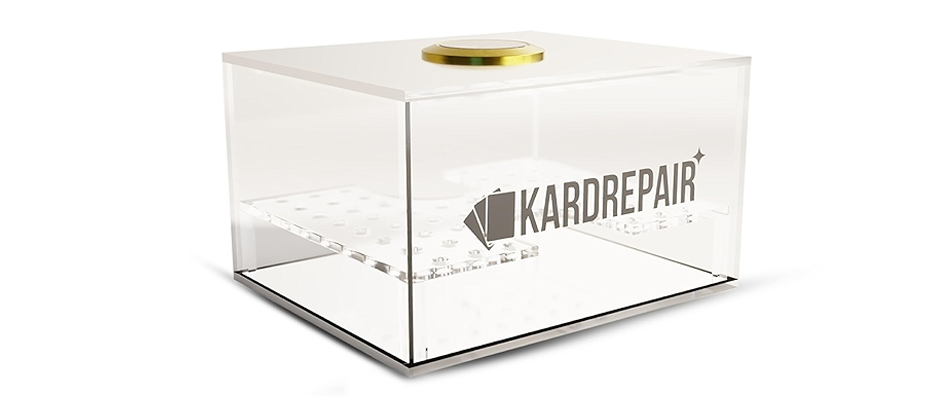
After years of fighting humidity and learning from expensive mistakes, I’ve developed a comprehensive approach that balances effectiveness with practicality.
The foundation is understanding that humidity control is continuous, not one-time. You can’t set up protection once and forget about it—environmental conditions change seasonally, equipment needs maintenance, and monitoring must be consistent. I check my hygrometers daily and empty my dehumidifier weekly. This vigilance prevents problems before they become disasters.
For most collectors, the practical humidity protection strategy looks like this:
For collections under $5,000:
- Store in climate-controlled living spaces (not garages, attics, or basements)
- Use penny sleeves and top loaders for all cards
- Add silica gel packets to storage boxes
- Monitor humidity with a basic digital hygrometer
- Total cost: $50-100 for protection supplies
For collections $5,000-$25,000:
- Dedicated climate-controlled storage room or closet
- Small room dehumidifier ($150-250)
- Sealed storage containers with humidity control packs
- Smart hygrometer with alerts
- Penny sleeves, top loaders, and sealed protection for all cards over $50
- Total cost: $300-500 for complete protection system
For collections over $25,000:
- Professional climate-controlled room with humidity monitoring
- Large capacity dehumidifier with continuous drainage
- Foil Armor packs for all foil/refractor cards
- Multiple hygrometers with data logging
- Grading valuable cards for permanent humidity protection
- Consider professional storage for highest-value pieces
- Total cost: $800-2,000 for comprehensive protection
The most important lesson I’ve learnt is that prevention is infinitely easier and cheaper than trying to fix warped cards after the fact. Invest in proper humidity control now rather than watching your collection deteriorate and trying desperate flattening methods later.
What humidity challenges have you faced with your collection? Have you found solutions that work particularly well, or are you fighting an ongoing battle against warping? Drop a comment below and share your experiences, we’re all learning together in this constant fight against environmental damage.
Now if you’ll excuse me, I need to check my dehumidifier and hygrometers. That’s the reality of serious card collecting, constant vigilance against the invisible enemy of humidity. Happy collecting, and may your cards stay forever flat!