Disclaimer: As an Amazon Associate I earn from qualifying purchases from our site. Thank you for your support!
Introduction
Here’s a stat that should stop every basketball card collector in their tracks was the last time Topps released a fully licensed flagship NBA basketball product was 2009-10. That’s fifteen years ago. Think about that for a second. Fifteen years of Panini domination, fifteen years without a Topps logo on an NBA card, and then — boom — October 2025, and the hobby completely lost its mind. I did too, honestly. I’d been sitting on the fence about buying into this release since the announcement, and the morning preorders went live I found myself staring at a sealed hobby case with my credit card already out.
So the big question on every collector’s lips right now is: is it worth breaking a sealed case of 2025-26 Topps basketball? It’s not a simple yes or no, and anyone who tells you it is probably hasn’t done the maths. Whether you’re chasing a Cooper Flagg auto, hunting a Golden Mirror SSP, or just trying to figure out if your money is better off spent cracking wax or holding the box sealed, this guide is going to walk you through everything you need to know — from box configurations and case hit odds to realistic expected value and the hold-versus-break debate.
Let’s get into it!
Why the 2025-26 Topps Basketball Set Is Such a Big Deal
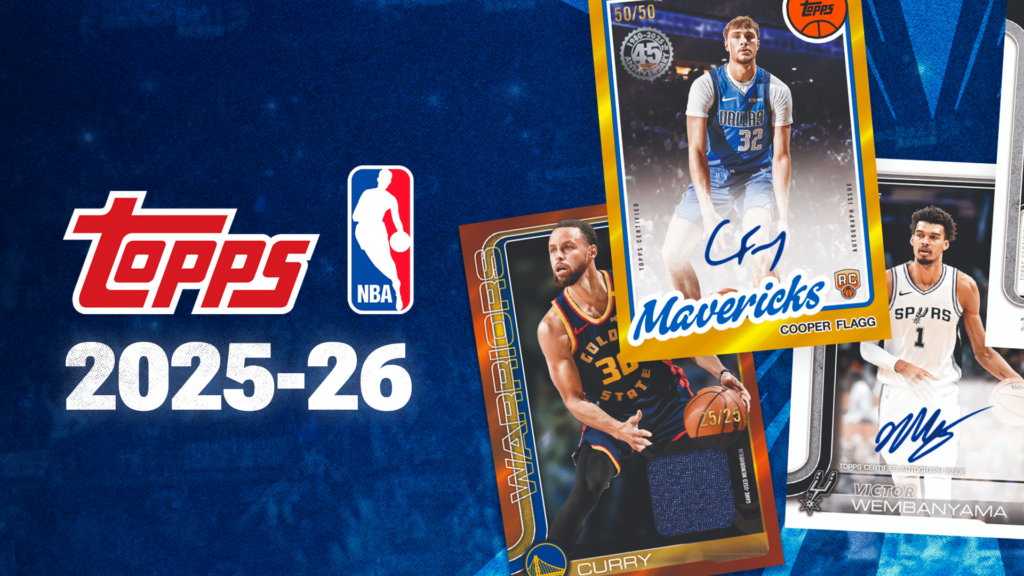
You can’t fully understand whether is it worth breaking a sealed case of 2025-26 Topps basketball case without first understanding just how significant this release is. This isn’t just another year of the same product with a fresh design. This is a genuine milestone in the hobby. The release of 2025-26 Topps Basketball marks the company’s first licensed basketball product since 2009, as Fanatics and the NBA entered into a new long-term and exclusive trading card licensing agreement.
That matters enormously for collectors because for fifteen years, Topps couldn’t use NBA logos or team names on their basketball cards. What we got instead were NBPA-only products that were lacking that official licensed look and feel that collectors actually want. Now Topps is back with the NBA logos and team names on the cards. The 2025-26 Topps Basketball checklist is packed with content, including the initial batch of Cooper Flagg rookie cards licensed by the NBA, and the first official Victor Wembanyama autographs featuring his Spurs jersey. That Wembanyama auto detail alone is massive since his first-year Panini cards already command serious money, and now collectors can grab his first official Topps signature in a Spurs uniform.
The set delivers fresh, clean designs that capture the energy of today’s game while honouring the iconic look and feel of past releases. Collectors can chase the full 300 card base set packed with vets, rookies, retired greats, and combo cards along with incredible autographs, relics, and super short printed inserts. The 1980-81 retro inserts are a particularly nice touch — they’re a nod to the golden era of Topps Basketball and they look brilliant in hand. I pulled one of these in my first box and it genuinely gave me a feeling I haven’t had since ripping early-2000s packs as a teenager.
For more context on the historical significance of this release, Beckett’s deep dive at beckett.com is well worth a read.
How Many Boxes Are in a 2025-26 Topps Basketball Case?
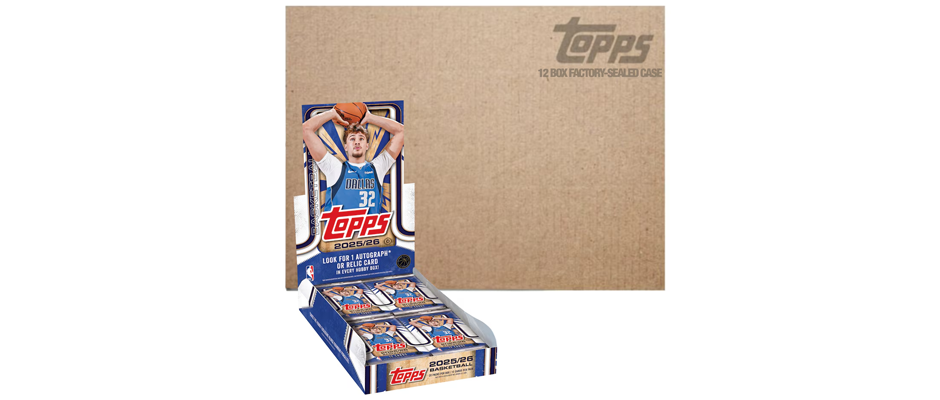
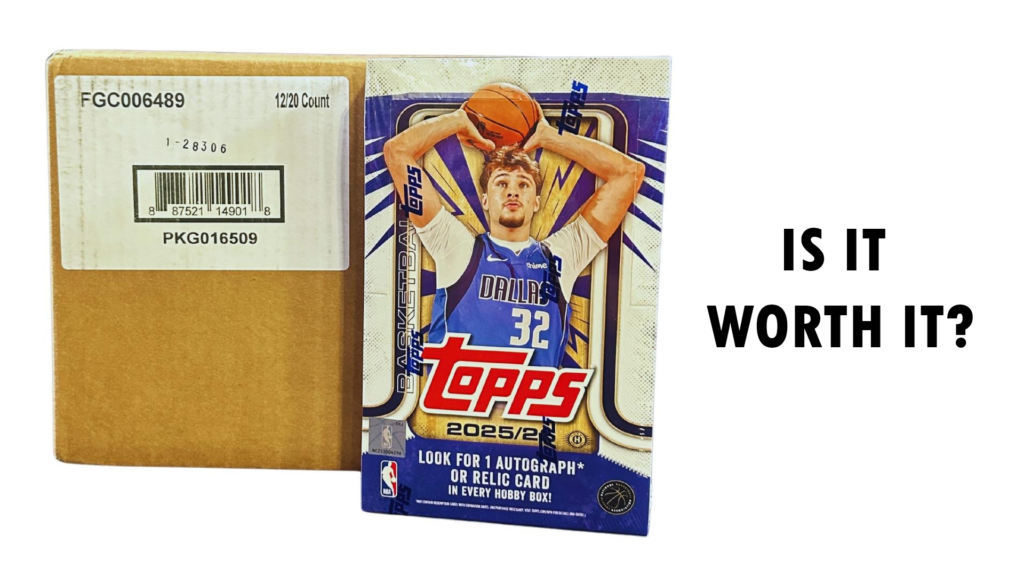
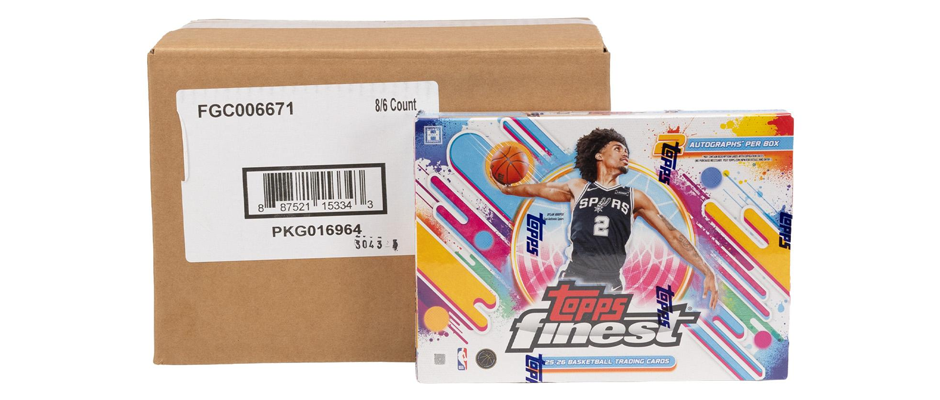
Before you even think about whether to break a case, you need to know what you’re actually buying. The 2025-26 Topps Basketball lineup comes in four different box formats, and each one has its own case configuration. Cards per pack: Hobby — 12; Jumbo — 40; Mega — 14; Value — 12. Packs per box: Hobby — 20; Jumbo — 10; Mega — 16; Value — 12. Boxes per case: Hobby — 12; Jumbo — 8; Mega — 20; Value — 40.
So a Hobby case gives you 12 boxes, each with 20 packs of 12 cards. That’s 240 packs total, or 2,880 cards in one case. A Jumbo case gives you 8 boxes, each with 10 fat packs of 40 cards, adding up to 80 packs and 3,200 cards per case. The sheer volume of the Jumbo case is what draws a lot of breakers to it, even at the higher price point. More cards means more shots at pulls.
Here’s a clean breakdown to help you plan:
| Format | Boxes Per Case | Packs Per Box | Cards Per Pack | Total Cards Per Case |
|---|---|---|---|---|
| Hobby | 12 | 20 | 12 | 2,880 |
| Jumbo | 8 | 10 | 40 | 3,200 |
| Mega | 20 | 16 | 14 | 4,480 |
| Value | 40 | 12 | 12 | 5,760 |
The Hobby case is the sweet spot for most serious collectors. You’re guaranteed one auto or relic per box, which means 12 guaranteed hits across the case. That’s a reasonable floor to work with. The Jumbo bumps that to one auto and one relic per box, giving you 16 guaranteed hits from 8 boxes.
Topps presales began on October 3, 2025, including Hobby boxes, Hobby Jumbo boxes, Mega boxes and Value Blasters. The release day pricing increased slightly with the Hobby box. So at release day pricing, a hobby case of 12 boxes would run you roughly $1,440. A Jumbo case of 8 boxes would sit around $1,840 at the $229.99 presale price. These aren’t trivial numbers, and that’s exactly why the break-versus-hold question is so important.
What Are the Case Hits in 2025-26 Topps Basketball?
This is where it gets really exciting — and also where you need to manage your expectations carefully. Case hits are the ultra-rare cards that are seeded across an entire case rather than guaranteed per box, and the 2025-26 Topps flagship has some genuinely great ones to chase.
There are also case hits to uncover, like Comic Court, which resembles the Donruss Net Marvels inserts, and Home Court. These are the two headline case hits, and they’re legitimately eye-catching cards. The die-cut design of the Home Court inserts in particular has been making rounds on social media since the first cases started being cracked back in October. If you pull one of these featuring Cooper Flagg or another top rookie, you’re looking at a card with real secondary market value.
Golden Mirror SSPs are short-print photo variations across all formats. Home Court and Comic Court are case-hit showstoppers. Hidden Gems are rare gem-themed SPs. Rookie Photo Shoot and Dual Autos are debut signatures. Victory (Hobby) and Sandglitter (Jumbo) are exclusive SSP parallels. The Victory SSPs being Hobby-exclusive is a genuine reason to favour the Hobby case over Mega or Value if you’re hunting the premium pulls. Sandglitter parallels in Jumbo are similarly exclusive and have been fetching solid prices.
One thing I noticed when I broke my first case — the Comic Court cards are absolutely gorgeous in hand. The design is way better than it looks on screen. My friend thought I’d pulled a relic at first because the card stock feels different. Just saying, if you do crack a case and pull one, don’t be too quick to flip it without appreciating it first.
For a full breakdown of all case hit odds and SSP details across every format, Beckett’s checklist page is the most comprehensive resource out there.
What Are the Odds of Pulling a Cooper Flagg Auto?
For most collectors, the entire conversation around breaking a 2025-26 Topps basketball case starts and ends with one name. Cooper Flagg. The number one overall pick in the 2025 NBA draft, the 2025 Jersey Mike’s Naismith Award winner and 2024 National high school player of the year, Flagg has been as advertised for the Dallas Mavericks, averaging 18.4 points, 6.3 rebounds, and 3.5 assists per game. His early-season performance has been outstanding, and collector demand for his cards has been intense since day one of the release.
So what are your actual odds of pulling a Flagg auto from a hobby case? Here’s where things get sobering. The Flagship Real One Rookie Autograph odds sit at 1:2,864 hobby packs. With 240 hobby packs in a full case, that works out to less than a 1-in-12 chance of pulling any Flagship Real One Rookie Auto across your entire case — and that’s across all rookies in the set, not just Flagg specifically.
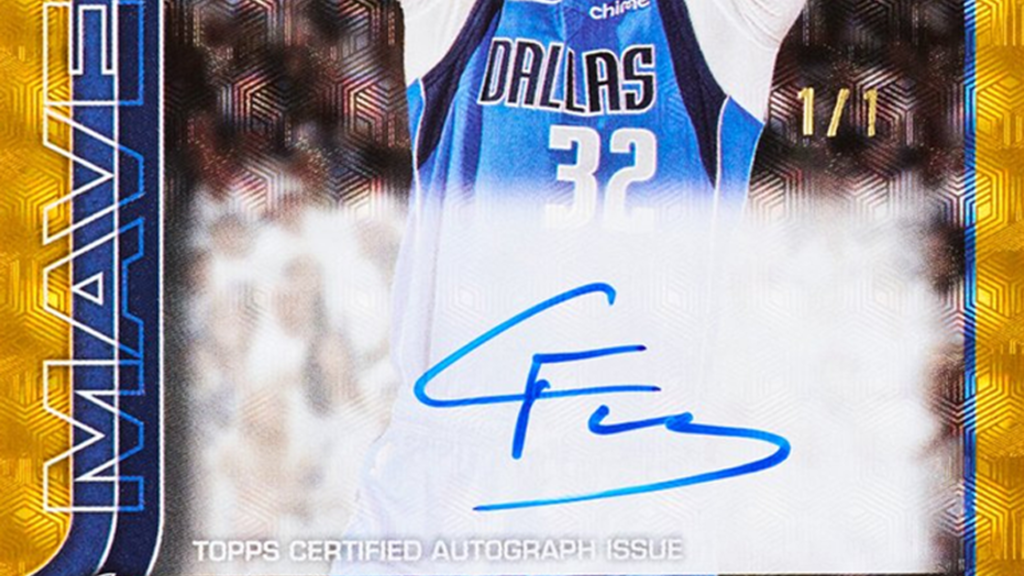
The 1980-81 Topps Basketball Autographs are seeded similarly. The autograph lineup includes ink from rookies, vets, and legends — including Cooper Flagg, Dylan Harper, LeBron James, Victor Wembanyama, Steph Curry, and more. That’s a deep and genuinely exciting autograph checklist, but the depth also means the odds are spread across a very large pool of signers.
The Rookie Photoshoot Dual Autographs are the most coveted hits in the set, featuring two rookies on one card with parallel versions numbered to 5 and the 1/1 Platinum. Cooper Flagg appears across multiple Rookie Photoshoot Dual combinations, paired with Dylan Harper, Ace Bailey, and Kon Knueppel. A Flagg dual auto would be an absolutely elite pull from any case — but realistically, pulling one across a single hobby case is a long shot. This is lottery territory.
Here’s my honest take: go in expecting your 12 hobby autos to be a mix of veterans, role players, and maybe one or two solid rookies. If you hit a Flagg or a Wembanyama, that’s a genuine bonus — not a baseline expectation. Managing those expectations is the difference between having a great time breaking a case and walking away feeling like you got done over.
Should I Hold or Break My Sealed 2025-26 Topps Basketball Case?
This is the real crux of it. You’ve got a sealed case sitting in front of you — do you crack it or hold it? Honestly, both sides of this argument have real merit, and it depends a lot on what kind of collector you are.
The case for holding is straightforward where sealed products from historically significant releases tends to appreciate over time, particularly flagship products from a licensor’s first year back. Think about what sealed 2003-04 Topps Chrome Basketball cases are worth now compared to their original retail. The first-year-back narrative gives this set genuine long-term collectability. A sealed case preserves all of that potential value in one tidy package. With that comparison is apt which if this product is looked back on as the start of a new era, sealed cases could be worth multiples of today’s price in ten years.
The case for breaking is also real, particularly at the Hobby format level. Twelve guaranteed hits across a case is not nothing. And with the right pulls — a numbered Flagg parallel, a Wembanyama auto, a Comic Court case hit on a star player — you could absolutely recoup the cost of the case and then some. Cases, boxes, hangers, packs, and singles of Topps’ first licensed basketball release since 2009 have flown off physical and digital shelves. The collector enthusiasm is real and it’s been sustained, not just a day-one spike. That suggests the secondary market for individual cards pulled from these cases remains healthy.
My personal approach? I split the difference. I bought two hobby cases — broke one immediately for the rush of it, and have the other sealed in my storage. If you can only buy one, I’d lean towards breaking it. This is a hobby, after all. The best pulls are the ones you experience in real time, not the ones you read about years later when you finally crack the box.
What Is the Expected Value of a 2025-26 Topps Basketball Case Break?
Right, let’s talk numbers. I want to be upfront here: calculating precise expected value on a wax break is inherently uncertain because so much depends on which players end up on your autos and parallels. But we can work through some realistic scenarios.
A Hobby case of 12 boxes at $119.99 per box runs to roughly $1,440 total. Across those 12 boxes, you’re getting 12 guaranteed auto or relic hits. Here’s a rough breakdown of what those hits are realistically likely to look like. You might pull 3-4 veteran or retired legend autos, 3-4 rookie autos across various names in the class, 2-3 relics (which tend to carry less secondary market value than autos), and 2-3 numbered parallels of varying levels.
On the secondary market, a base auto from a mid-tier veteran typically fetches $10-$30. A base rookie auto of a lesser-known name in the class might pull $5-$20. However, hit a Flagg, Harper, or Wembanyama auto and you’re looking at $200-$500+ for a base auto, significantly more for numbered parallels. The Golden Mirror SSPs and case hits, when they feature the right players, have sold for $50-$200+ depending on the player and parallel.
Realistically, if you break a hobby case and have an average hit rate with no blockbuster pulls, you might recoup $400-$700 of your $1,440 outlay by selling everything. If you’re lucky enough to land a top rookie auto or a low-numbered parallel of a star player, you can push past break-even and potentially into profit. The variance is enormous. This is not a reliable investment strategy — but it’s an exciting hobby experience, and that has its own value that’s hard to put a dollar sign on.
For the best SSP odds, Jumbo boxes give collectors the best chance, followed by Hobby with Victory SSP exclusives. If SSPs and case hits are your primary chase, Jumbo cases offer better per-card odds on those premium pulls despite the higher upfront cost.
Is 2025-26 Topps Basketball a Good Set to Invest In?
If you’re approaching this from a pure investment angle rather than a collecting angle, I’d urge some caution — not because the set isn’t great, but because the hobby market can be unpredictable in ways that spreadsheets can’t always account for.
That said, there are real reasons to believe this set has long-term legs. Cooper Flagg and Dylan Harper headline the 2025-26 rookie class, with Kon Knueppel, Ace Bailey, Tre Johnson III, and Egor Demin close behind. That’s a genuinely strong rookie class. Flagg in particular has the rare combination of on-court excellence and cultural buzz that drives card prices. Flagg has responded, averaging 18.4 points, 6.3 rebounds, and 3.5 assists per game for the Dallas Mavericks. Those are not rookie-who-disappears-by-Christmas numbers. That’s a future star performing like a future star right out of the gate.
The historical angle is also compelling. This is Topps Basketball’s first fully licensed flagship release in fifteen years. Products that mark genuine turning points in hobby history — first-year Prizm basketball, first-year Chrome football — tend to hold collector interest well beyond their release window. Sealed product from these milestone sets often outperforms on the secondary market over a 5-10 year horizon.
Where it gets complicated is print run. Topps, backed by Fanatics, has the production capacity to print a lot of product. If the hobby is flooded with supply, sealed case prices might not appreciate as dramatically as some hope. This is an open question and it’s worth keeping an eye on secondary market prices for sealed cases over the coming months to get a sense of supply versus demand.
For a broader picture of the hobby market around this product, the analysis at Cardlines on the broader 2025-26 Topps ecosystem is a worthwhile read.
Hobby vs Jumbo vs Mega — Which Case Format Is Best to Break?
Not all cases are created equal, and which format you choose to break should come down to what you’re actually chasing. Here’s a clean comparison across the three main case formats worth considering.
| Format | Boxes/Case | Guaranteed Hits | Exclusive Content | Best For | Amazon |
|---|---|---|---|---|---|
| Hobby | 12 | 1 auto or relic/box | Victory SSPs | Autos, classic break experience | Check Prices |
| Jumbo | 8 | 1 auto + 1 relic/box | Sandglitter SSPs, best SSP odds | Hit volume, SSP hunters | Check Prices |
| Mega | 20 | None guaranteed | Holo Foil, Aqua, Pink SSPs | Colour collectors, set builders | Check Prices |
Go Hobby for autos and a classic experience. Choose Jumbo for the highest hit potential. Try Mega for colour, nostalgia, and variety. That’s a pretty clean summary honestly. The Hobby case is the traditional collector’s choice — guaranteed hits, manageable cost, exclusive SSP content. The Jumbo case is for the person who wants maximum value per card and is willing to pay more upfront for that guaranteed auto plus relic combo per box.
I’ve broken both Hobby and Jumbo cases of this product. My personal preference is the Hobby case, purely for the experience. Twenty packs per box feels like a proper rip session. The Jumbo packs are exciting but you blow through them fast — 10 fat packs and you’re done. There’s something to be said for drawing out the anticipation across a longer break session.
Mega cases are great if you’re a team collector or a set builder who wants sheer volume and is happy chasing colour parallels. The Holo Foil and exclusive Aqua and Pink SSPs are genuinely fun pulls and the odds are better in Mega than in Hobby for some of the retail-exclusive content.
For a full format-by-format guide, Topps’ own Ripped blog at ripped.topps.com breaks down exactly what’s in each box type and what’s exclusive to each format.
Final Score: To Rip or Not to Rip?
So, is it worth breaking a sealed case of 2025-26 Topps basketball? Here’s my honest answer: yes, if you’re breaking it because you love the hobby. No, if you’re banking on it turning a profit by next month.
This is one of the most historically significant basketball card releases in a generation. The rookie class is excellent, the checklist is deep, the case hits are visually stunning, and the simple fact that Topps is back with a fully licensed NBA product after fifteen years gives it a gravitas that most releases just don’t have. Breaking a case of this is a genuine experience — one I’d encourage every basketball collector to have at least once.
Just go in with realistic expectations on the financial side. Your 12 hobby hits will probably look a lot more like solid but unglamorous pulls than Cooper Flagg autos. That’s fine. The thrill of cracking a new pack, of not knowing what the next card is, of holding that Rainbow Foil parallel up to the light — that stuff doesn’t show up in an expected value calculation, but it’s real and it’s worth something.
If you’re on the fence, I’d say go the Hobby case. It’s the most complete experience, gives you 12 guaranteed hits, and the Victory SSP exclusives mean there’s always that possibility of a massive pull hiding somewhere in those 240 packs. And if you’ve got the budget to buy two cases, hold one sealed — just in case this product becomes the Prizm of its generation.
Have you already cracked a case? Drop your biggest pull in the comments below — I genuinely love hearing what people are pulling from this set. And if you’re still on the fence, feel free to ask any questions and I’ll do my best to help you figure out which format makes the most sense for your situation!
Note: Box and case pricing may vary by retailer and region. Always compare prices across multiple sources before purchasing. Secondary market values are subject to change based on player performance, supply, and collector demand. This article is for informational and collecting purposes — it is not financial or investment advice.