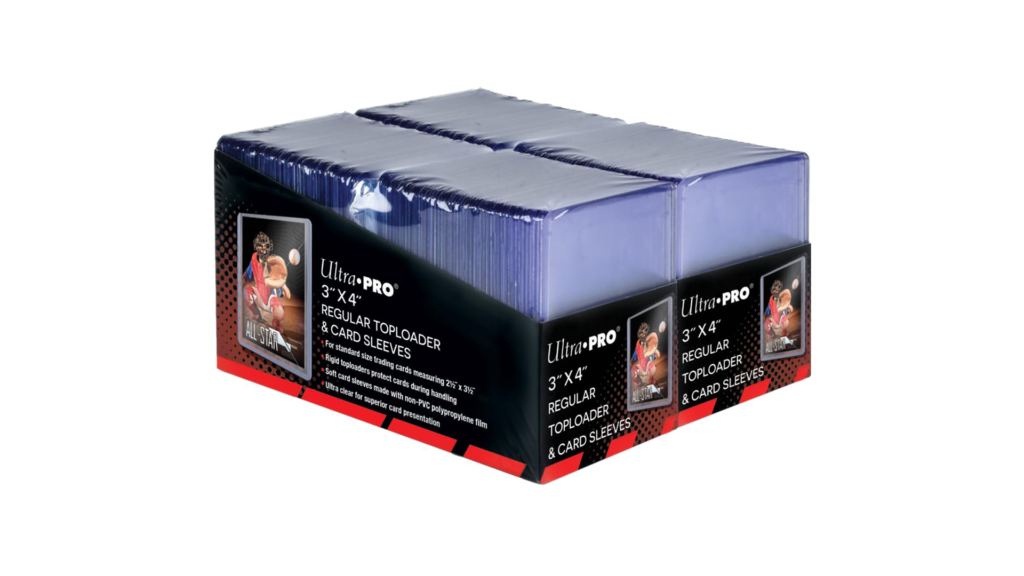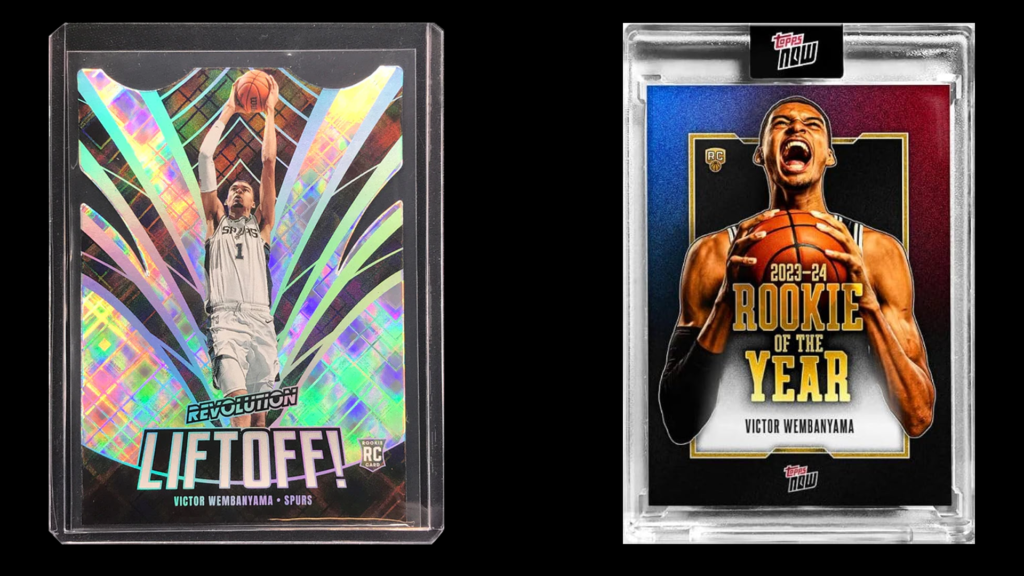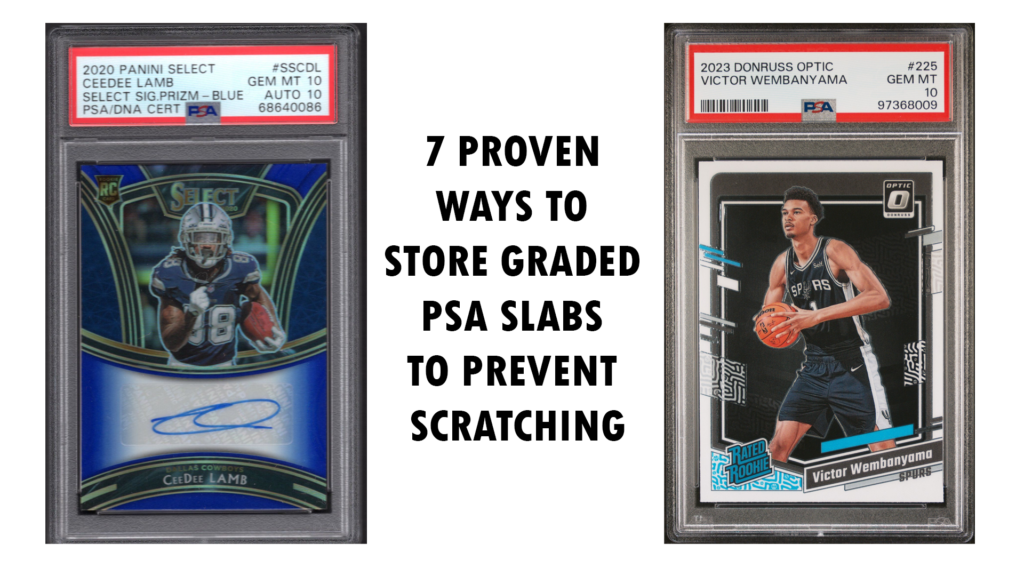
Disclaimer: As an Amazon Associate I earn from qualifying purchases from our site. Thank you for your support!
Introduction
Here’s something that catches almost every new collector off guard – a PSA slab is not indestructible. I know, I know, you just paid good money to have your card graded, it came back encased in that satisfying thick acrylic shell, and it feels like it could survive a small car accident. But trust me on this one. That clear plastic surface scratches more easily than you’d expect, and I’ve got a box of slabs from my early collecting days that look like they were stored inside a bag of gravel to prove it.
Here’s the stat that should put things in perspective: a scratched slab on an otherwise Gem Mint 10 card can tank its resale value by 20-30% simply because buyers on eBay are visual creatures and a cloudy, scuffed case just doesn’t inspire confidence, even if the card itself is flawless inside. So learning these 7 proven ways to store graded PSA slabs to prevent scratching isn’t just a nice-to-have – it’s a core part of protecting your investment and your collection’s presentation quality.
In this guide, I’ll walk you through exactly how to store PSA slabs properly, which sleeves are actually safe to use (spoiler: some make things worse), the best storage boxes for graded cards, ideal climate conditions, and how to handle slabs without leaving a fingerprint or hairline scratch on them. Let’s get into it!
Why PSA Slabs Get Scratched in the First Place
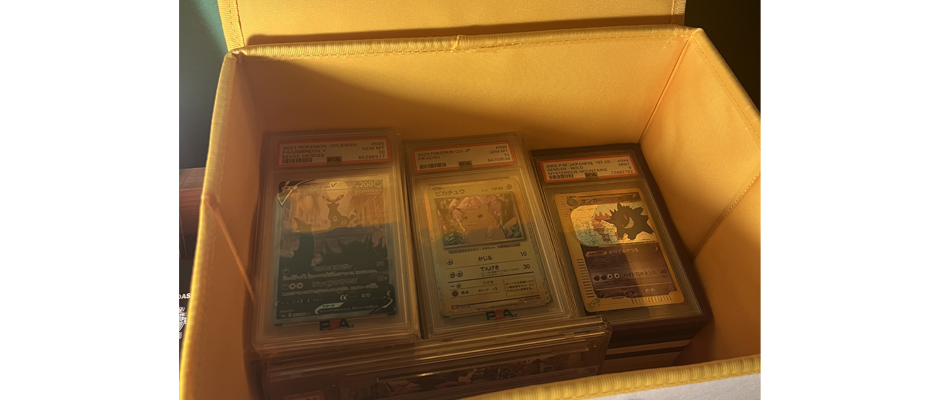
Before we talk about how to store graded PSA slabs to prevent scratching, it helps to understand why they scratch at all. PSA uses an acrylic plastic for their slab cases – it’s clear, rigid, and great at protecting the card inside, but acrylic is inherently softer than glass. It scratches on contact with pretty much anything that drags across it: other slabs, box interiors, paper dividers, plastic sleeves, even fingernails and rings if you’re not careful.
The most common culprits are storage-related. Slabs sliding around inside a cardboard box during transport is one of the biggest. The interior walls of a standard cardboard box are not smooth as the corrugated texture acts like light sandpaper against the slab surface over time. Similarly, stacking slabs flat on top of each other creates friction between cases every time one shifts, and even a tiny amount of lateral movement is enough to leave fine scratches.
The second most common cause, and the one that trips up the most experienced collectors, is sleeve insertion. Yes, the very sleeve you’re using to protect your slab can be what’s scratching it. More on that in a minute. The third cause is bare-handed handling with the oils and microscopic grit on your hands leave marks on the acrylic surface that dull its clarity over time. It’s not the end of the world, but across a collection of 100+ slabs, it adds up.
The reason this matters beyond aesthetics is resale. A scratched slab looks like a poorly cared-for card, even if the grade is perfect. Protect the slab and you protect the resale value. That’s the whole game when it comes to storage.
Should I Sleeve My PSA Slabs?
Yes, but you need to choose the right sleeve, and you need to know how to put it on properly. A good slab sleeve acts like a skin over the acrylic, absorbing fingerprints, dust, and light contact scratches before they reach the case itself. These sleeves are clear plastic bags sized specifically for PSA slabs, and they come in two main styles: resealable bags and exact-fit (snug) sleeves.
Resealable bags are the more traditional option. They’re slightly larger than the slab, have a flap that folds over the top, and seal with an adhesive strip. BCW’s Graded Card Sleeves are the classic example as they’re technically bags rather than form-fitting sleeves, and the loose fit means the slab can slide in and out easily without resistance. The downside is that the extra room means the slab can still move around slightly inside, which over time causes light friction.
Exact-fit or glove-fit sleeves are snugger and designed to hug the slab surface with minimal excess material. Card Shellz Glove-Fit Sleeves, VaultX Exact Fit Slab Sleeves, and the Cardboard Gold Perfect Fit PSA sleeves all fall into this category. These give a cleaner look and better surface contact protection, but the tighter fit means insertion technique matters more. If you rush it, the slab edge can catch the sleeve interior and – ironically – cause the scratches you’re trying to prevent.
Here’s my go-to method for sleeving a slab safely. Hold the sleeve with the opening facing up. Tilt the slab at a slight angle and ease the bottom edge in first, then slowly lower it flat into the sleeve. No force, no jamming. If the sleeve resists, don’t push harder, just ease back and try again. Slow and deliberate is the move. Once it’s in, seal the flap and you’re done.
For a step-by-step on sleeve selection for PSA slabs, the Card Shellz grading supplies guide is genuinely one of the best resources out there.
Do Graded Card Sleeves Scratch PSA Slabs?
This one is a bit of a rabbit hole, and honestly, it’s one of the most talked-about issues in graded card collecting forums right now. The short answer is yes – some sleeves absolutely do scratch PSA slabs, and the worst part is it happens during insertion, not over time.
The community has documented this pretty clearly. Collectors have reported receiving PSA orders back, immediately sleeving the slabs into snug perfect-fit sleeves, and pulling them back out to find fine vertical scratches running across the case surface. This appears to happen when the inner edge of the sleeve catches the acrylic during insertion, leaving hairline marks that are almost impossible to remove cleanly. What makes this worse is it happens across multiple brands and therefore it’s not a single dodgy batch. It’s a design issue that comes from the inherent friction between rigid acrylic and tightly fitted polypropylene.
The safest option, based on community consensus, is to use sleeves made from OPP (oriented polypropylene) with a smooth interior and a tapered flap where specifically sleeves designed to reduce interior friction. Cardboard Gold’s Perfect Fit PSA Sleeves are officially recommended by PSA themselves and are made from premium OPP material that’s noticeably smoother against the slab surface. Card Shellz Glove-Fit Sleeves use a similarly smooth clear OPP construction and are purpose-built to prevent this exact issue.
If you’ve already got scratches on your slabs from rough sleeves, some collectors have had success gently polishing the surface with a plastic-safe polish like Novus Plastic Polish. Use the mildest grade, apply with a soft cloth in circular motions, and take it very slowly. I’d always do a test on a low-value slab before going anywhere near your best cards. And honestly, even with polishing, prevention is a million times better than the cure.
For more on sleeve-related scratching from the community, this discussion thread on Elite Fourum is eye-opening reading.
What Is the Best Storage Box for PSA Graded Cards?
Right, once your slabs are sleeved, they need a home – and not just any home. The right graded card storage box keeps slabs upright, prevents lateral movement, protects from dust, and ideally stacks neatly so you’re not playing a Jenga game every time you want to find a card. Here are the main options worth considering, from entry-level to serious collector territory.
CollectHall Graded Card Box (Cardboard, 40+ slab capacity)
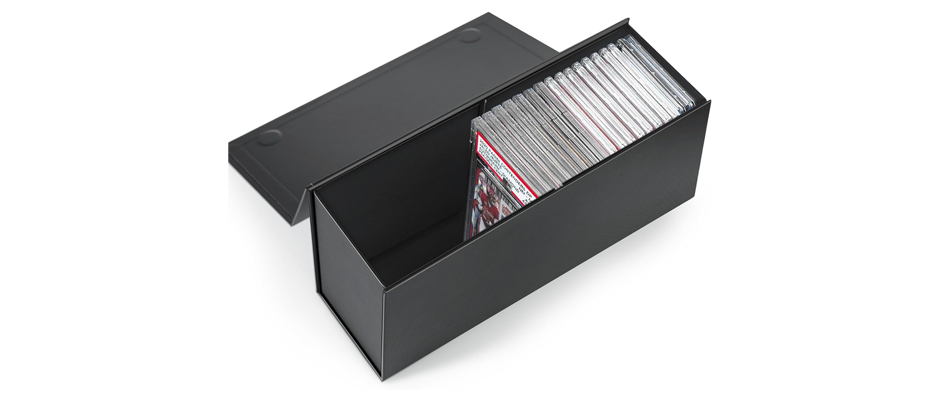
This is the classic entry-level option and it does the job for small collections. Made from sturdy cardboard, it holds approximately 40 graded slabs in a horizontal layout and stacks neatly on a shelf. It’s cheap, widely available, and genuinely fine for a modest collection. It comes also with a magnetic opening to help with keeping cards secure enough and keep dust out.
BCW 2-Row Graded Card Bin (Plastic, ~100-slab capacity)
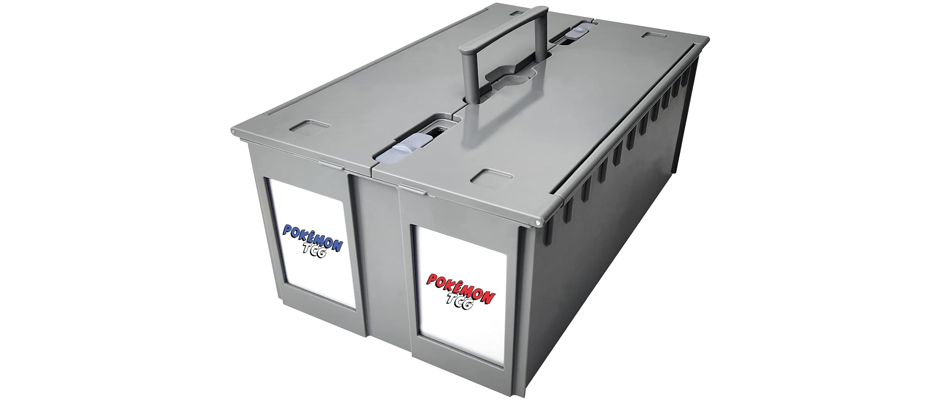
This is the upgrade most serious collectors end up buying. Made from durable, acid-free plastic rather than cardboard, the BCW Graded Card Bin holds roughly 100 graded slabs across two rows, features a hinged lid with sliding locks, a recessed carry handle, and stackable feet that nest into the lid of the bin below it. It comes with two partitions for organising slabs by player, set, or grade. It’s compatible with PSA, BGS, SGC, CSG, and HGA slabs. For bulk graded card storage, this is the standard in the hobby and for good reason — it’s solid, it’s practical, and it protects well.
BCW Super Vault Storage Box (Cardboard, 75-80 slab capacity)

A beefed-up version of the standard cardboard box, the Super Vault is constructed from white corrugated cardboard with a 200-pound test strength, which is significantly more robust than regular box cardboard. It holds 75 to 80 graded slabs in a two-piece design and is compatible with all major grading services. The clean white exterior makes it a nice display piece on shelves too. It’s a solid middle ground between the basic cardboard box and the full plastic bin.
EVORETRO Collector’s Choice Slab Binder
If you want to store and display your slabs at the same time, the EVORETRO Slab Binder is worth serious consideration. It holds graded slabs in acid-free, ultra-clear sleeves inside a zip-secured binder format, with a four-slab front display window so your best cards are always on show. It’s designed for PSA, BGS, and CGC slabs specifically. The 360-degree zip keeps everything secure during transport. For collectors who love flipping through their collection like a photo album, this is a genuinely special product.
Comparison Table
| Product | Material | Capacity | Stackable | Best For |
|---|---|---|---|---|
| CollectHall Graded Card Box | Cardboard | ~30 slabs | ✅ | Small collections, entry-level |
| BCW 2-Row Graded Card Bin | Acid-free plastic | ~100 slabs | ✅ | Serious bulk storage |
| BCW Super Vault Box | Heavy corrugated cardboard | 75-80 slabs | ✅ | Mid-size collections, display shelf |
| EVORETRO Slab Binder | Fabric/acrylic | Variable | ❌ | Display + storage combo |
For the full BCW range of graded card storage options, BCW Supplies breaks down every product in detail or check out our own best sports card supplies page for more.
Should I Store PSA Slabs Upright or Flat?
Store them upright. Always upright. This one’s non-negotiable, and it’s worth explaining why because I used to store mine flat and I genuinely didn’t understand the problem until someone on a forum pointed it out.
PSA slabs use a two-piece friction-fit design with the front and back panels of the case are pressed together and held in place by pressure alone. They’re not glued, they’re not screwed, they’re not fused. Just friction. When you stack slabs flat on top of each other, the accumulated weight pushes down on that two-piece design, and over time – especially in warmer climates – that pressure can cause the seal to loosen, the case to bow slightly, or in the worst case, the two panels to separate. A separated PSA slab is a damaged PSA slab, full stop.
Storing slabs upright, like books on a shelf, distributes the weight properly and eliminates that downward pressure on the case seal. It also means each slab is only touching its neighbours on the narrower edge surfaces rather than the flat face, which dramatically reduces the surface area available for friction and scratching. Use a graded card storage box with properly sized rows to keep slabs upright without flopping over, and add dividers or BCW Monster Pads (foam inserts) between slabs if you want extra cushioning.
Think of it like wine storage. You wouldn’t stack wine bottles flat on a table, you’d store them on a rack. Same principle. Upright, supported, not piled.
For more on this, PSA’s own storage blog at blog.psacard.com covers the key principles of graded card preservation straight from the source.
What Temperature and Humidity Should I Store Graded Cards At?
The ideal storage environment for graded PSA slabs is a temperature range of 65 to 72 degrees Fahrenheit, which translates to roughly 18 to 22 degrees Celsius, at a humidity level between 40 and 50 per cent. Those conditions match a standard climate-controlled room in most homes – not a garage, not a shed, not a roof space, and definitely not a car. Extreme heat causes acrylic to expand and contract, which can loosen the friction-fit seal on PSA cases over time. Humidity causes condensation that can cloud the interior of the case and, in severe cases, affect the card itself.
UV light is the other big one. Even through a PSA slab, prolonged exposure to direct sunlight causes card inks to fade over time. That means a perfectly graded 10 sitting in direct sunlight on a shelf will gradually have its colours bleached out over years. Never display graded cards in direct sunlight. If you want to display them on a shelf near a window, use UV-protective display cases or acrylic stands with UV-filtering properties, and position them on the same wall as the window rather than opposite it, so they’re not in the direct beam of light.
For most collectors, keeping your graded collection in an air-conditioned room during summer is genuinely important. A portable dehumidifier in your storage space during humid periods is worth the investment if you’ve got significant value in your collection.
How Do I Handle PSA Slabs Without Scratching Them?
Handling is where a lot of slab damage happens quietly over time. You pick up a slab to show a mate at a card night, your ring drags across the surface, you set it back down on the table a bit too firmly, and suddenly there’s a mark that wasn’t there before. It sounds minor but it adds up, especially for display pieces you handle regularly.
The simplest rule is to handle slabs as little as possible and always with clean, dry hands. The oils and microscopic grit naturally present on your skin will leave prints and micro-scratches on the acrylic surface if you’re not careful. A lot of serious collectors keep a pair of thin cotton gloves specifically for handling high-value slabs – it sounds a bit over-the-top, but if you’ve got a $500+ card in a slab you’re showing people regularly, it makes sense. At card shows or trade nights, try to keep your best slabs in their sleeves and hand them to people already sleeved — it means they’re handling the OPP plastic rather than the acrylic itself.
When you do need to clean a PSA slab, use a clean microfibre cloth only. Gently wipe the surface in straight lines – no circular scrubbing, no paper towels, and absolutely no household cleaning sprays or chemicals. Cleaning sprays can react with the acrylic and cause permanent cloudiness or even chemical damage to the case seal. A dry or very lightly dampened microfibre cloth is all you need. For stubborn smudges, breathe lightly on the surface first (the moisture from your breath helps lift oils) then wipe gently.
Never attempt to clean the inside of a slab or tamper with the case in any way. If there’s something inside the slab that needs attention, that’s a conversation for PSA directly – attempting to crack it open yourself will void any authenticity and render the slab worthless.
How Do I Store My PSA Slabs Long Term?
If you’re building a serious collection with long-term storage in mind, here’s the complete system I’d recommend — step by step, from the moment a slab arrives on your doorstep to settling into long-term storage.
Step one: when your slab arrives, unbox it carefully and inspect the case surface under good lighting before you do anything else. Document any pre-existing marks so you know what arrived versus what happens in your care.
Step two: sleeve the slab immediately using a quality OPP glove-fit sleeve like the Card Shellz Glove-Fit or Cardboard Gold Perfect Fit. Insert the slab slowly, bottom edge first, with no forcing. Seal the flap. Your slab is now protected from fingerprints, dust, and incidental contact.
Step three: place the sleeved slab upright into a graded card storage box – ideally a BCW 2-Row Graded Card Bin for bulk storage, or a BCW Super Vault for smaller collections. Make sure there’s no lateral wobbling. Add foam dividers between slabs if there’s any gap or movement within the box.
Step four: store the box in a climate-controlled room. Not a garage. Not under a bed near an exterior wall. A room that stays between 18 and 22 degrees and has moderate humidity year-round. If you’re in a high-humidity part of Australia, consider adding a silica gel pack inside the storage box to absorb any excess moisture.
Step five: for your most valuable slabs – the grails, the PSA 10s on key cards, anything worth $500 or more — consider a Pelican case with precut foam slots. Pelican cases feature a waterproof rubber gasket seal and a polypropylene shell that’s crush-rated well beyond anything a standard shelf delivers. They’re not cheap, but one well-protected high-value slab repays the cost of the case many times over.
Step six: review your storage setup every six months. Check for any new scratches on slab surfaces, inspect the humidity in your storage area, and replace any sleeves that have become cloudy or scratched themselves. Sleeves don’t last forever – swap them out roughly annually for cards you handle or view frequently.
That’s the complete long-term system. Sleeve, store upright, control climate, check regularly. It genuinely isn’t complicated once you’ve got the right products in place.
For a broader look at how PSA recommends storing their graded cards, their own preservation guide at blog.psacard.com is the place to start.
Slab Happy: Keeping Your Grades Pristine for the Long Haul
So there you have it – everything you need to know about how to store graded PSA slabs to prevent scratching. The core principles are simple: sleeve your slabs immediately using quality OPP glove-fit sleeves, store them upright in a purpose-built graded card box, keep them in a cool and dry environment away from UV light, handle them with care and clean hands, and check on them regularly.
It’s easy to feel like a PSA slab is the final word in card protection – and in terms of the card inside, it mostly is. But the slab itself needs looking after just as much as the raw card did before it was graded. A scratched, cloudy slab on a Gem Mint 10 is one of the most avoidable disappointments in the hobby, and with the right storage setup it simply doesn’t have to happen.
The two products I’d say every graded card collector absolutely needs are a quality slab sleeve – I lean toward Card Shellz Glove-Fit or Cardboard Gold Perfect Fit – and a BCW 2-Row Graded Card Bin for bulk storage. Everything else is an upgrade from there. Start with those two and you’ll be miles ahead of where most collectors are when their first graded order lands.
Got a storage setup you swear by? Maybe a specific sleeve brand that’s been treating your slabs right, or a clever climate solution for Aussie summers? Drop it in the comments below — I’d love to hear how other collectors are keeping their slabs pristine. And if you found this guide helpful, share it with your collecting crew so they can stop scratching their hard-earned grades!