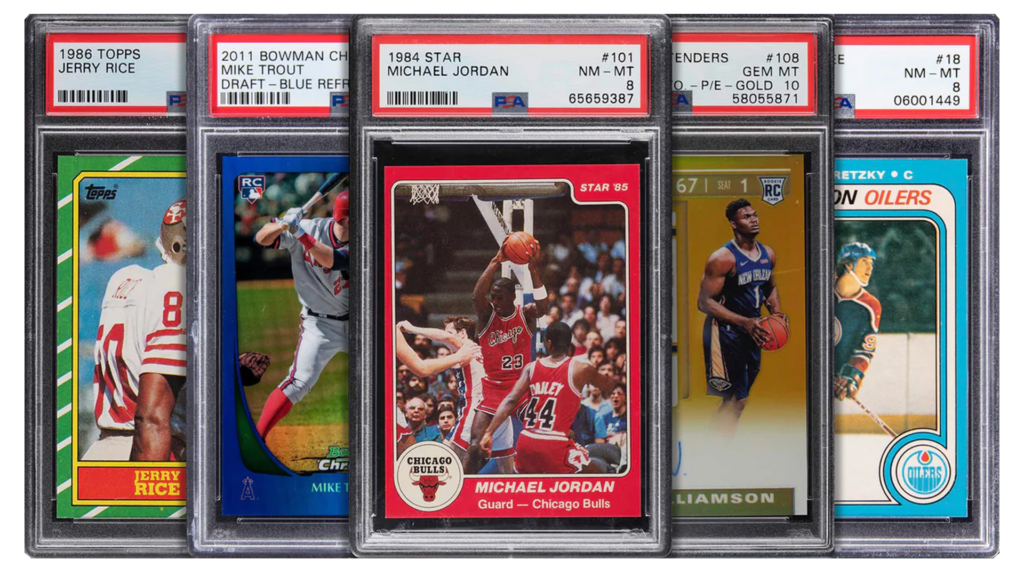
I’ll never forget the day I got my first PSA submission back. Months of waiting, checking tracking obsessively, then finally holding those crisp slabs in hand. The anticipation was torture. Three cards graded PSA 10, two came back as 9s, and one disappointing 8. That experience taught me everything about sports card grading – the highs, the lows, and why it absolutely matters for serious collecting.
Sports card grading has transformed from niche service to hobby cornerstone. In February 2025 alone, PSA processed over 1.9 million cards, setting new records. That’s not a typo, it really is nearly 2 million cards graded by one company in one month. Add BGS, SGC, and CGC, and you’re looking at millions of cards monthly flowing through grading services.
But here’s the thing, sports card grading isn’t simple. Which company should you use? What grades actually matter? When is grading worth the cost? How do you prep cards for submission? This comprehensive guide answers everything. We’ll cover the major grading companies, their pricing structures, turnaround times, grading standards, submission processes, and strategic decision-making frameworks. Whether you’re grading your first card or your thousandth, you’ll find valuable insights here.
Why Sports Card Grading Matters: Authentication, Preservation, and Value
Sports cards grading serves three critical functions that justify the cost and hassle for collectors.
Authentication is perhaps most important. Counterfeit cards are a real problem, especially for high-value vintage cards and autographs. Professional grading companies verify authenticity before encapsulation. A PSA slab guarantees your 1986 Fleer Jordan rookie isn’t a Chinese fake. For expensive purchases, this peace of mind alone justifies grading costs.
I nearly bought a raw Michael Jordan rookie for $2,000 before researching counterfeits. Turns out fakes are incredibly common, for example colour saturation, centering, and card stock all get replicated. Legitimate grading companies have authentication experts who’ve examined millions of cards. They know what genuine cards look like. That expertise protects your investment.
Condition assessment provides objective evaluation. Raw card arguments are endless, where one person’s “mint” is another’s “near mint.” Grading eliminates subjectivity with standardised 1-10 scales. A PSA 9 means specific centering tolerances, corner sharpness, edge quality, and surface condition. Buyers know exactly what they’re getting.
The impact on value is massive. A PSA 10 LeBron James 2003 Topps Chrome rookie sells for $8,000-$12,000. The same card in PSA 9? Maybe $2,500-$4,000. That half-point grade difference represents thousands of dollars. PSA 8s sell for under $1,500. Grade matters exponentially.
Preservation protects cards permanently. Graded slabs are tamper-evident, rigid plastic cases that prevent handling damage. No more dinged corners, surface scratches, or edge wear. Once slabbed, cards remain in that exact condition forever (assuming proper storage). For long-term holding, this protection is invaluable.
I have raw cards from childhood that degraded over decades despite careful storage. Corners got soft, surfaces developed tiny scratches, centering issues became more apparent. Cards I got graded 15 years ago? Still perfect. The encapsulation works.
Market liquidity improves dramatically with grading. Graded cards sell faster and for higher prices than raw equivalents. Buyers trust graded cards as they know condition, the authenticity is verified, and there’s no haggling over card state. For investment collectors, graded cards are simply more liquid assets.
eBay’s authentication program now covers trading cards over $250, providing free grading-style authentication. However, this doesn’t assign grades as it just verifies authenticity. Professional grading still dominates for condition assessment and premium pricing.
Registry competition drives grading for set builders. PSA’s Set Registry allows collectors to register complete graded sets and compete for rankings. Completing a high-grade vintage set becomes a competitive hobby within the hobby. BGS and SGC offer similar registries. This gamification incentivizes grading entire collections.
That said, grading isn’t always worth it. Low-value cards (under $50) often don’t justify $20-40 grading fees. Grading fees, shipping costs, turnaround time, and risk of unexpected low grades all factor into ROI calculations. Strategic grading, where you should choose what to grade and which service to use as it separates smart collectors from those wasting money on unnecessary submissions.
PSA (Professional Sports Authenticator): The Industry Standard

PSA has been the gold standard since 1991. Their red-label slabs are instantly recognizable and command the highest resale premiums across most card categories.
Grading scale uses 1-10 with half-point grades for some tiers. Key grades include PSA 10 (Gem Mint), PSA 9 (Mint), PSA 8 (Near Mint-Mint), and so on down to PSA 1 (Poor). There’s also PSA Authentic for autographs where condition isn’t graded. The scale is straightforward, which contributes to PSA’s broad market acceptance.
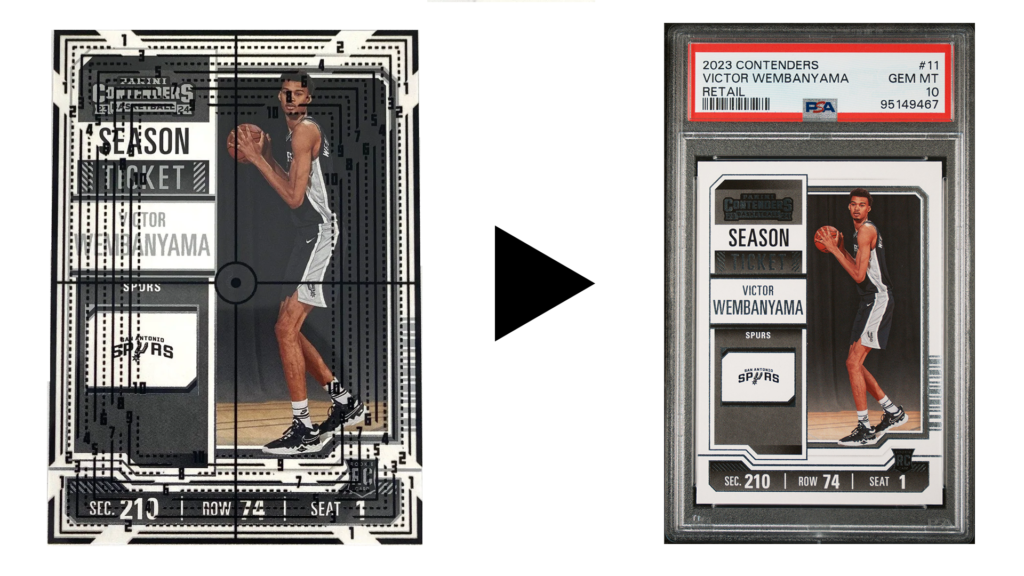
PSA 10 Gem Mint requires near perfection. Centering must be 55/45 on the front (50/50 is perfect), corners sharp, edges clean, and surface pristine. PSA tightened centering standards in 2025, making 10s harder to achieve. This increased grade stringency protects PSA 10 premiums long-term.
Population reports are PSA’s killer feature. The PSA Set Registry shows exactly how many of each card exist at each grade. This rarity data drives pricing. If only 50 PSA 10s exist of a particular card, you know scarcity. If 10,000 exist, supply is abundant. This transparency helps collectors make informed buying decisions.
Pricing increased significantly in 2025. Current PSA pricing (as of late 2025):
- Value/Value Bulk: $19-$25 per card for cards valued under $499 (requires 20-card minimum). Turnaround is 20-30 business days. This is the sweet spot for mid-tier cards.
- Regular: $75 per card, 10-day target for cards valued up to $1,499. Now includes grader notes explaining grades.
- Express: $150 per card, 5-day turnaround. Fast when timing matters.
- Higher tiers exist for ultra-expensive cards worth $10,000+.
PSA’s September 2025 price increase frustrated collectors, especially combined with longer turnaround estimates. However, PSA’s market dominance means they can command premium pricing. Collectors pay because PSA slabs bring the best resale premiums.
Turnaround times vary by service level and submission volume. Value submissions currently run 25-40 days. Express hits 5-7 days consistently. PSA dealt with massive backlogs during the pandemic (6-12 month waits), but they’ve hired hundreds of graders and streamlined operations. Current turnarounds are significantly improved.
Market premiums are PSA’s biggest selling point. PSA-graded cards typically sell for 15-40% more than identical BGS or SGC graded cards, all else equal. Buyers trust PSA, liquidity is highest, and international recognition is unmatched. For maximum resale value, PSA is usually the answer.
Weaknesses exist though. No subgrades means you don’t know why a card got PSA 9 instead of 10. Was it centering? Corners? Surface? You’ll never know. For some collectors, this lack of transparency is frustrating. Additionally, PSA’s pricing continues climbing, pricing out casual collectors for lower-value submissions.
I use PSA for about 70% of my submissions because the resale market favours them. When I’m buying for personal collection, I’m fine with PSA, BGS, or SGC. But when buying to potentially resell? PSA every time. The premium is real.
Submit to PSA when:
- Grading flagship rookies you might sell
- Maximum resale value is priority
- Card value justifies $20-75+ fees
- International buyers are your target market
- You want population report transparency
Don’t bother with PSA for bulk commons, cards under $30 value (unless bulk submitting 20+), or when SGC’s speed matters more than premium pricing.
BGS (Beckett Grading Services): Subgrade Specialists

BGS carved its niche through detailed subgrades that show exactly how cards are evaluated. Their thick, clear slabs feel premium in hand.
Grading scale uses 1-10 with half-point increments. BGS 9.5 is their “Gem Mint” standard. The key differentiator is subgrades where every BGS card (when you pay for subgrades) receives four separate scores: Centering, Corners, Edges, and Surface. These subgrades average to the overall grade.
For example, a card might be BGS 9 with subgrades of 9.5 Centering, 9.5 Corners, 9 Edges, and 8.5 Surface. You immediately know the surface brought the grade down. This transparency helps buyers understand exact condition and helps sellers explain why cards didn’t hit higher grades.
BGS Black Label 10 is legendary. To receive a Black Label, a card must receive perfect 10 subgrades in all four categories – 10 Centering, 10 Corners, 10 Edges, 10 Surface. These are extraordinarily rare. I’ve attended breaks where someone pulled a Black Label and the room erupted. Black Labels sell for multiples of regular 10s, even sometimes 3-5x premiums.
Pristine 10 (non-Black Label) requires high subgrades averaging 10 but not four perfect 10s. These are also rare and valuable, though Black Labels command highest premiums. BGS’s multi-tier perfect grade structure creates fascinating market dynamics.
Pricing is generally lower than PSA:
- Base service (no subgrades): $18 per card, 45+ day turnaround
- With subgrades: $27 per card
- Express tiers available up to $150 for fast service
The subgrade feature justifies the slight premium over base pricing. For thick patch autograph cards or high-end modern cards, subgrades provide valuable transparency.
Turnaround times historically lagged PSA, running 30-60+ days for standard service. Express service hits target timelines more reliably. BGS faced internal restructuring challenges in recent years, affecting consistency. Current turnarounds have improved but remain slower than SGC.
Market positioning is interesting. BGS commands lower resale premiums than PSA for most cards where typically 10-20% less for equivalent grades. However, BGS Black Labels and high-end memorabilia cards with strong subgrades can actually outsell PSA equivalents. The market pays up for Black Labels and for BGS 9.5s with perfect 10 auto subgrades.
Basketball card collectors particularly appreciate BGS for thick RPA (Rookie Patch Auto) cards. The subgrade transparency shows surface quality, crucial for thick cards prone to surface issues. A BGS 9.5 RPA with four 9.5 subgrades sells confidently because buyers know there aren’t hidden surface scratches.
Strengths include subgrade transparency, thick premium slabs with excellent protection, Black Label as aspirational grade, and strong market for high-end memorabilia cards. The detailed grading helps collectors improve future submissions by understanding exactly what hurt grades.
Weaknesses are lower resale liquidity than PSA, slower standard turnarounds, and subgrade complexity can confuse casual buyers. Some sellers find subgrades actually hurt sales when cards have low subgrades (8.5) in visible categories.
I use BGS for expensive patch autographs where subgrades justify condition. For a $500+ RPA, I want subgrades showing no surface issues. BGS excels in this space. For standard rookies? I stick with PSA for better resale liquidity.
Submit to BGS when:
- Grading thick memorabilia or autograph cards
- You value detailed condition feedback
- Chasing Black Label 10 on truly perfect cards
- Buying for personal collection and want transparency
- Card has strong corners/edges/surface to showcase via subgrades
Skip BGS when maximum liquidity matters most, you’re grading thin base cards where subgrades don’t add value, or you’re submitting budget cards where $27 fees don’t make sense.
SGC (Sportscard Guaranty Corporation): Speed and Vintage Excellence

SGC has become the comeback story of card grading. While PSA dealt with backlogs, SGC maintained fast, reliable service, winning over collectors.
Grading scale uses 1-10 (recently switching from their old 10-100 scale). SGC 10 is “Pristine” (formerly Gold Label when extremely rare). SGC 9.5 is “Gem Mint” and 9 is “Mint.” The simplified scale makes SGC accessible to newer collectors.
Tuxedo slabs are SGC’s signature. Black-insert holders create striking displays—cards pop visually against black backgrounds. Collectors love SGC slabs for display purposes. The aesthetic is clean and professional.
Pricing is highly competitive:
- Standard service: $15 flat fee for cards valued under $1,500
- Turnarounds: Typically 15-20 business days
- Express and bulk tiers available
That $15 price point with sub-20-day turnarounds is compelling. When I’ve got 20 cards to grade and don’t need PSA premiums, SGC makes financial sense. The turnaround speed lets you get cards back quickly for potential flipping.
Turnaround times are SGC’s superpower. They consistently deliver within quoted timeframes, often beating estimates. During pandemic chaos when PSA had 6-12 month backlogs, SGC maintained 2-4 week turnarounds. This reliability built strong customer loyalty.
Market positioning for vintage cards rivals PSA. SGC specializes in pre-1980 vintage cards, and their market premiums for vintage approach PSA’s. Vintage collectors respect SGC’s expertise and grading consistency. For 1950s-70s cards, SGC is absolutely viable as PSA alternative.
Modern cards see SGC trading at slight discounts to PSA—maybe 10-15% less for equivalent grades. However, this gap has narrowed significantly. SGC aggressively markets to modern collectors, and acceptance grows. Don’t automatically dismiss SGC for modern cards—do comps first.
SGC 10 Pristine (Gold Label) is rare and respected. These perfect grades command strong premiums, though not quite Black Label levels. SGC’s grading consistency means their 10s hold value well.
Strengths include fastest standard turnarounds, competitive pricing, strong vintage reputation, beautiful tuxedo holders, and consistent grading standards. SGC doesn’t play games as they grade fairly and deliver quickly. That straightforward approach appeals to many collectors.
Weaknesses are lower mainstream recognition than PSA, modern card resale still lags PSA by 10-20%, and no subgrade options for detailed feedback. Some international buyers don’t recognize SGC as readily as PSA.
I use SGC when I need cards back quickly, when grading vintage cards (their specialty), when budgets are tight but I still want professional grading, and when building personal collections where PSA premiums don’t matter.
Submit to SGC when:
- Speed matters more than maximum premium
- Grading vintage pre-1980 cards
- Budget-conscious but want professional grading
- Building personal collection for display
- Submitting 50+ cards where $15/card saves significant money vs PSA
Avoid SGC when international resale is likely (PSA has better global recognition), you’re grading flagship rookies where PSA premiums justify higher costs, or you specifically need subgrades for transparency.
CGC Cards: The Modern Alternative

CGC Cards entered sports cards after success grading comics and coins. They bring fresh approaches and competitive pricing.
Grading scale uses 1-10 with half-points. CGC Pristine 10 sits above CGC Gem Mint 10 as their apex grade. This two-tier perfect grade structure mimics BGS somewhat. CGC 9.5 is “Gem Mint +.”
Modern aesthetics define CGC slabs. Clean, contemporary holders with clear labels appeal to younger collectors. CGC introduced innovative holder designs like the “perfect fit” sizing that minimizes card movement inside slabs.
Pricing is competitive:
- Standard tiers: $12-20 per card depending on declared value
- Turnarounds: 20-30 business days typically
- Bulk and express tiers available
That $12-20 range makes CGC attractive for bulk submissions. When grading 100 cards, saving $5-10 per card adds up fast.
TCG dominance is where CGC thrives. Pokemon, Magic: The Gathering, and other TCG cards gravitate to CGC. The company actively courts TCG collectors with specialized labels and grading standards. For basketball cards, CGC is viable but hasn’t achieved PSA/BGS/SGC market penetration yet.
Market positioning shows CGC basketball cards trading at 20-30% discounts to PSA equivalents. This gap creates opportunities for personal collectors who don’t care about maximum resale. Why pay PSA premiums when CGC provides authentication and grading at lower prices?
Strengths include competitive pricing, modern holder aesthetics, fast adoption in TCG markets, and innovative grading features. CGC is willing to experiment and improve based on collector feedback.
Weaknesses are lower basketball card market recognition, smaller resale premiums, less established population data, and limited track record compared to 30+ year veterans like PSA.
Submit to CGC when:
- Grading TCG cards (they’re strong here)
- Building personal collection where resale doesn’t matter
- Budget is extremely tight
- You prefer modern slab aesthetics
- Grading newer cards where CGC recognition is growing
Skip CGC when maximum resale value matters, you’re grading high-end cards where PSA/BGS track records matter, or you need established population reports for rarity research.
Understanding Grades: What Numbers Actually Mean
Grades aren’t just numbers—they represent specific condition standards with massive value implications.
PSA 10 Gem Mint requires near-perfect cards. Centering 55/45 front and 60/40 back (PSA tightened front centering in 2025), four sharp corners, clean edges with no color breaks, and flawless surfaces without scratches, print lines, or staining. Only about 15-20% of modern cards achieve PSA 10.
PSA 9 Mint allows minor imperfections not visible at first glance. Centering up to 60/40 front, slightly softer corner tip allowed, tiny edge or surface imperfections acceptable. PSA 9s are excellent cards that just miss perfection. Maybe 30-40% of quality modern cards grade PSA 9.
PSA 8 Near Mint-Mint shows visible but minor issues. Centering can reach 65/35, corners may have slight wear, edges might show small color breaks, surfaces can have minor scratches. PSA 8s are still nice cards but clearly not mint. These comprise perhaps 25-30% of submissions.
PSA 7 and below indicate increasing condition issues. PSA 7 has definite wear. PSA 6 shows more significant issues. Anything below 6 is pretty rough. For investment purposes, focus on 8+, ideally 9-10.
BGS 9.5 Gem Mint requires subgrades averaging 9.5+. Typically needs at least three 9.5 subgrades and one 9 minimum. Centering must be 55/45 or better, corners near-perfect, edges clean, surfaces pristine. BGS 9.5 equals PSA 10 in quality, though PSA 10s typically sell higher due to market preferences.
BGS Black Label 10 demands absolute perfection—four perfect 10 subgrades. Centering 50/50, mathematically perfect corners, edges without any flaws, surfaces absolutely flawless. Less than 1% of cards achieve Black Label. These are museum-quality specimens.
SGC 10 Pristine (Gold Label) requires perfection similar to PSA 10. SGC is tough on 10s—they’re rare. SGC 9.5s are more common and represent excellent cards.
The grade jump from 9 to 10 matters exponentially. A PSA 9 card worth $100 might be $400-600 in PSA 10. That’s 4-6x multiplier for half a grade point. The market pays massive premiums for perfection.
I learned this painfully. I submitted five cards I thought were perfect 10s. All came back 9. Tiny centering issues, microscopic corner flaws, minor surface imperfections I couldn’t see and graders caught everything. Those cards lost thousands in potential value from that half-point difference. Now I’m more conservative estimating grades before submitting.
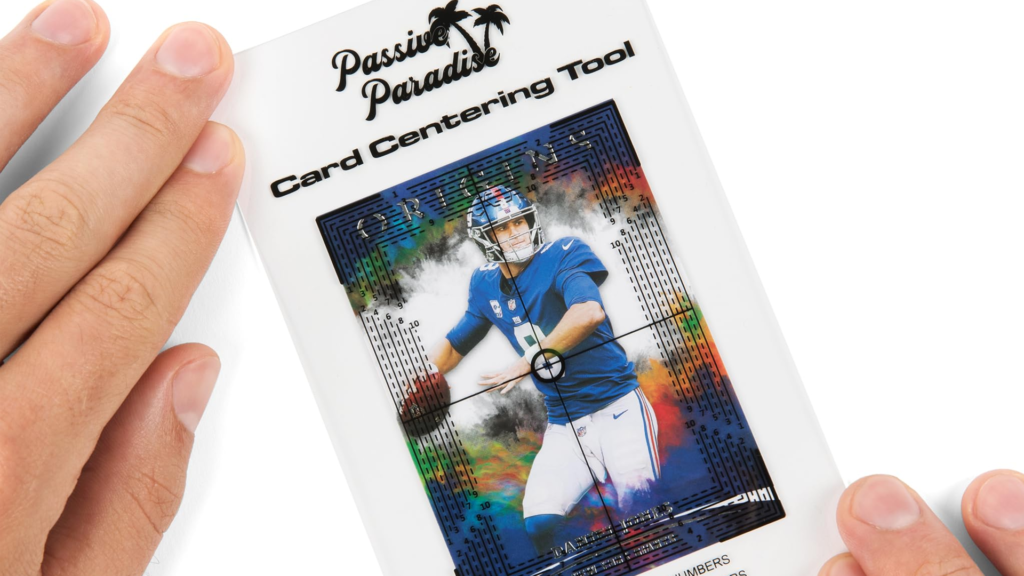
Pre-grading helps set expectations. Use a quality loupe or magnifying glass to inspect cards. Check centering with a centering tool or ruler. Examine corners for whitening or softness. Study edges for color breaks. Review surfaces under bright light for scratches or print lines. Compare your card against graded examples online.
Don’t submit cards you estimate at 7 or below unless they’re extremely valuable vintage cards. The grading fees rarely justify getting low-grade modern cards slabbed.
Submission Process: Step-by-Step Guide
Submitting cards for grading involves careful preparation. Here’s exactly how to do it right.
Step 1: Inspect and Select Cards
Examine cards thoroughly under bright light with magnification. Check centering by measuring borders, I use a ruler or centering tool. Look for corner wear, edge issues, and surface problems. Only submit cards you believe will grade 8+.
I use a jeweler’s loupe to inspect surfaces. You’d be surprised what microscopic scratches exist that are invisible to the naked eye. Finding them before submission prevents disappointment.
Step 2: Determine Declared Value
Accurately declare card values. This determines pricing tier and insurance coverage. Under-declaring to save money is risky, or if a card gets lost, you’re only insured for declared value. Over-declaring wastes money on higher tier fees.
Use recent eBay sold listings for comparable cards to estimate values. Declare the raw card’s current market value, not the potential graded value.
Step 3: Choose Service Level
Select turnaround speed versus cost balance. Value/Bulk services take longer but cost less. Express services deliver fast but cost significantly more. For most collectors, standard tiers work fine unless you need cards for specific shows or sales.
Step 4: Prepare Cards Properly
Place each card in a penny sleeve, then into a card saver (not top loader, grading companies prefer card savers because they’re easier to remove cards from). Don’t use tape on card savers as it creates removal issues.
Write card details on the card saver or include a submission form listing each card. This helps ensure you get the right cards back.
Step 5: Package Securely
Use sturdy boxes or bubble mailers. Place card savers between rigid cardboard to prevent bending. Fill empty space with bubble wrap or packing paper, cards should not shift during shipping.
Step 6: Insure Shipment
Always insure for full declared value. Use tracked shipping so you can monitor the package. USPS, FedEx, and UPS all offer insurance. It costs a few extra dollars but protects against loss.
Step 7: Track Submission
Most grading companies provide online tracking. You’ll receive confirmation when they receive your package, when grading begins, and when cards ship back. Check status regularly.
The waiting is brutal. I obsessively check tracking status daily during submissions. It’s part of the process, just embrace the anticipation or you’ll drive yourself mad.
Step 8: Receive and Inspect
When cards return, inspect immediately. Verify you received correct cards, check grades match what you expected, and examine slabs for damage. If anything is wrong, contact the grading company immediately.
Most grading companies offer minimum grade guarantees or grading accuracy guarantees. If you strongly disagree with a grade, research their review processes. PSA allows grade reviews for fees. Sometimes grades get bumped on review.
Common submission mistakes include using top loaders instead of card savers, insufficient packaging protection, under-insuring shipments, not photographing cards before submission, and selecting wrong service tiers for card values. Avoid these and your submissions will go smoothly.
Strategic Grading Decisions: When to Grade and What
Not every card deserves grading. Strategic decisions separate profitable grading from wasted money.
ROI calculation is fundamental. Grading costs $15-75 per card typically. Add shipping ($10-30 depending on volume) and insurance costs. Your total might be $25-100 per card all-in. For grading to make financial sense, the value increase from grading must exceed these costs by meaningful margins.
Example: A raw card worth $50. Grading costs $30 all-in. PSA 10 value is $200, PSA 9 is $90, PSA 8 is $60. Expected outcome: 20% PSA 10, 40% PSA 9, 30% PSA 8, 10% worse. Expected value: (.20 × $200) + (.40 × $90) + (.30 × $60) + (.10 × $40) = $40 + $36 + $18 + $4 = $98. Subtract $30 grading cost = $68 net. Compare to $50 raw value. Grading adds $18 expected value, marginally worth it but not exciting.
The same analysis for a card where PSA 10 is $1,000, raw is $200, and grading costs $40: Expected value calculation might show $300-400 net after grading costs. This clearly justifies grading.
Run these calculations before submitting. If the math doesn’t work, don’t grade.
Grade high-end cards where certification adds significant buyer confidence. For purchases over $200-300, most buyers want graded cards. Grading facilitates sales and commands premiums justifying costs.
Grade rookie cards of promising players early. If you bought Cooper Flagg rookie cards when he was drafted, grade them now before he’s established and values skyrocket. Early grading locks in condition at lower fees (based on current values) before cards appreciate dramatically.
Grade vintage cards over $100 for authentication. Counterfeits plague vintage markets. Graded vintage cards sell much easier than raw equivalents because buyers trust authentication.
Don’t grade bulk commons. That pile of 1990s base cards? Not worth grading. Even PSA 10s of most 90s commons are worth $5-10. Grading costs exceed card values. Keep these raw or don’t keep them at all.
Don’t grade cards under $30 raw value unless bulk submitting 50+ cards where per-card costs drop significantly. Individual submissions of low-value cards lose money.
Don’t grade damaged cards unless they’re extremely rare vintage cards where even low grades have value. That 1952 Topps Mantle in PSA 2? Still worth thousands. Your 2018 Luka Dončić rookie with a crease? Worthless even graded.
Timing matters. Grade after big player performances when buzz is high but before values fully spike. Sell graded cards into strength. Don’t grade during market peaks, because if you grade when a card is $500 and by the time it returns the market corrected to $200, you overpaid for insurance and service tiers.
I made this mistake during the 2021 boom. Submitted cards at peak values, paying premium service tiers. By the time cards returned, the market had corrected 40%. I overpaid for grading relative to current values. Time your submissions strategically.
Consider opportunity cost. Cards take several weeks to grade. During that time, they’re unavailable to sell. If you think a player will get injured or values will drop, selling raw immediately might beat grading and selling later.
Interpreting Population Reports and Making Data-Driven Decisions
Population reports are powerful tools for understanding rarity and value.
PSA Population Reports show exactly how many of each card exist at each grade. For example, you might see: 2003 Topps Chrome LeBron James RC—PSA 10: 437, PSA 9: 2,134, PSA 8: 1,892, PSA 7 and below: 3,201.
This data reveals that PSA 10s are relatively scarce compared to lower grades. Only 6% of graded examples achieved PSA 10. This rarity justifies significant premiums as PSA 10s sell for 3-5x what PSA 9s sell for on this card.
Use population data to identify undervalued cards. If a card has very low PSA 10 population (under 50 copies) and strong player performance, it might be undervalued relative to scarcity. Conversely, cards with thousands of PSA 10s have abundant supply, limiting upside.
Population growth matters too. If a card had 200 PSA 10s last year and now has 600, supply increased 3x. This supply inflation pressures prices downward. Monitor population growth for cards you hold, where accelerating grading submissions signal potential oversupply.
Grade distribution reveals how difficult cards are to grade high. Some cards have 40% PSA 10 rates—these are easy to grade and PSA 10s don’t command huge premiums. Others have 5% PSA 10 rates – tough grades, PSA 10s are genuinely rare and valuable.
I research population reports before buying expensive graded cards. If I’m paying $2,000 for a PSA 10, I want to know whether 50 or 5,000 exist. Scarcity drives long-term value. Abundant high grades suggest limited appreciation potential.
Centering is the usual culprit for lower grades on modern cards. Factory centering issues plagued many sets. Cards notoriously off-center have low PSA 10 populations. Understanding which sets/cards have centering issues helps you hunt for well-centered raw examples to submit.
Strategic grading involves submitting well-centered raw cards where PSA 10 population is low. You’re adding to scarce supply, and if you get that 10, you have a genuinely rare card. Submitting poorly-centered cards from easy-to-grade sets just adds to abundant PSA 9 populations.
Protecting Your Graded Cards: Storage and Insurance
Graded cards need proper care despite their protective slabs.
Slab storage requires careful consideration. Store slabs upright in specialized graded card boxes, the BCW Graded Card Storage Box holds 30-40 slabs safely. Never stack slabs flat as weight can crack holders over time.
Prevent scratching by ensuring slabs don’t rub against each other during storage. Place cardboard dividers between slabs or use individual slab sleeves. Scratched holders reduce aesthetic appeal and resale value even though cards inside remain pristine.
Climate control still matters. While slabs protect cards, extreme temperatures and humidity fluctuations can potentially affect holders over decades. Store in climate-controlled environments, just avoid attics, basements that could be prone to flooding, or garages with temperature swings.
Display cases for prized slabs should be UV-resistant. Direct sunlight fades cards even inside slabs over years. UV-Resistant Display Cases protect cards while showing them off.
Insurance becomes critical with valuable graded card collections. Homeowner’s and renter’s policies typically cap collectibles coverage at $1,000-2,500. If your collection exceeds this, get specialized insurance.
Document your collection thoroughly, photograph every slab, record cert numbers, maintain spreadsheets with purchase prices and current values. This documentation is essential for insurance claims.
I keep digital photos of every graded card I own stored in cloud backup. If my collection was destroyed, I’d have proof of ownership and condition for insurance purposes. It takes 30 minutes initially and 5 minutes per new slab, it’s minimal effort for massive protection.
Security matters for high-end collections. Safe deposit boxes at banks store extremely valuable cards securely. Home safes work too – look for fireproof, water-resistant safes rated for important documents.
For collections over $25,000, seriously consider bank safe deposit boxes for top cards. Home storage risks fire, flood, and theft. Banks provide security you can’t replicate at home.
The Future of Sports Card Grading: Trends and Predictions
Sports card grading continues evolving. Understanding trends helps you make forward-looking decisions.
AI and automation will increasingly assist grading. Companies are developing AI systems that analyze centering, corners, edges, and surfaces objectively. Human graders would verify AI assessments, combining technology with expertise. This could speed turnarounds and improve consistency.
Blockchain verification is coming. Some companies explore NFT-style blockchain records for physical cards, permanently documenting ownership history and grade information. This could combat counterfeits and provide provenance tracking.
Competition intensifies among grading services. PSA’s market dominance faces challenges from SGC, BGS, and CGC. Expect continued innovation in holder design, customer service improvements, and competitive pricing as companies fight for market share.
Grading standards will likely tighten further. As cards become more valuable, maintaining grade integrity requires strict standards. PSA’s 2025 centering changes signal this trend. Future standards might become even more rigorous, protecting existing high-grade populations.
Specialty grading for unique cards will expand. Thick memorabilia cards, oversized cards, and non-standard sizes need specialized holders and grading. Companies that innovate in specialty grading will capture niche markets.
Turnaround improvements continue. All major companies invest in hiring, technology, and process optimization. The days of 6-12 month waits should be history. Current 2-4 week standard turnarounds will likely become 1-2 weeks as efficiency improves.
Digital integration between physical graded cards and digital representations could emerge. Imagine owning a PSA 10 LeBron James rookie with accompanying authenticated digital version for online display. Physical and digital collecting might converge.
International expansion accelerates. Sports card collecting grows globally. Grading companies expanding international presence with local submission centers and multilingual services will capture growing markets.
Environmental sustainability might influence grading. Plastic slab production has environmental impacts. Companies exploring eco-friendly holder materials or recycling programs will appeal to environmentally-conscious collectors.
The grading industry’s future looks strong. As card values rise, authentication and condition certification become more valuable. Grading companies providing best service, fairest grades, and strongest market recognition will thrive.
Your Sports Card Grading Strategy Starts Now
You’ve absorbed comprehensive grading knowledge, from company comparisons to strategic submission decisions, from understanding grades to population reports.
The most critical insight? Grade strategically, not emotionally. Just because you love a card doesn’t mean it should be graded. Run ROI calculations, research population data, estimate grades conservatively, and choose appropriate services.
Start small if you’re new. Submit 5-10 cards to learn the process. Experience teaches more than any guide. You’ll develop intuition for which cards grade well and which services suit your needs.
Build relationships with submission services or local dealers who offer group submissions. Many shops submit for customers, handling packaging and paperwork for small fees. This simplifies the process while you learn.
Stay informed about grading company changes. Pricing adjusts, standards evolve, turnaround times fluctuate. Join collector communities, follow grading company social media, and read hobby news. Staying current prevents surprises.
Remember, grading adds most value to high-end cards where authentication and condition matter significantly. Don’t waste money grading bulk commons or low-value cards. Focus on cards where grading genuinely enhances value and salability.
Be patient with the process. Waiting weeks for grades is frustrating but necessary. Use that time to research your next submissions or enjoy your existing collection. The anticipation makes receiving grades more rewarding.
Most importantly, understand that grades don’t define you. Getting 9s when you hoped for 10s stings, but it happens to everyone. Learn from submissions, improve your eye for condition, and keep collecting.
Share your grading experiences in the comments below. What companies do you prefer? Have you had unexpected grade surprises? What cards are you planning to submit? Let’s learn from each other’s experiences.
Welcome to the graded card world. Your perfectly encapsulated collection awaits.
Essential Sports Card Grading Resources
Grading Companies:
- PSA – Professional Sports Authenticator
- BGS – Beckett Grading Services
- SGC – Sportscard Guaranty Corporation
- CGC Cards
Grading Tools & Supplies:
- Card Savers (100ct) for Submissions
- Jeweler’s Loupe for Surface Inspection
- Centering Tool
- Graded Card Storage Boxes
Research Tools:
- PSA Population Report – Grading population data
- Beckett Grading Population – BGS populations
- SGC Population Report – SGC data
- eBay Sold Listings – Real market values
Community & Learning:
- r/PSA – Reddit PSA community
- r/sportscards – General card grading discussions
- Blowout Cards Forums – Grading discussion threads
- Card grading Facebook groups – Local submission groups